Hardware
Mouse Optomotor Capture Device
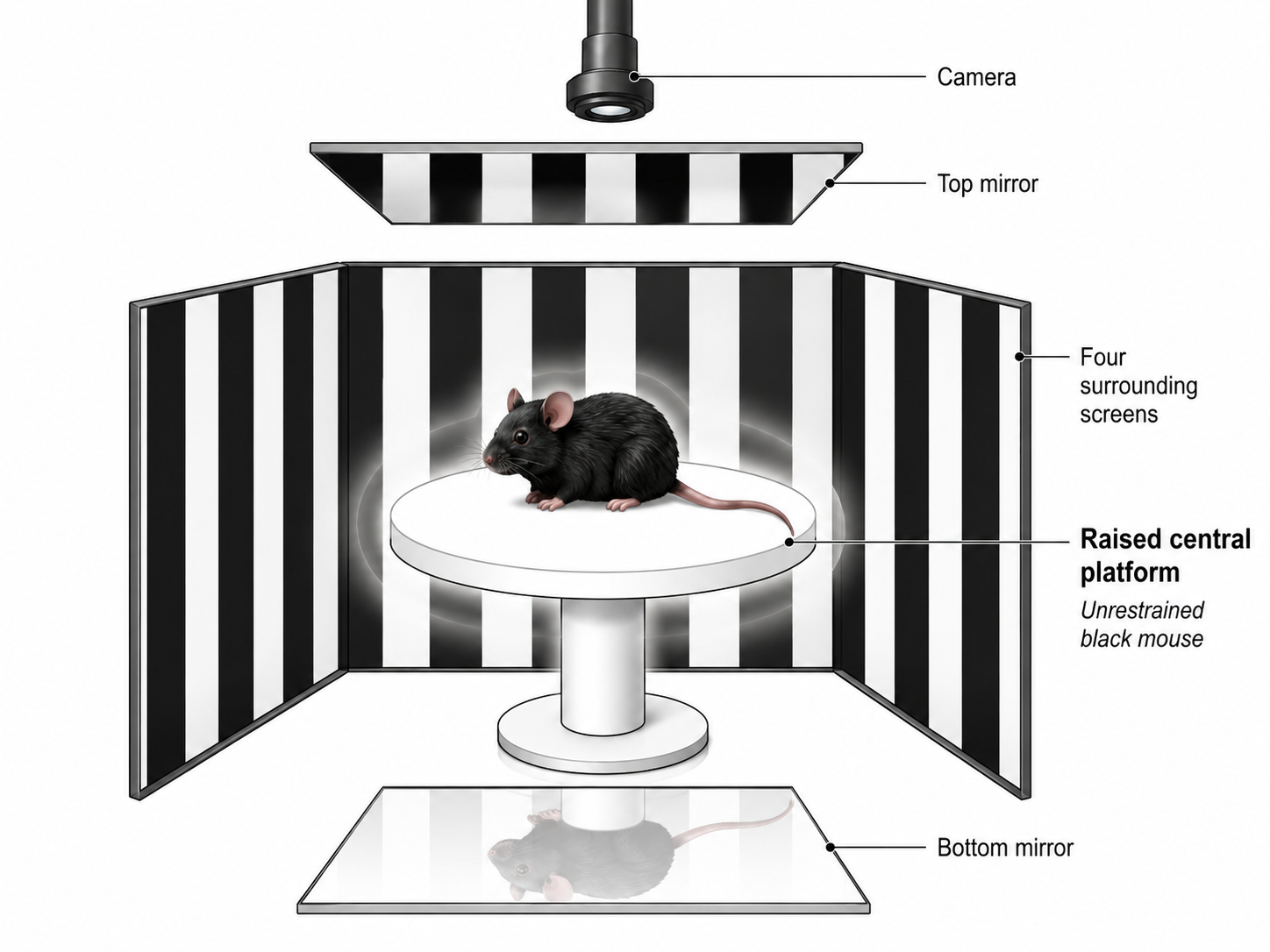
Six-sided surround displays, top/bottom mirrors, behavior camera, and dedicated animal platform integrated for immersive optomotor stimulation and stable acquisition.
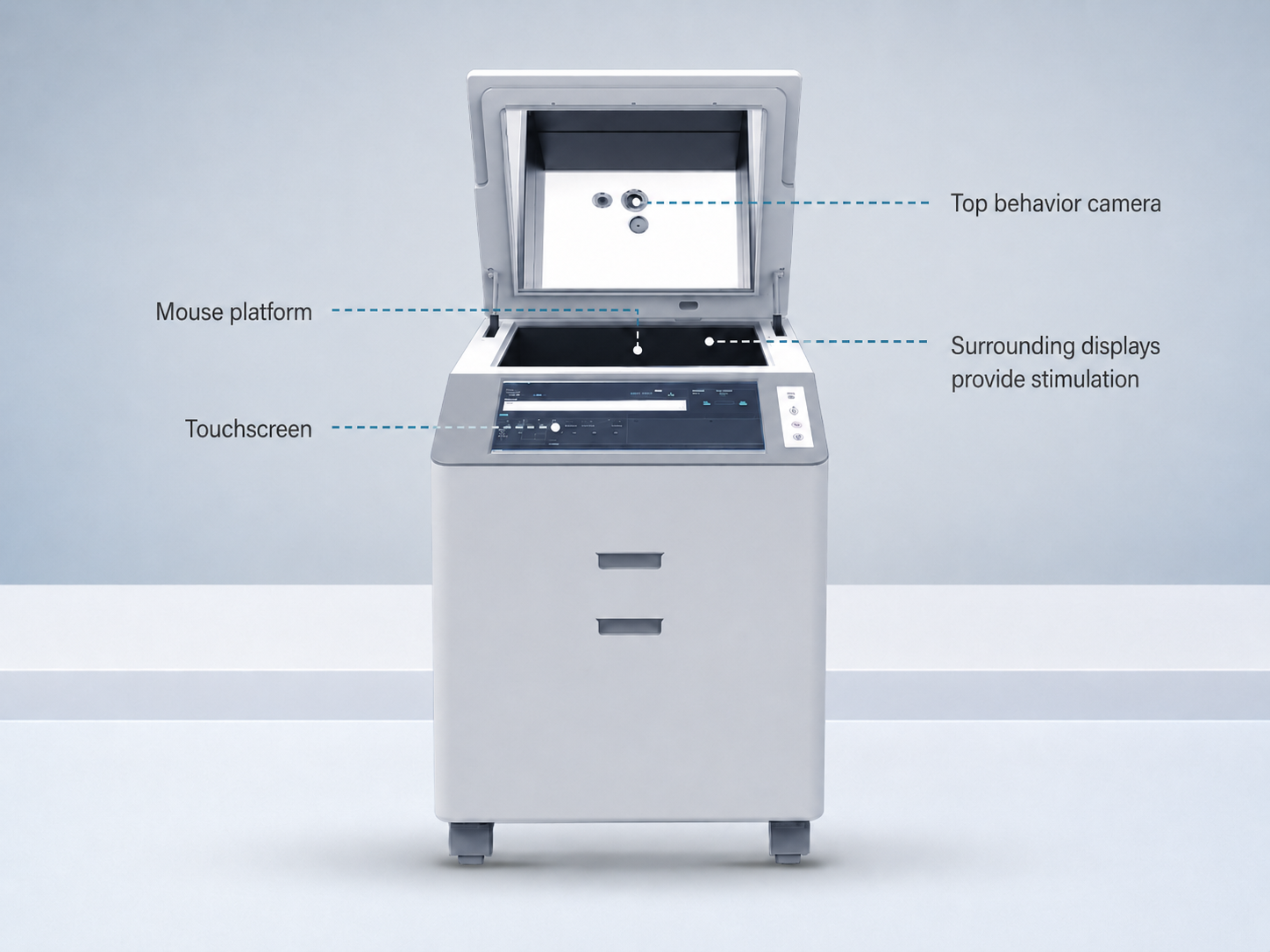
Leading OMR head-movement detection with AI optomotor tracking — quantifying spatial frequency and contrast sensitivity thresholds for vision and neuroscience research.
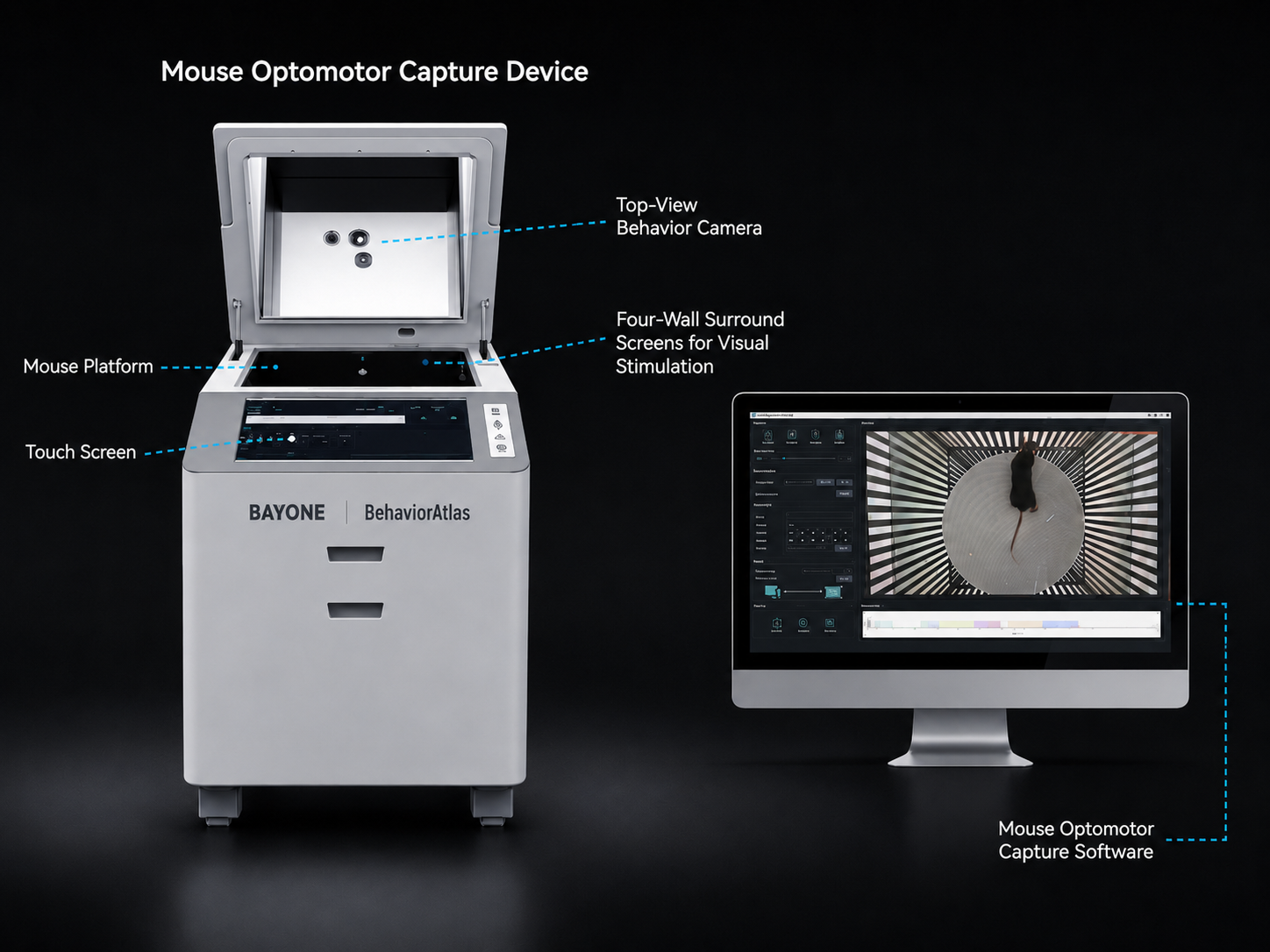
Precise OMR head movement capture — AI-powered tracking with flexible visual stimulation.
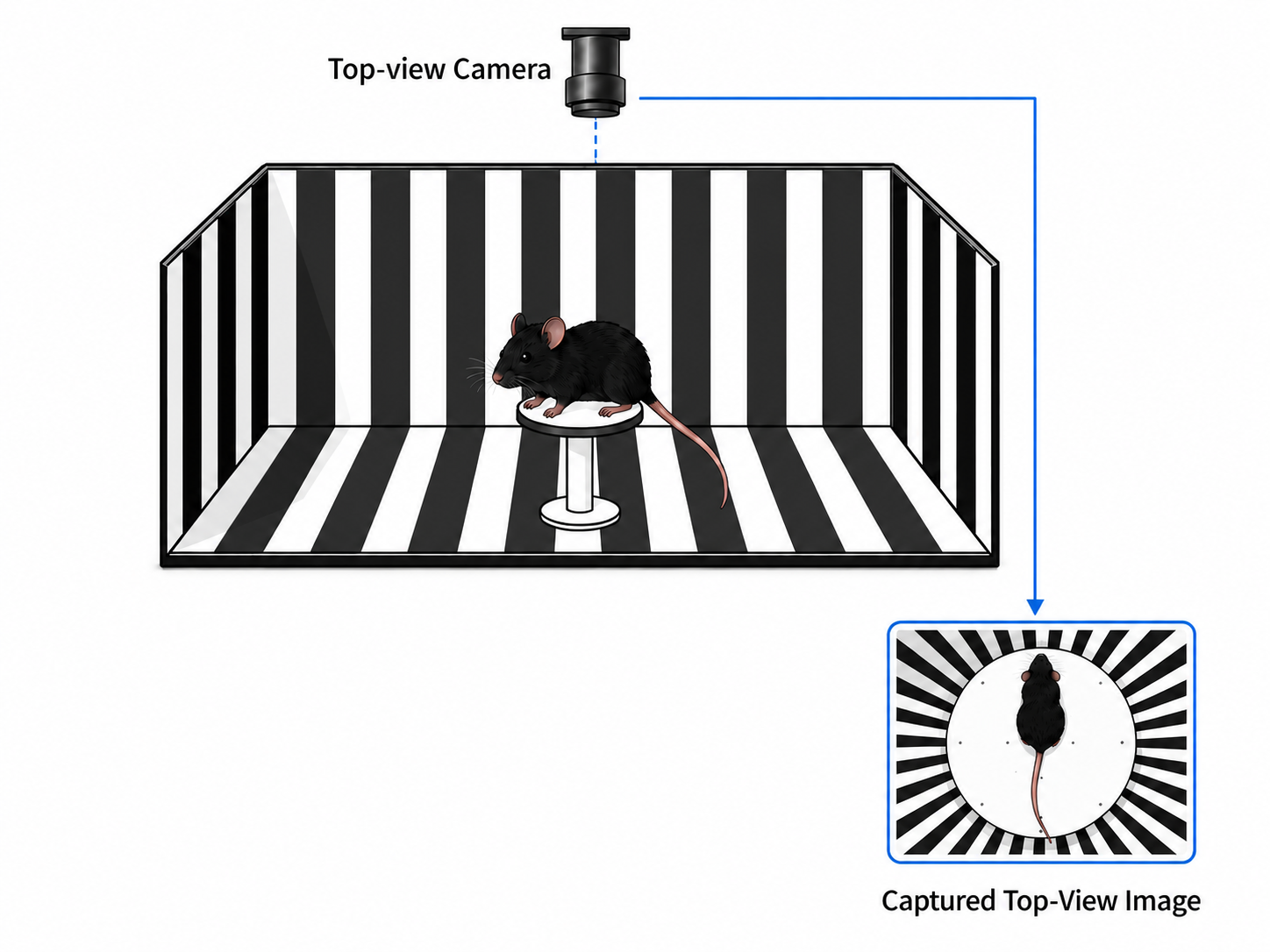
Top behavior camera captures head and body movement; AI analyzes grating synchronization to quantify visual acuity and contrast sensitivity.
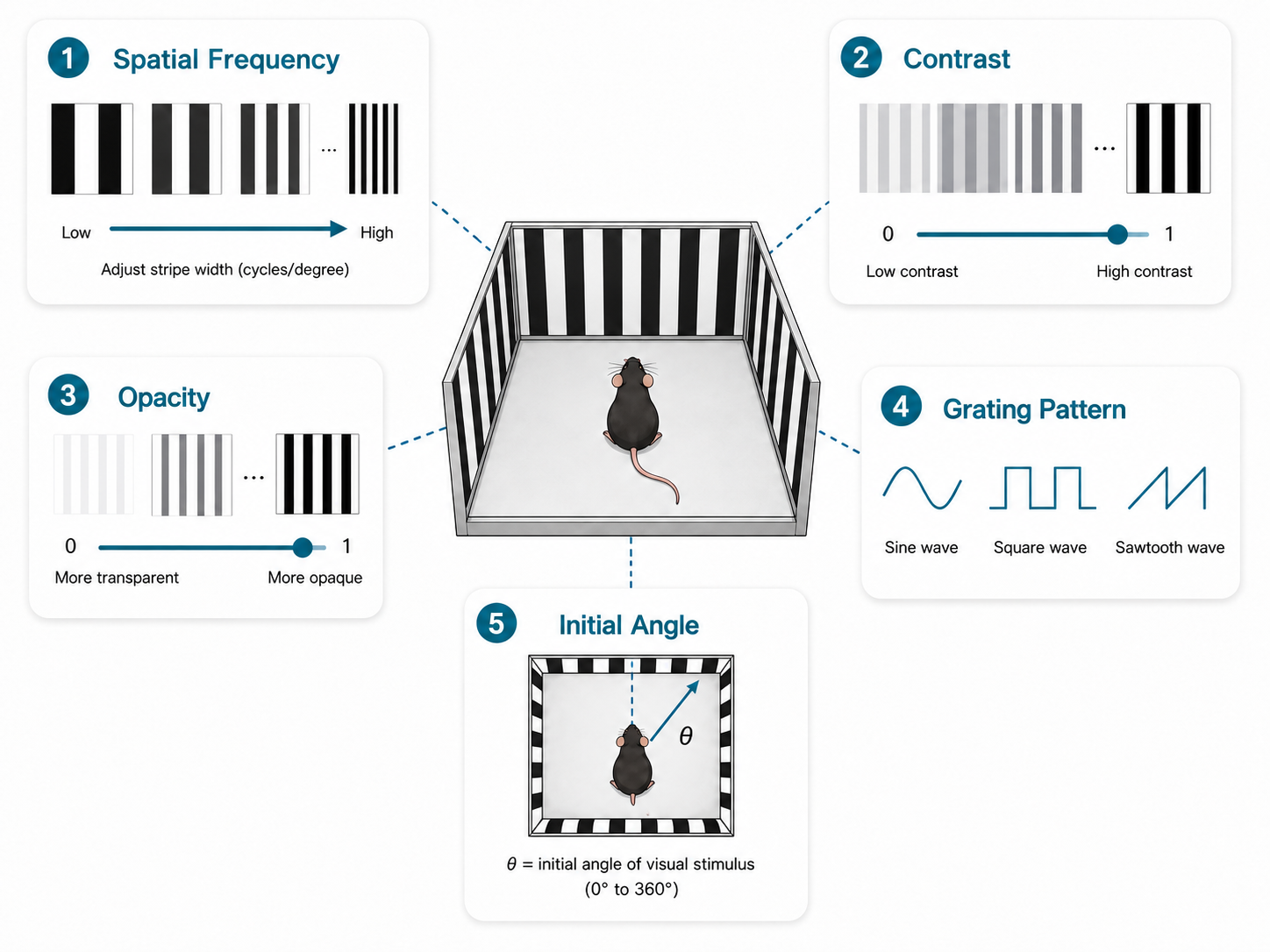
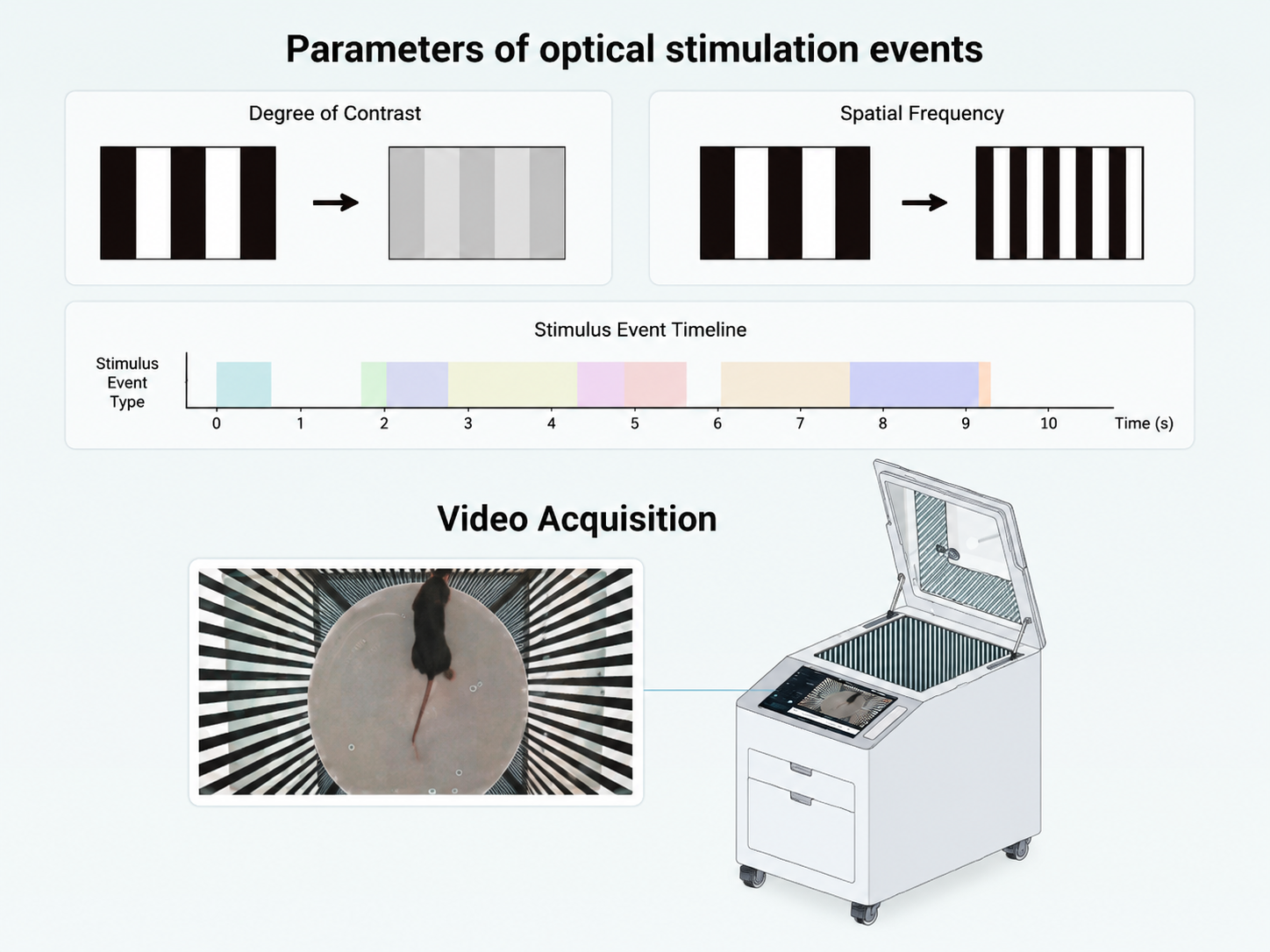
Customizable spatial frequency, contrast (0–1), opacity, grating texture (sine/square/sawtooth), and initial stimulus angle.
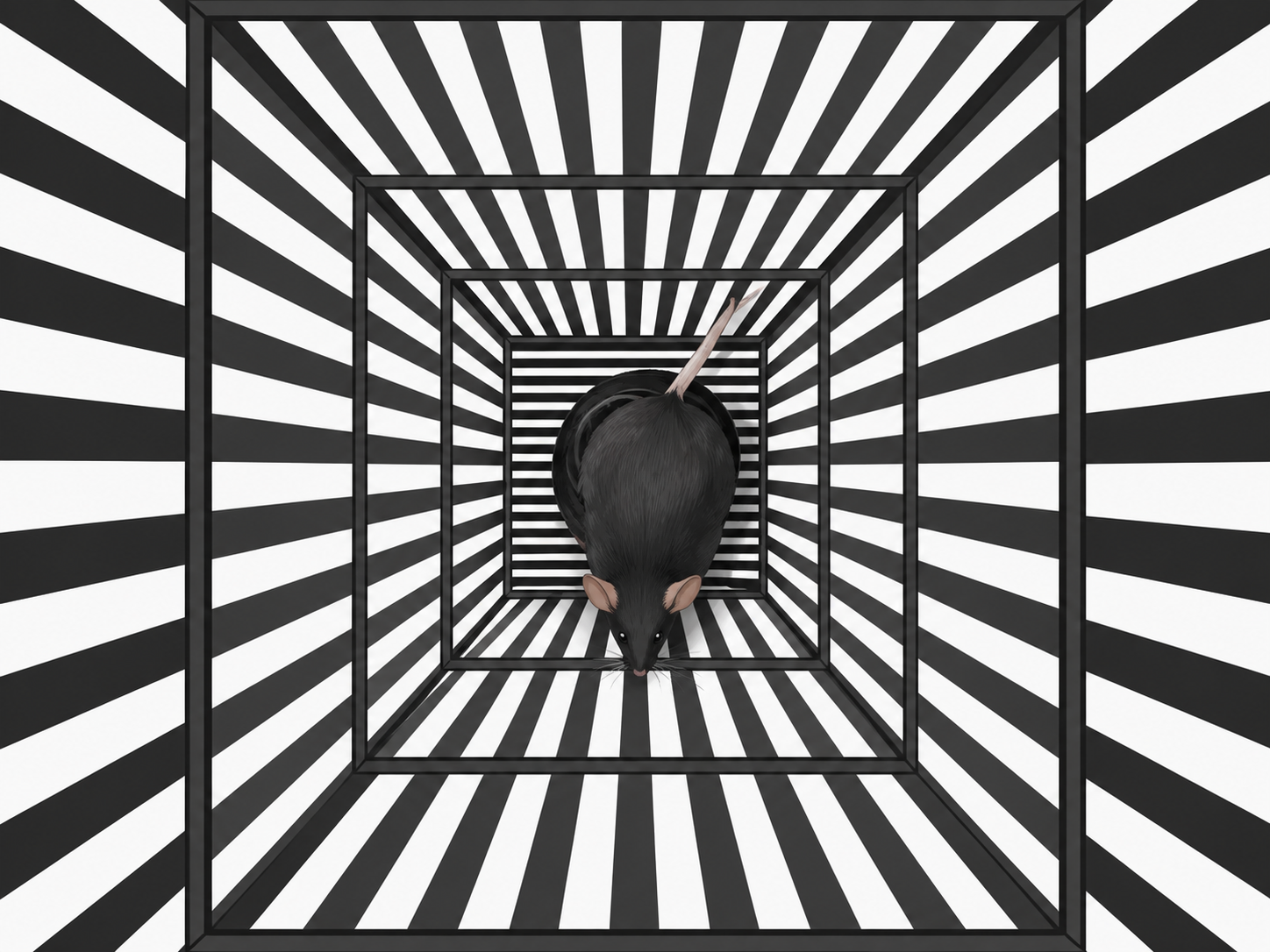
Surround displays with top and bottom mirrors deliver omnidirectional visual signals to elicit stable optomotor responses.
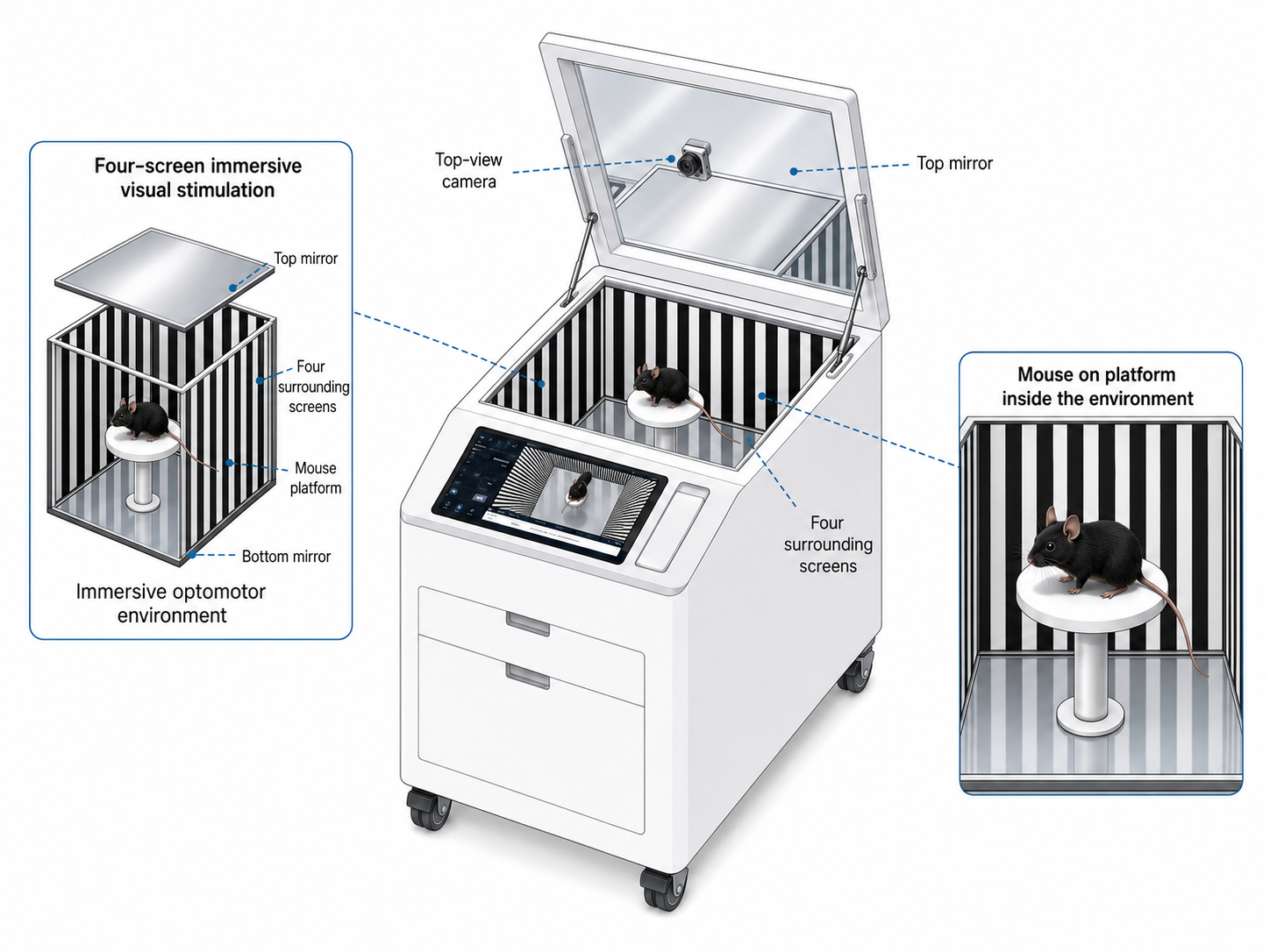
Elevated central platform for unrestrained mice receiving visual stimulation in natural posture for authentic data.
Hardware, capture software, and analysis software — covering the full optomotor workflow.
Six-sided surround displays, top/bottom mirrors, behavior camera, and dedicated animal platform integrated for immersive optomotor stimulation and stable acquisition.
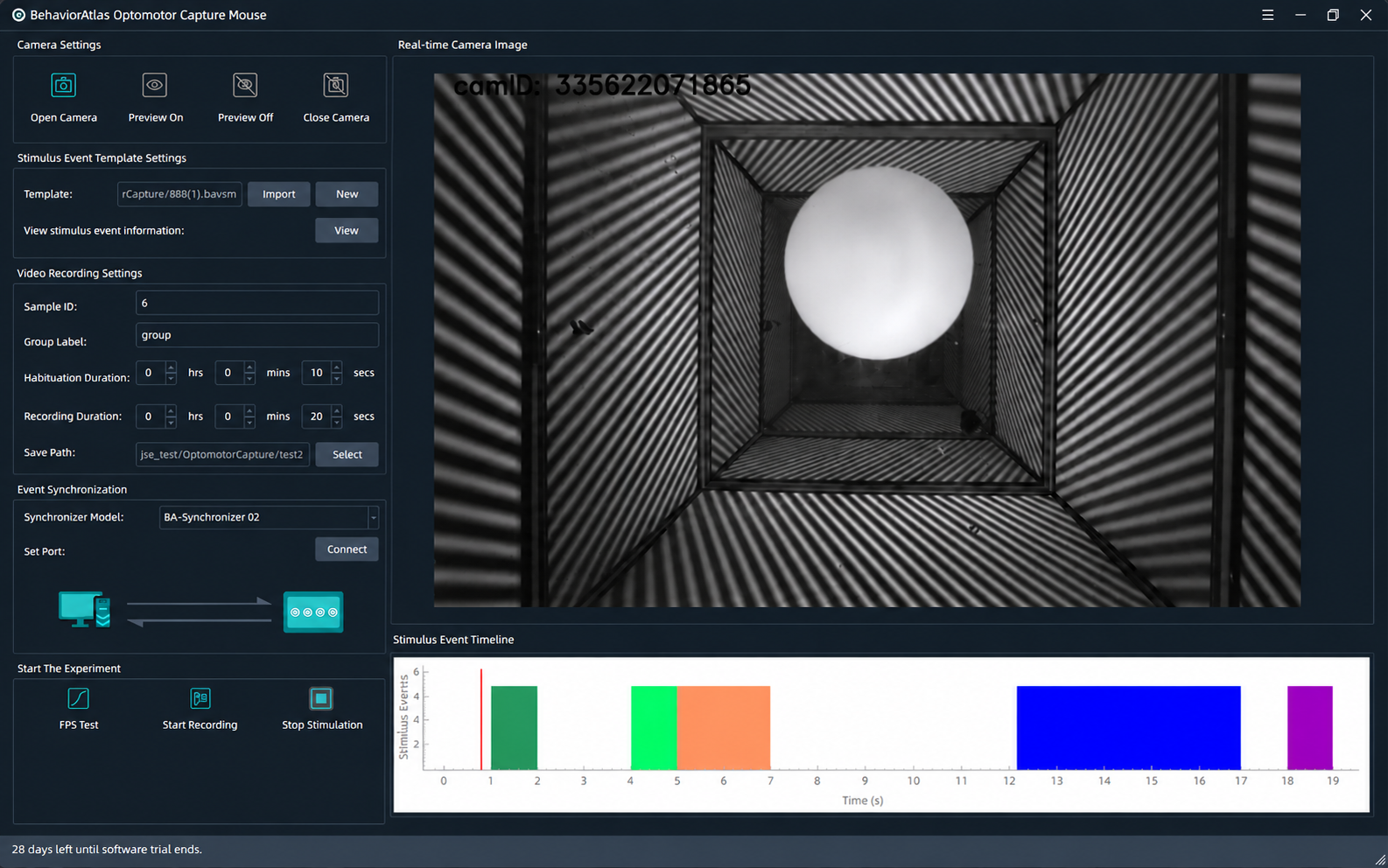
Stimulus parameter setup, preview, video recording, and TTL marking — flexible configuration of spatial frequency, contrast, grating texture, and stimulus direction.
Automated analysis for optomotor experiment data — OMR head movement analysis, body keypoint tracking, result visualization, and statistical report export.
Analysis software coming soon
Dark adaptation and placement, parameter config, acquisition and stimulation — AI tracks OMR head movement to output visual thresholds.
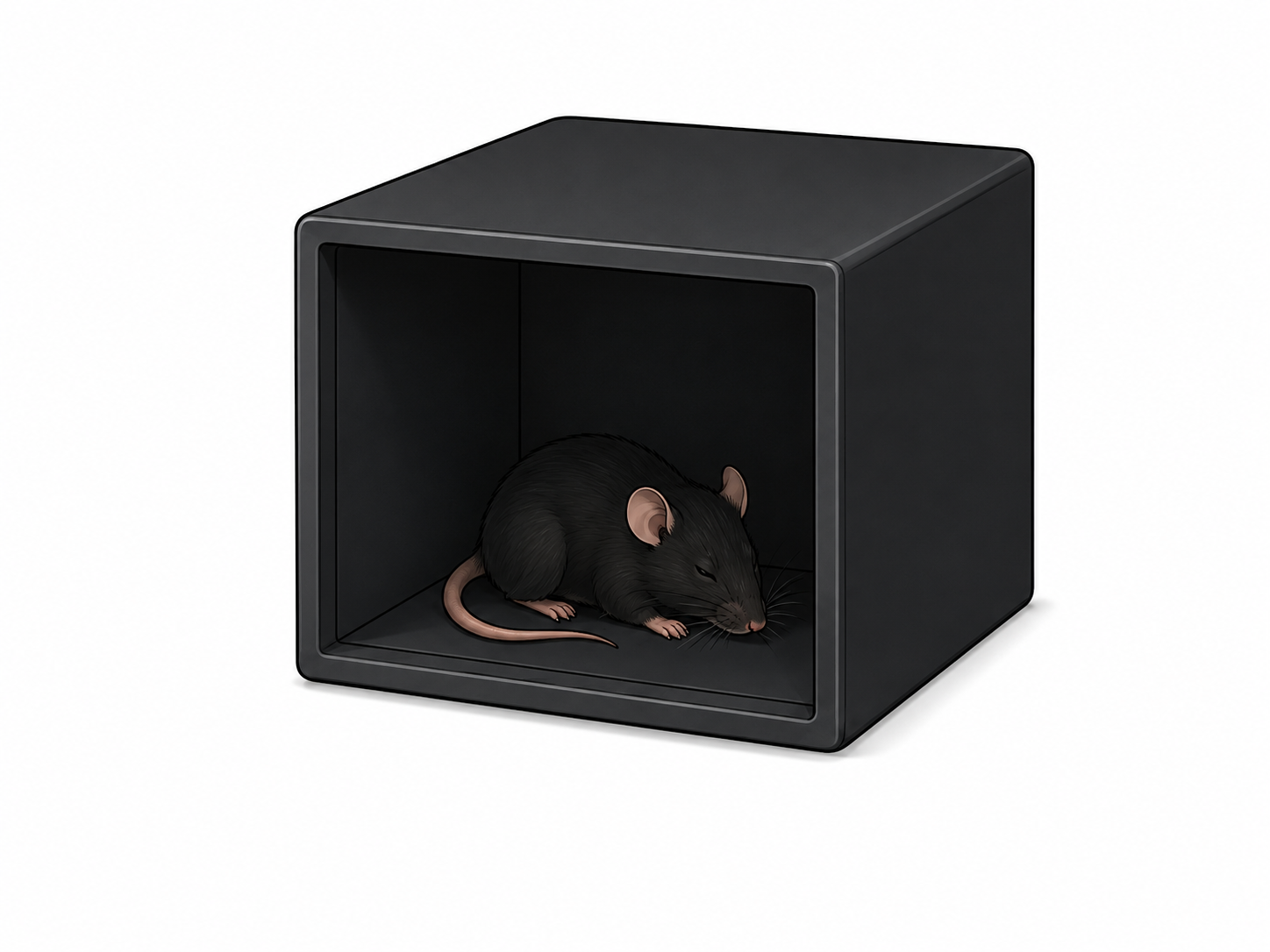
After dark adaptation, place mouse on central platform in optomotor apparatus for free movement before experiment.
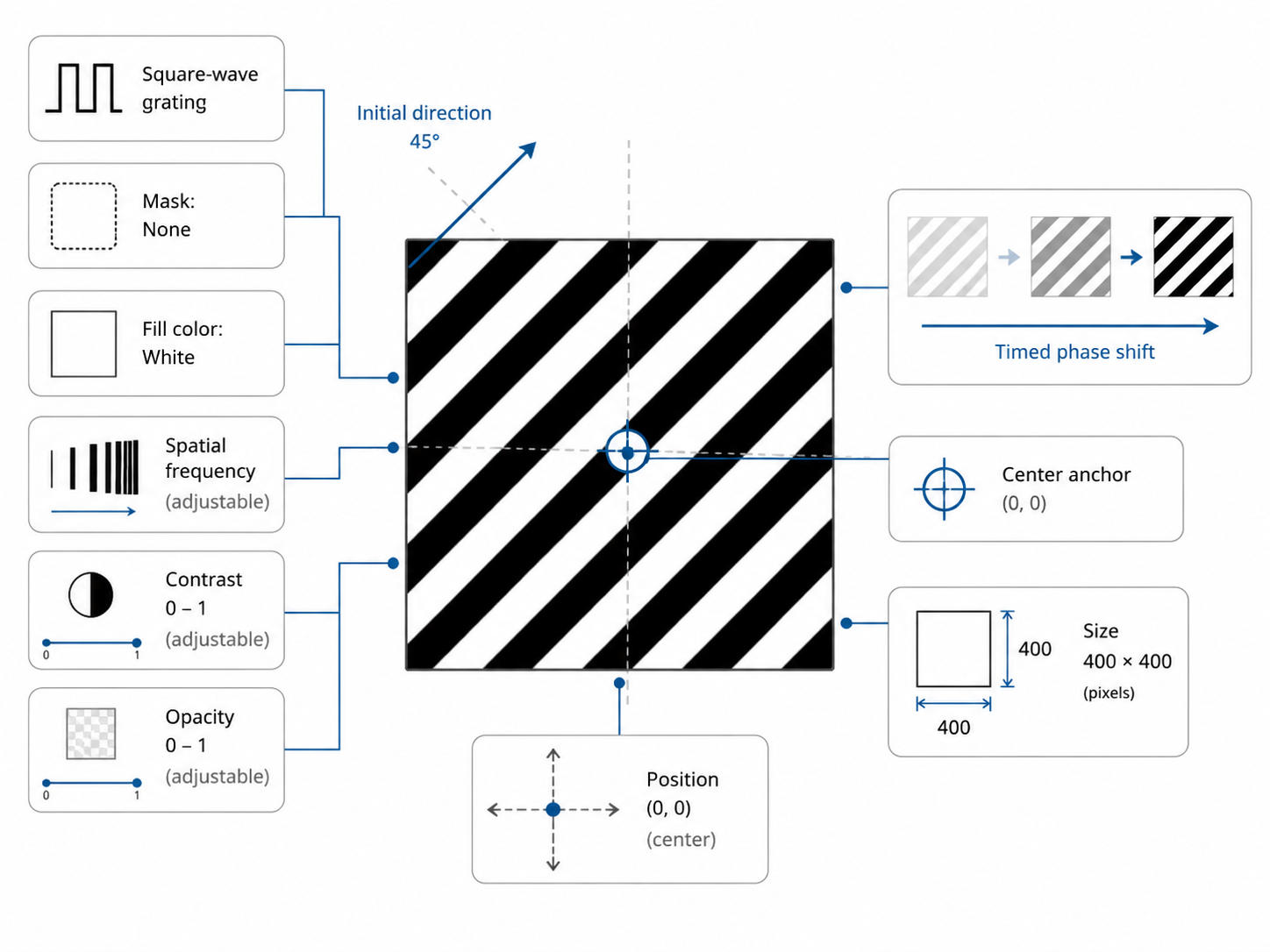
Create a grating stimulus event in capture software — configure spatial frequency, contrast, opacity, grating texture, direction, and moving speed, then lock the gradient protocol after preview.
Top behavior camera records head and body movement synchronized with grating stimulus timeline.
Visual stimulation begins in preset sequence on six-sided surround displays — gratings presented in configured temporal order, direction, and duration.
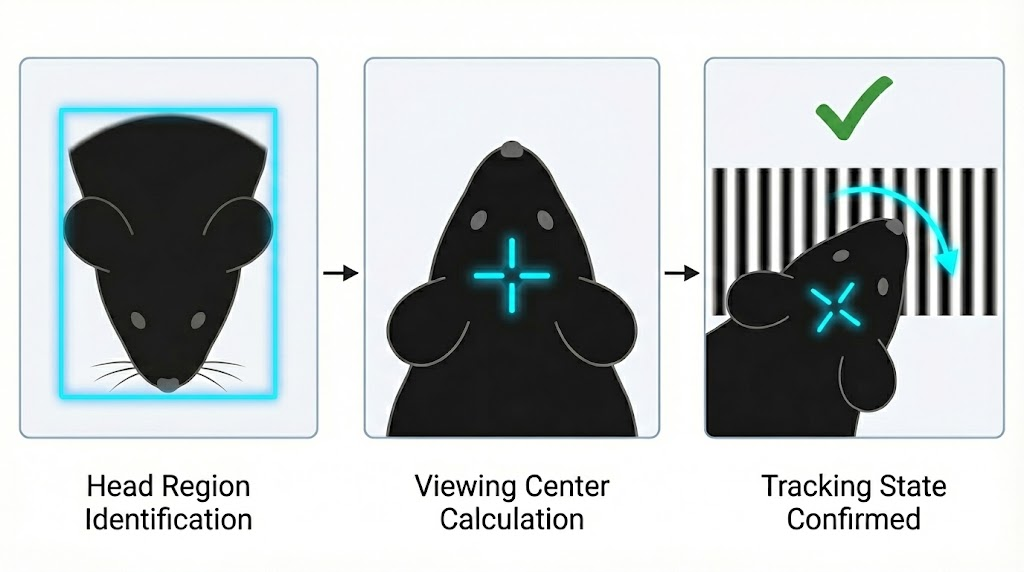
AI algorithms analyze head pose to determine whether head movement tracks the rotating grating.
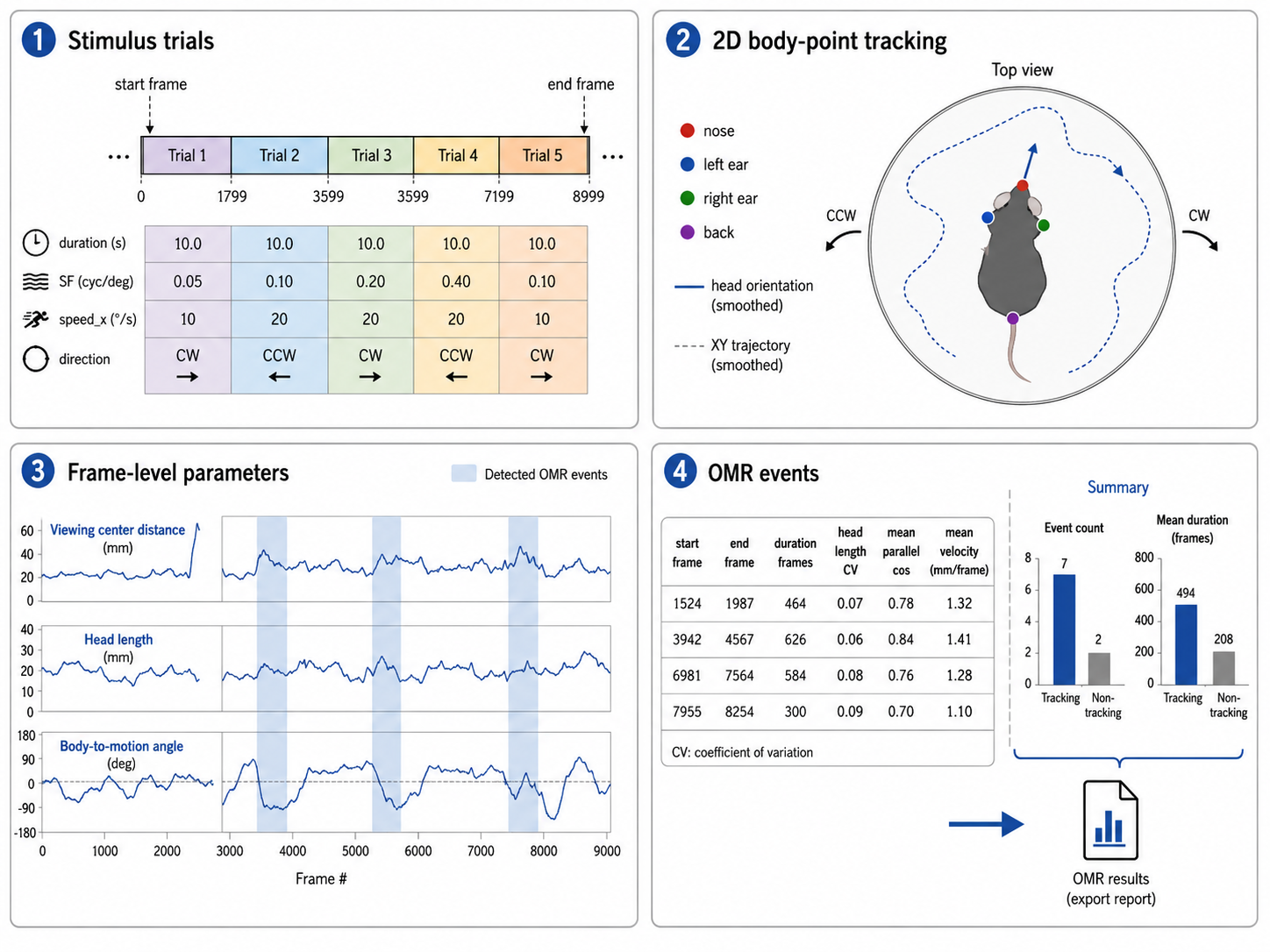
Aggregate head movement tracking trajectories — AI auto-determines tracking status, outputs spatial frequency and contrast sensitivity threshold reports.
Analysis software organizes results into a clear data structure — stimulus parameters, body movement trajectories, frame-level kinematics, and OMR tracking events for statistics and visualization.
Hierarchical data output — stimulus, trajectories, kinematics, and OMR events
├──/stimuli/
Stimulus trials
Start/end frames, duration, spatial frequency, moving speed, and stimulus direction for each trial
Measured values for all stimulus trials — one complete row per trial
├──/2Dcoordinates/
Body keypoints
Nose, left ear, right ear, and back
Frames per second of the top behavior camera video
Smoothed XY position of each keypoint per frame for head and body movement visualization
├──/frameLevel_parameter/
Frame-level kinematics
Viewing center distance, head length, and body-to-motion angle
Kinematic parameter values for each video frame
└──/events/
OMR tracking events
Start/end frames, duration in frames, head-length variability, grating parallelism, mean movement velocity, and more
Complete statistics for each detected OMR head-tracking event
The optomotor system integrates with the freely-moving mouse eye-tracking system — synchronized OMR and pupil data in one setup, with cable routing and multimodal recording support.
Learn about Eye-tracking Research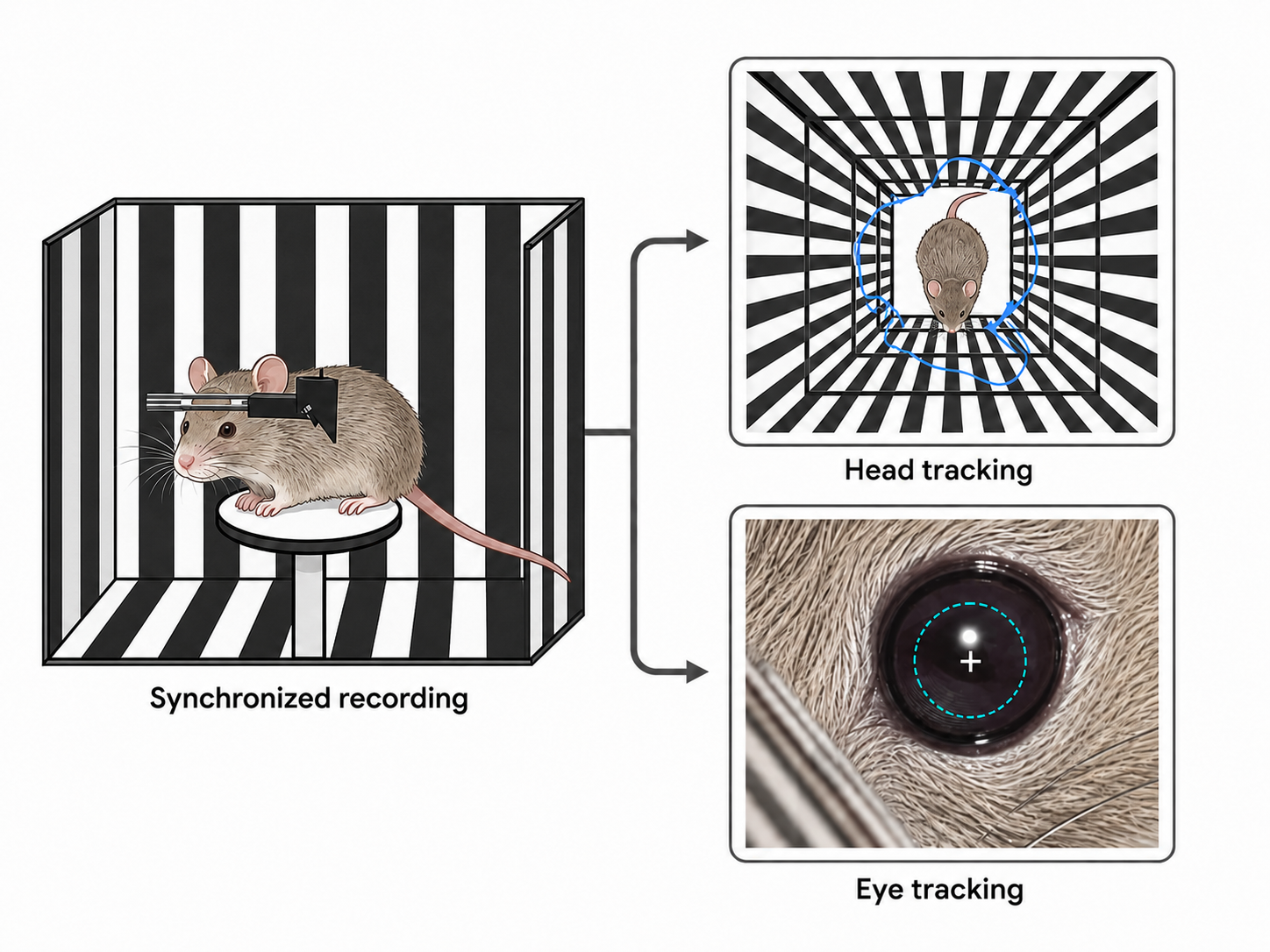
Synchronized with the freely-moving mouse head-mounted eye-tracking unit — optomotor stimulation and pupil recording on a shared timeline
Cable routing and mounting positions reserved for head-mounted eye-tracking modules alongside the top behavior camera
Capture software supports TTL peripheral sync — aligning optomotor stimulation, head/body video, and eye-tracking data
Extensible to optomotor + eye-tracking multimodal analysis for combined visual function and pupil response assessment
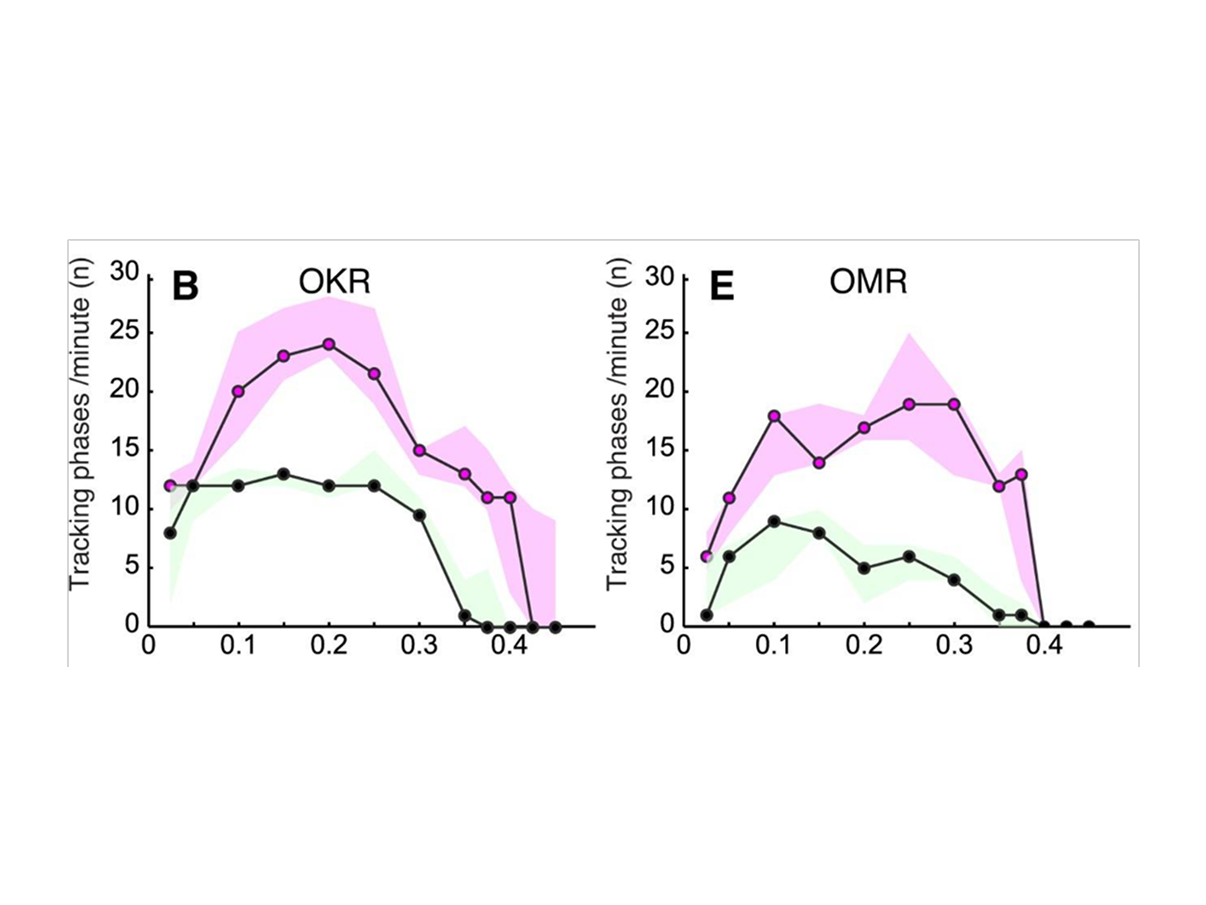
Combined OMR head tracking and OKR eye tracking — AI distinguishes tracking vs. non-tracking states
Non-invasive — no surgery required; a top behavior camera captures video
AI Recognition Results
Accurate grating-tracking detection from head movement
AI Pipeline
A pose estimation model tracks the midpoint between ear centers and the nose tip as the Viewing Center reference; post-processing determines whether head movement is synchronized with the grating — an OMR event.
An ETU connector is implanted on the mouse skull; an eye-tracking camera is connected during experiments to capture video
AI Recognition Results
Accurate grating-tracking detection from eye movement
AI Pipeline
Precisely identifies the pupil region, uses attention to extract core saccade features, and combines traditional features (amplitude, velocity, etc.) to detect OKR events — distinguishing grating tracking from noise with significantly improved accuracy.
Widely used in visual acuity, contrast sensitivity, and neurodegenerative vision impairment research.
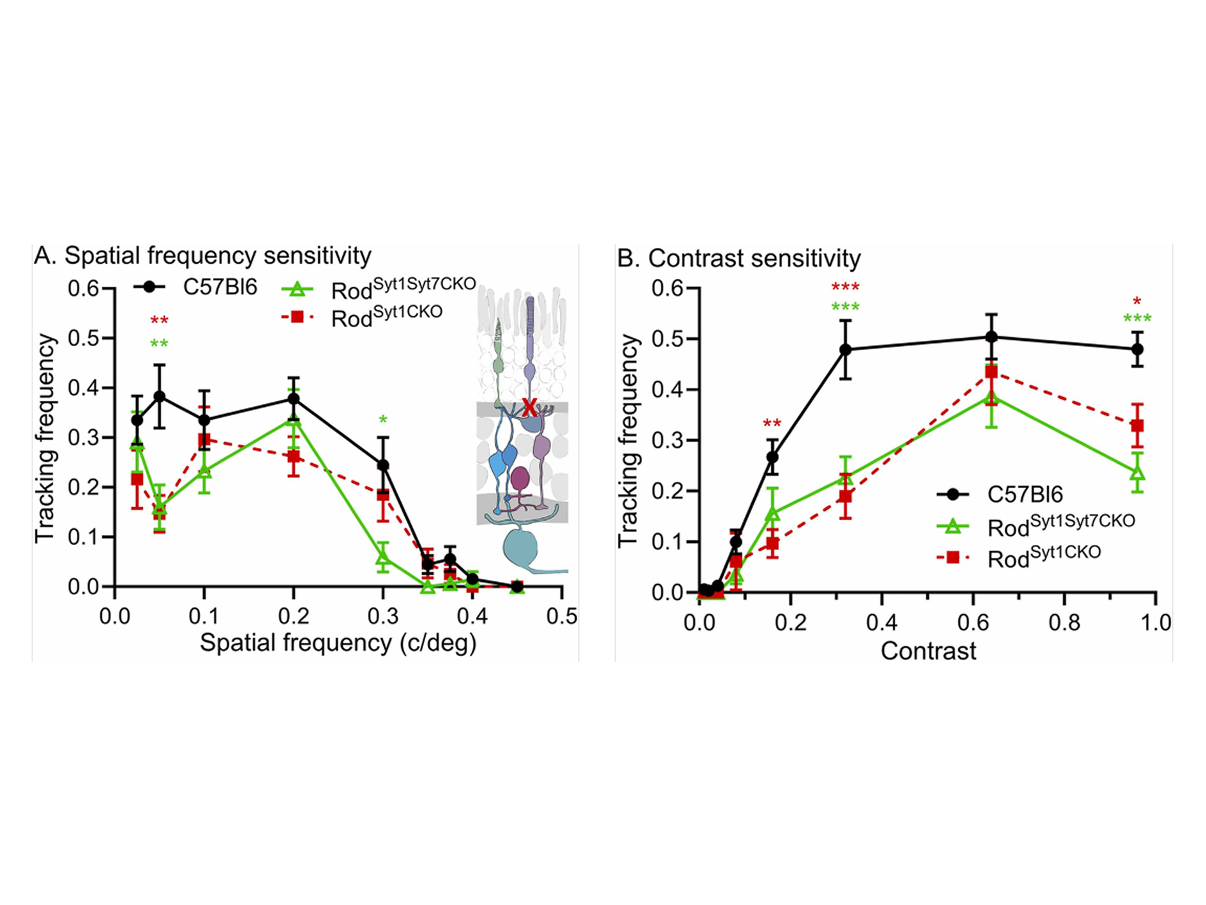
Compared visual behavior in C57 mice and rod photoreceptor Syt1 and/or Syt7 knockout mice — assessed effects of synaptic protein loss on optomotor response.
Compared Brn3b wild-type and knockout mice in head-fixed OKR and freely-moving OMR assays.
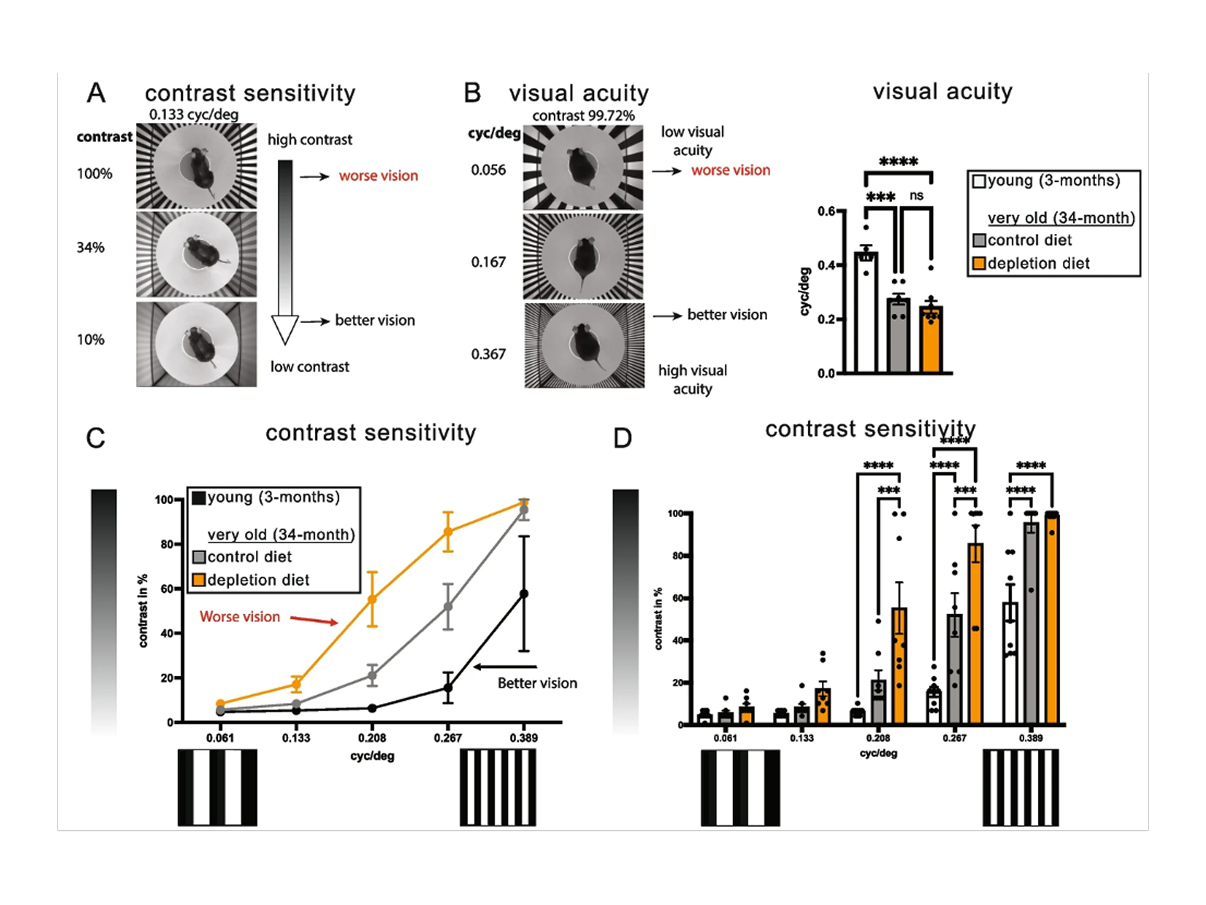
Examined aging and microglial depletion effects on optomotor function — revealed immune regulation and visual decline links.
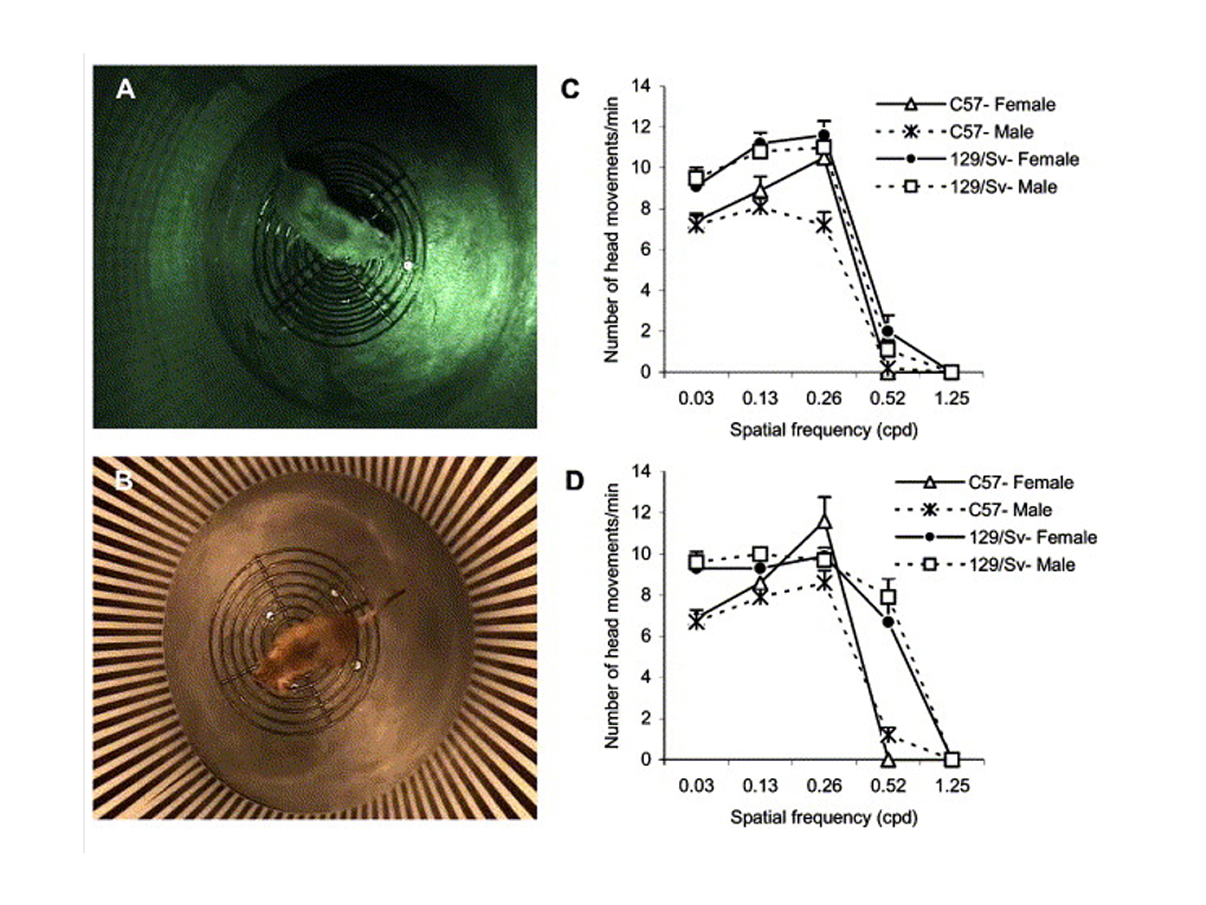
Assessed head tracking responses to varying spatial frequency gratings in C57BL/6J mice — determined visual sensitivity boundaries.
Contact us for demos, protocols, and optomotor + eye tracking integration consulting
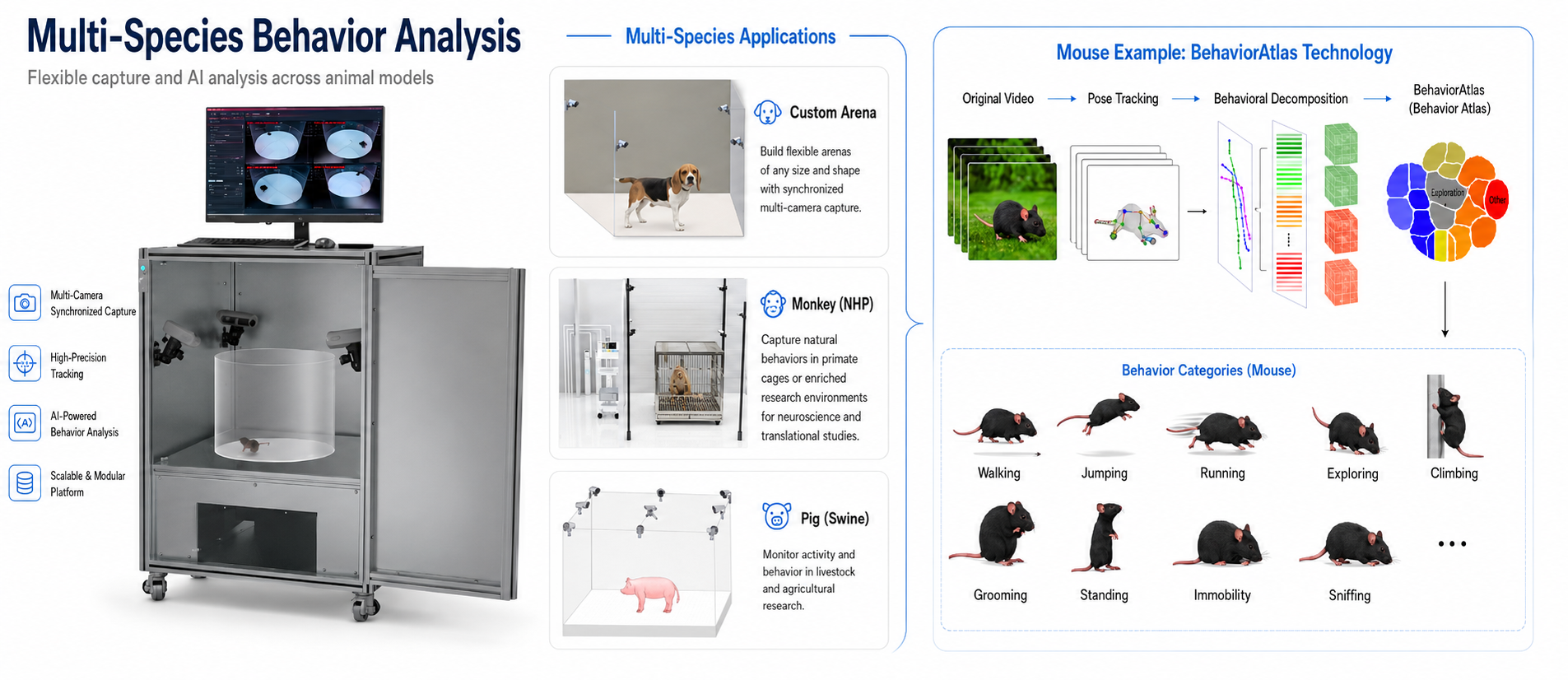
3D-AI Fine Behavioral Analysis System
Multi-animal fine behavior research
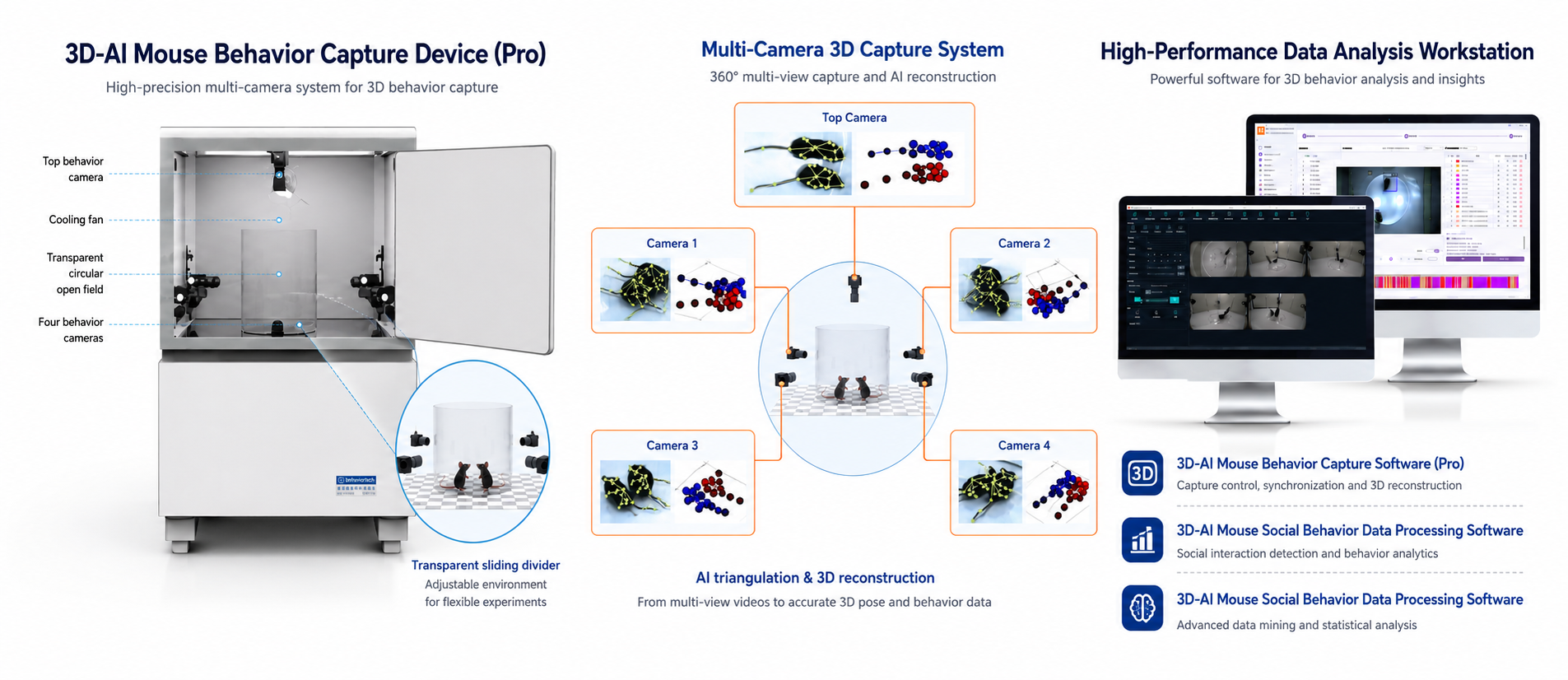
3D-AI Mouse Social Behavior Analysis System
Dyadic mouse social interaction research
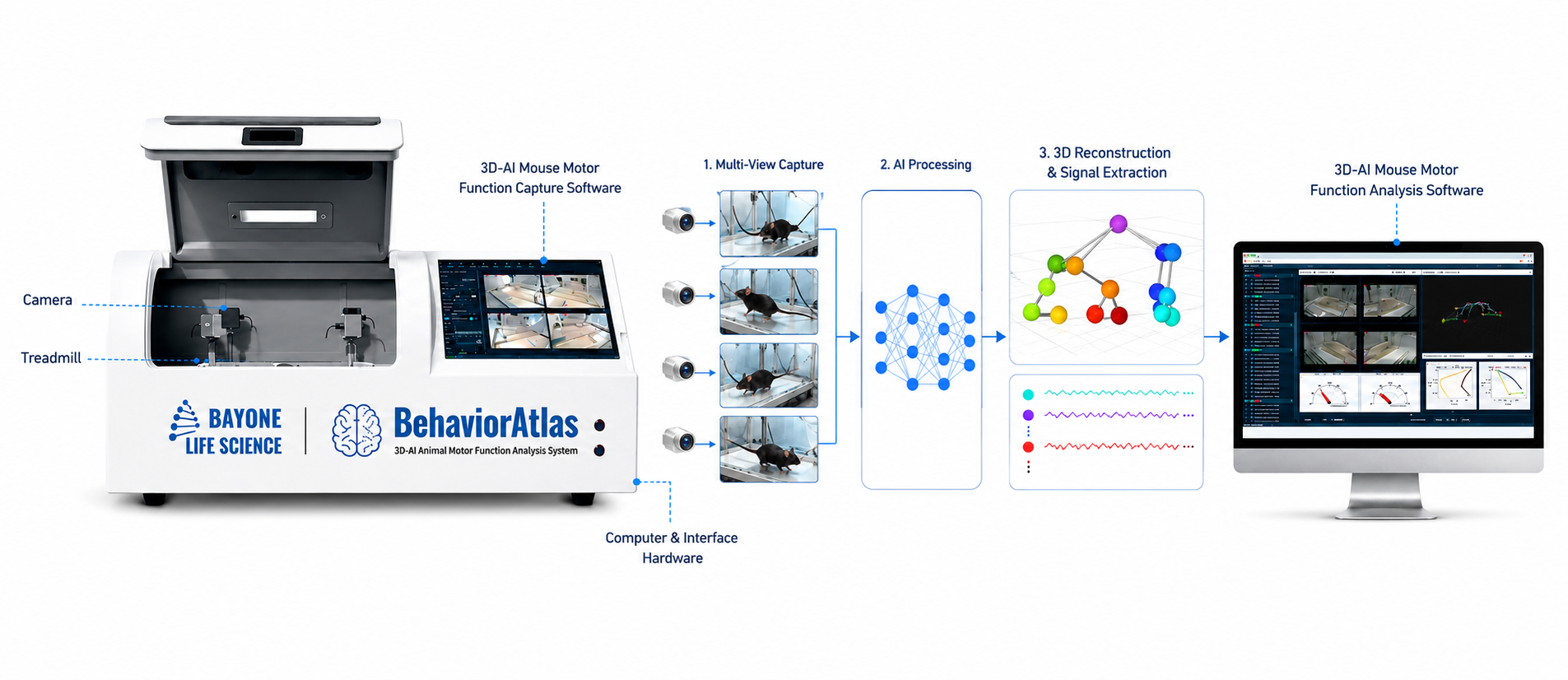
3D-AI Fine Motor Function Analysis System
Fine motor function assessment
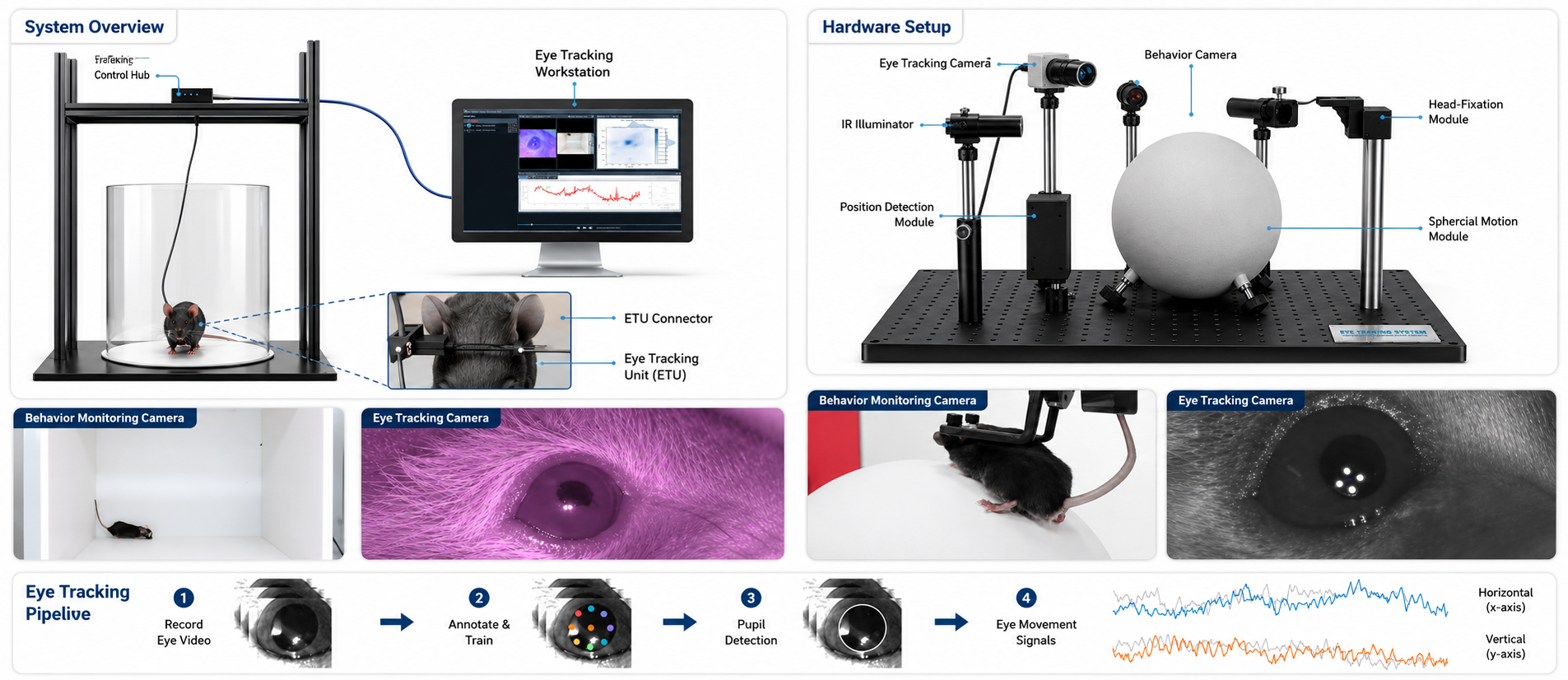
Mouse Eye-tracking System
Freely-moving and head-fixed eye-tracking research
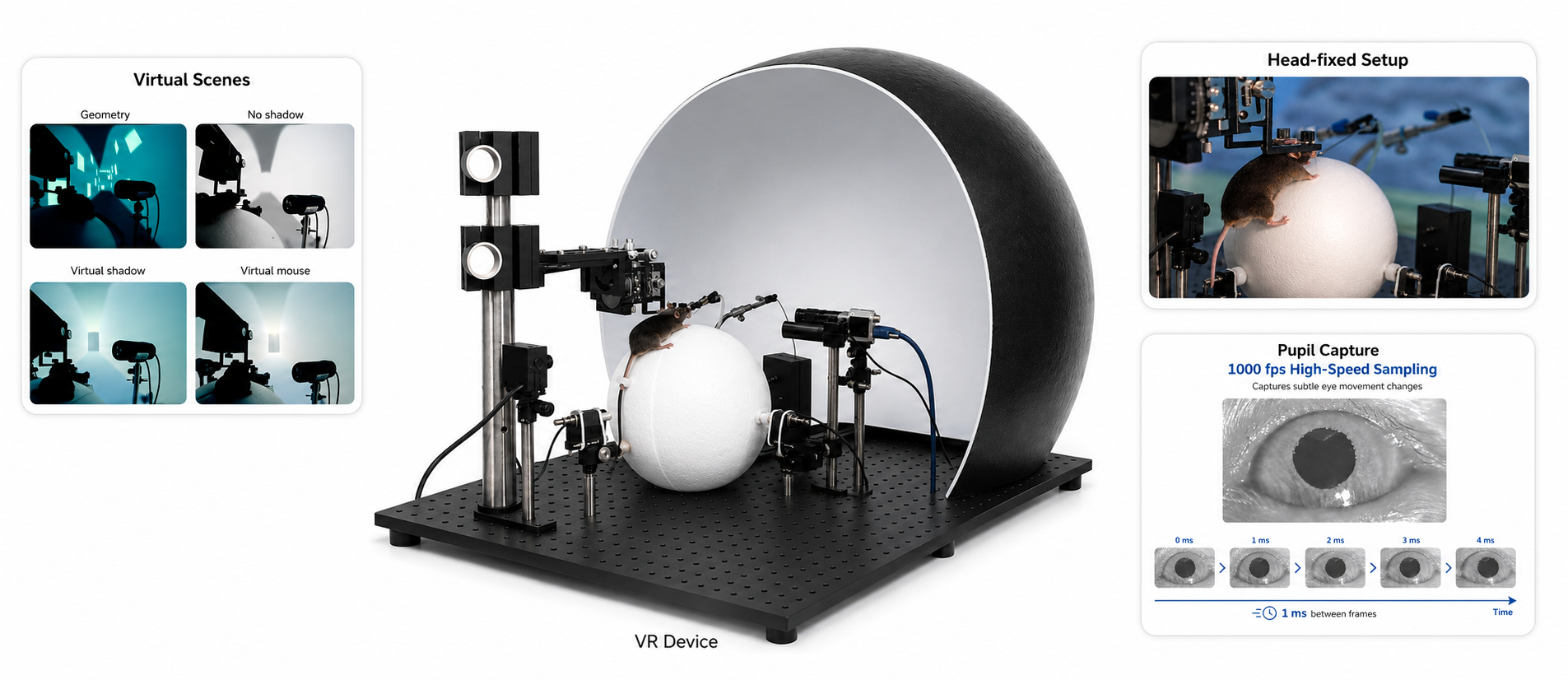
Small Animal Virtual Reality System
VR environment behavioral research
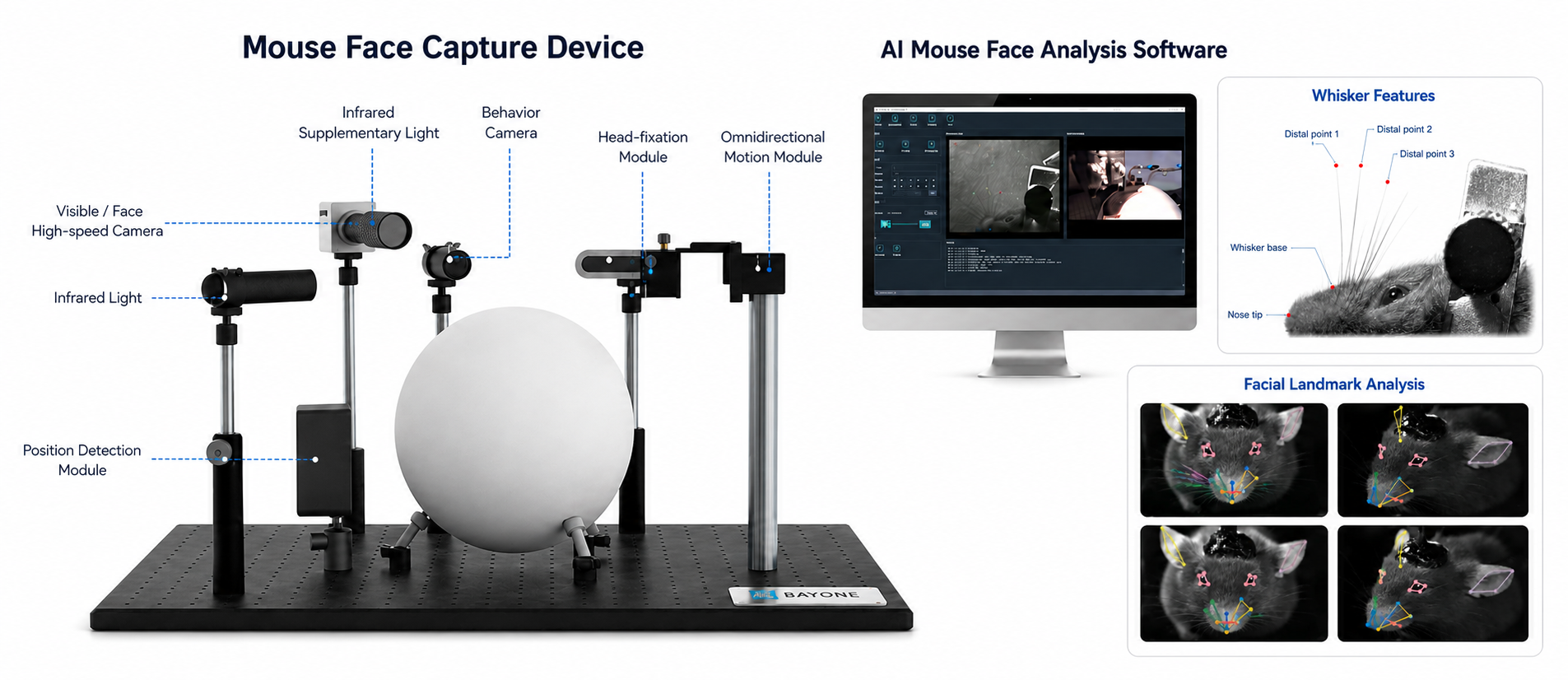
Mouse Pain & Emotion Analysis System
Pain and emotion behavior quantification