Modular capture platform
Multi-camera array, 4-axis arms, experiment modules, host PC, and calibration — reconfigured by paradigm.
- ≥6-camera array · ≥4-channel sync
- Auto / manual spatial calibration
- TTL 2-in / 2-out open I/O
BA-OmniLab
Eight paradigms keep their own apparatus and analysis — sharing one adjustable, switchable video-capture platform.
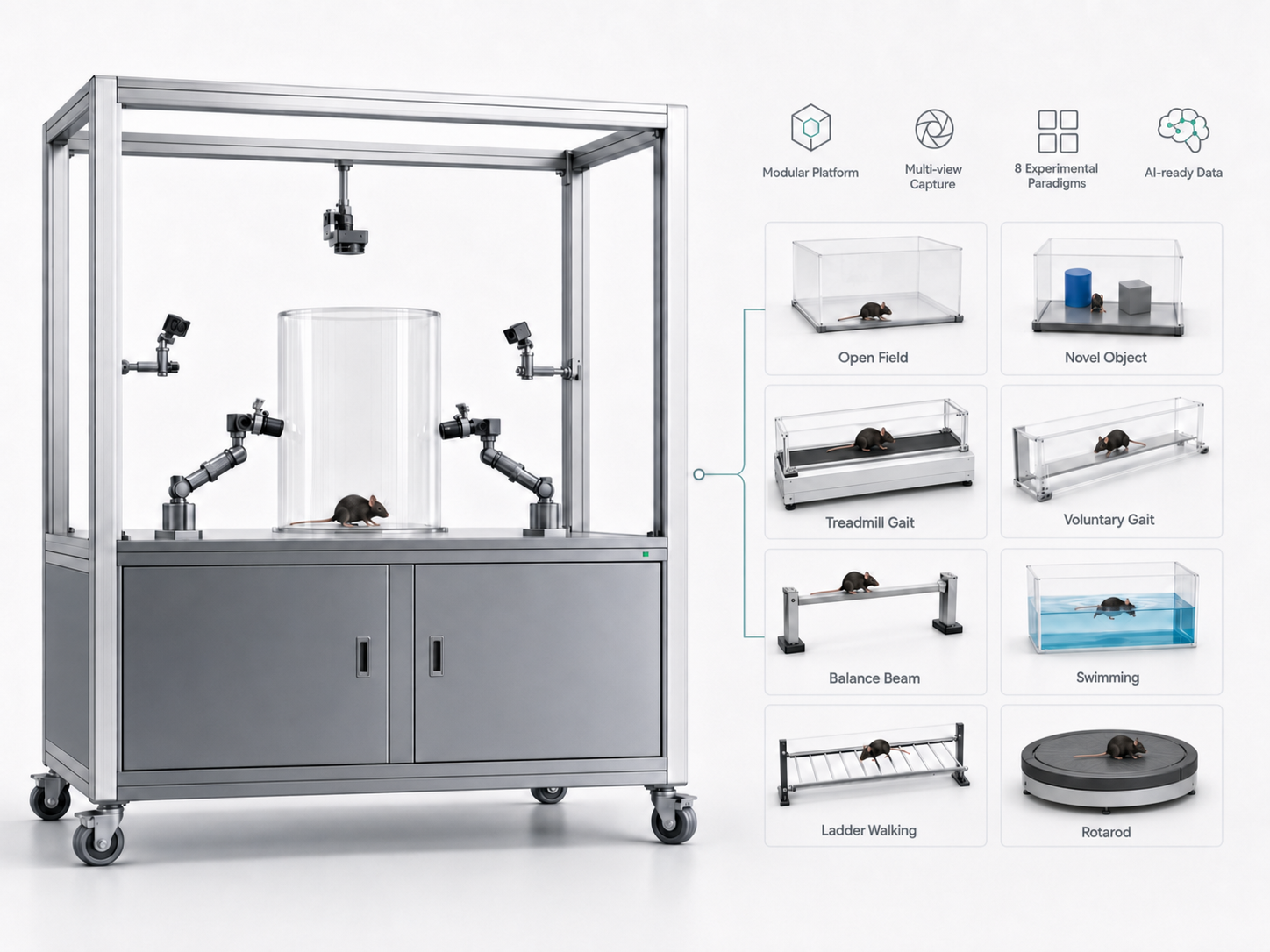
Shared capture infrastructure; each paradigm keeps its apparatus and software.
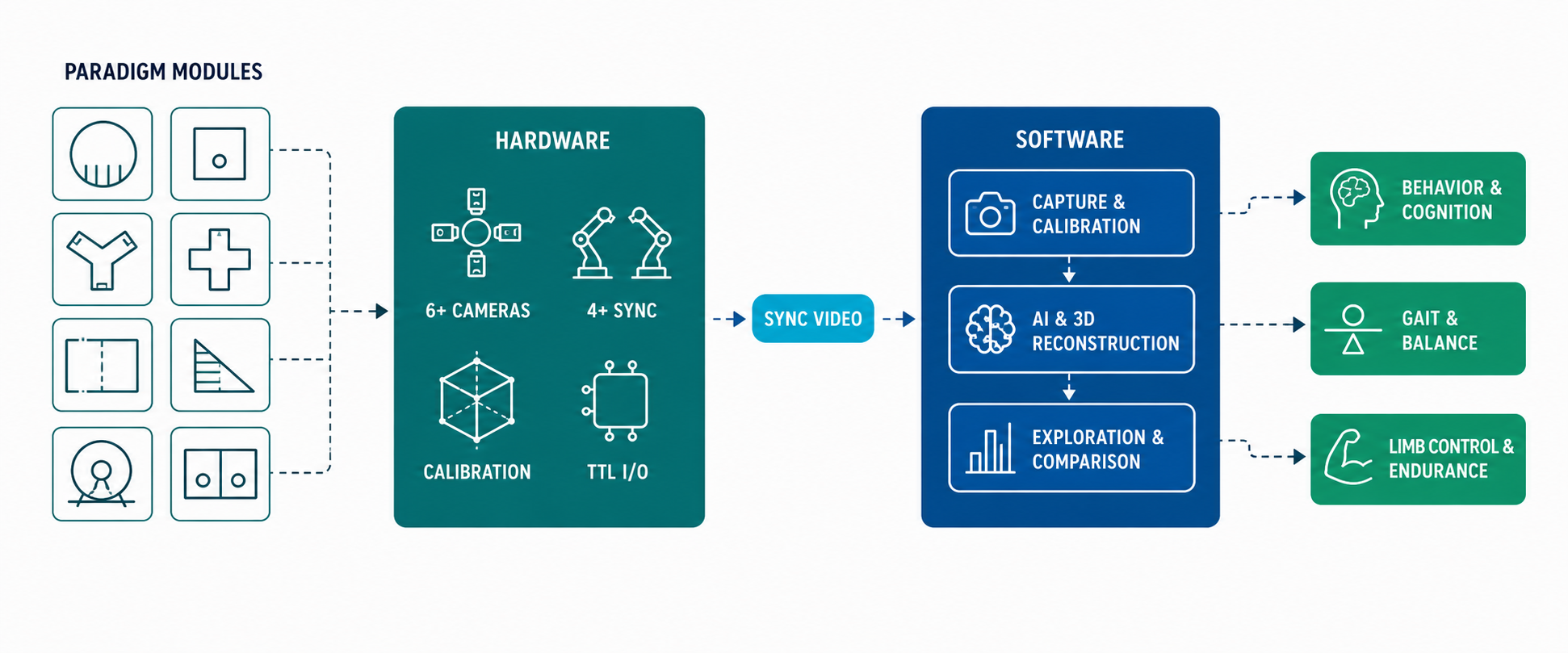 System overview
Multi-camera array, 4-axis arms, experiment modules, host PC, and calibration — reconfigured by paradigm.
Dedicated modules for each paradigm — focused, clear, easy to enable on demand and upgrade.
From locomotion and cognition to gait, balance, limb control, and endurance — multi-dimensional phenotypes.
Spontaneous activity, cognitive exploration, joint gait, balance, fine limb control, and endurance.
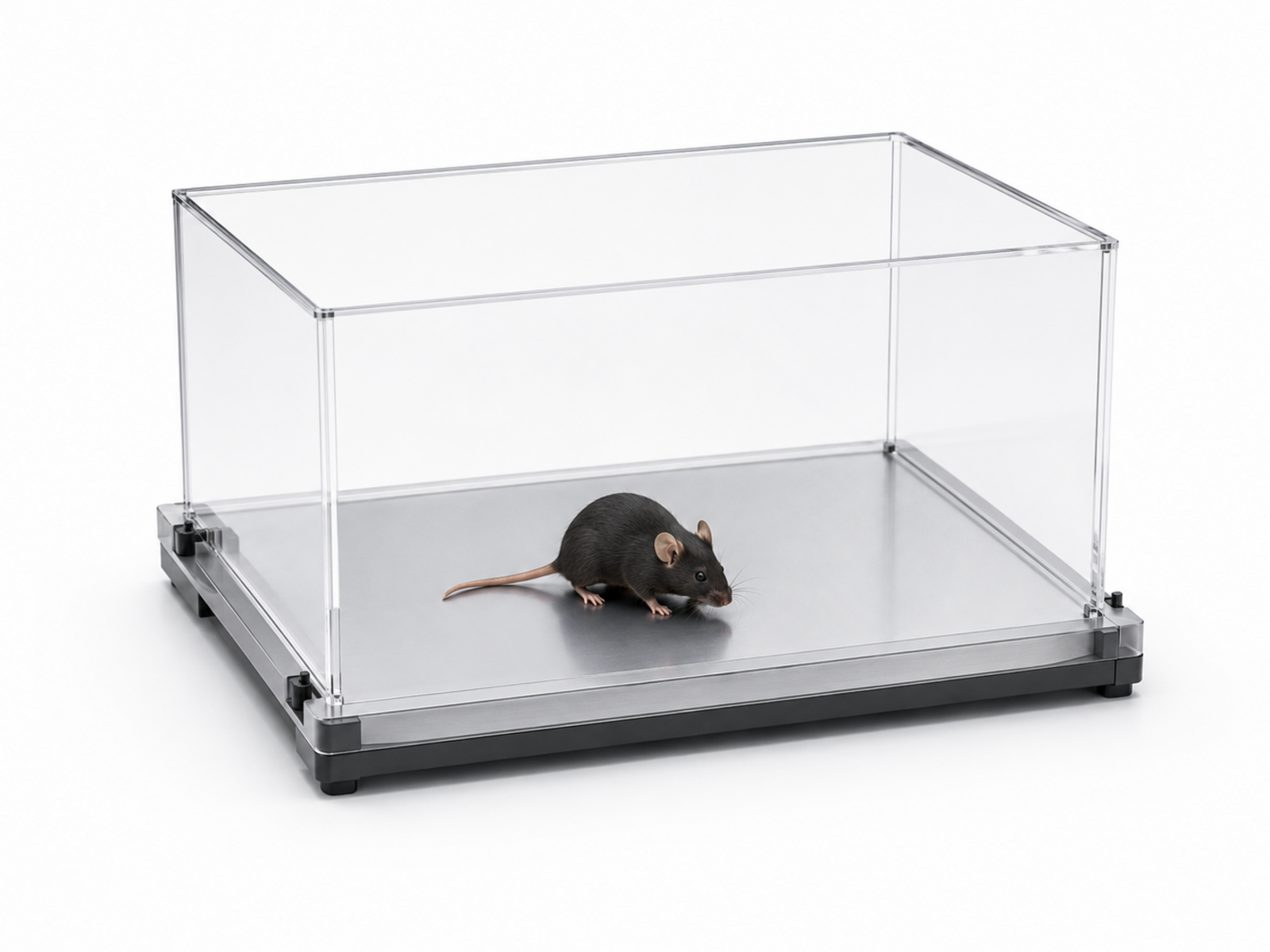
Locomotion, zone preference & fine behavior
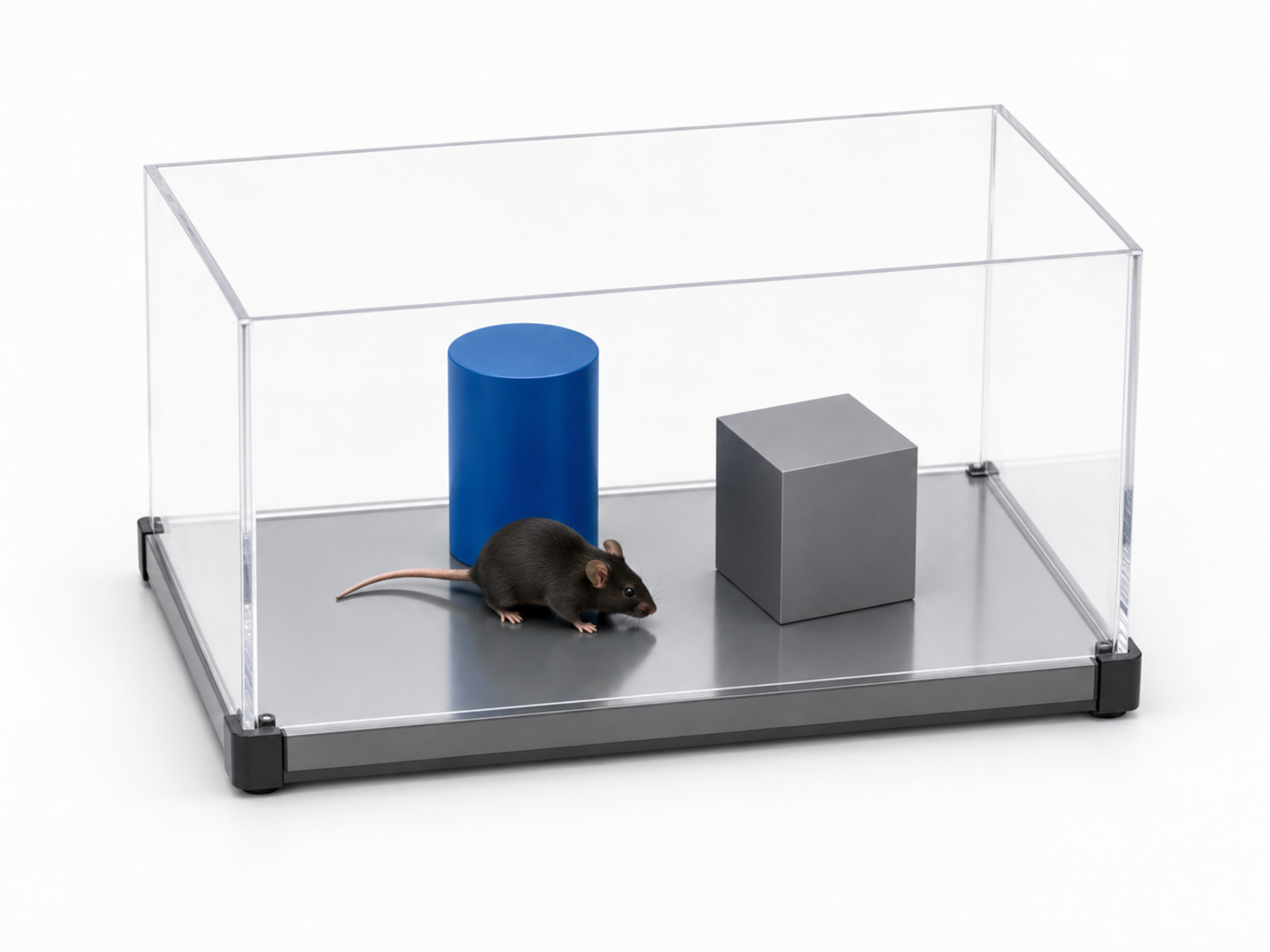
Contacts, approach path & dwell time
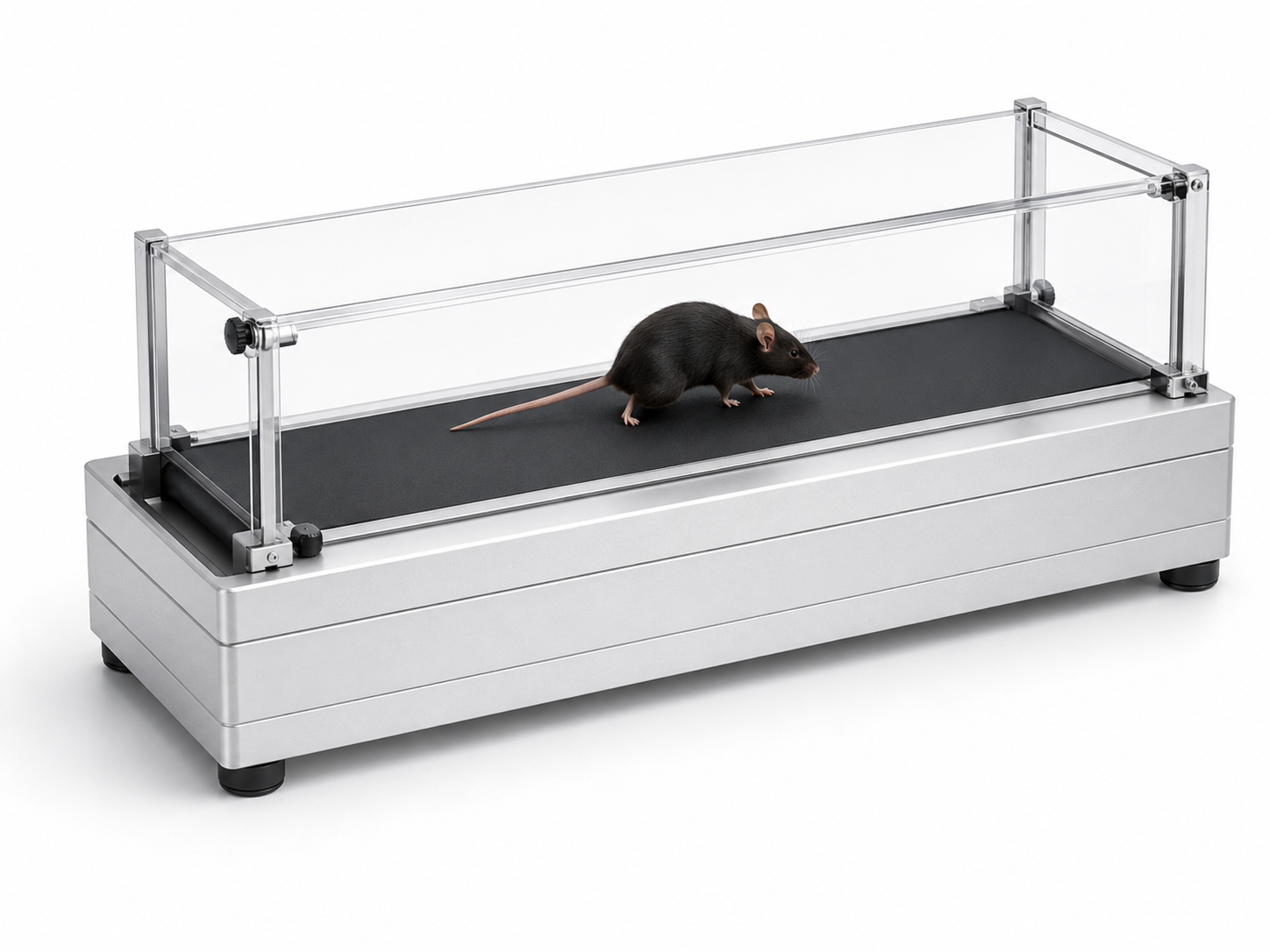
Stride, cadence & stance phase
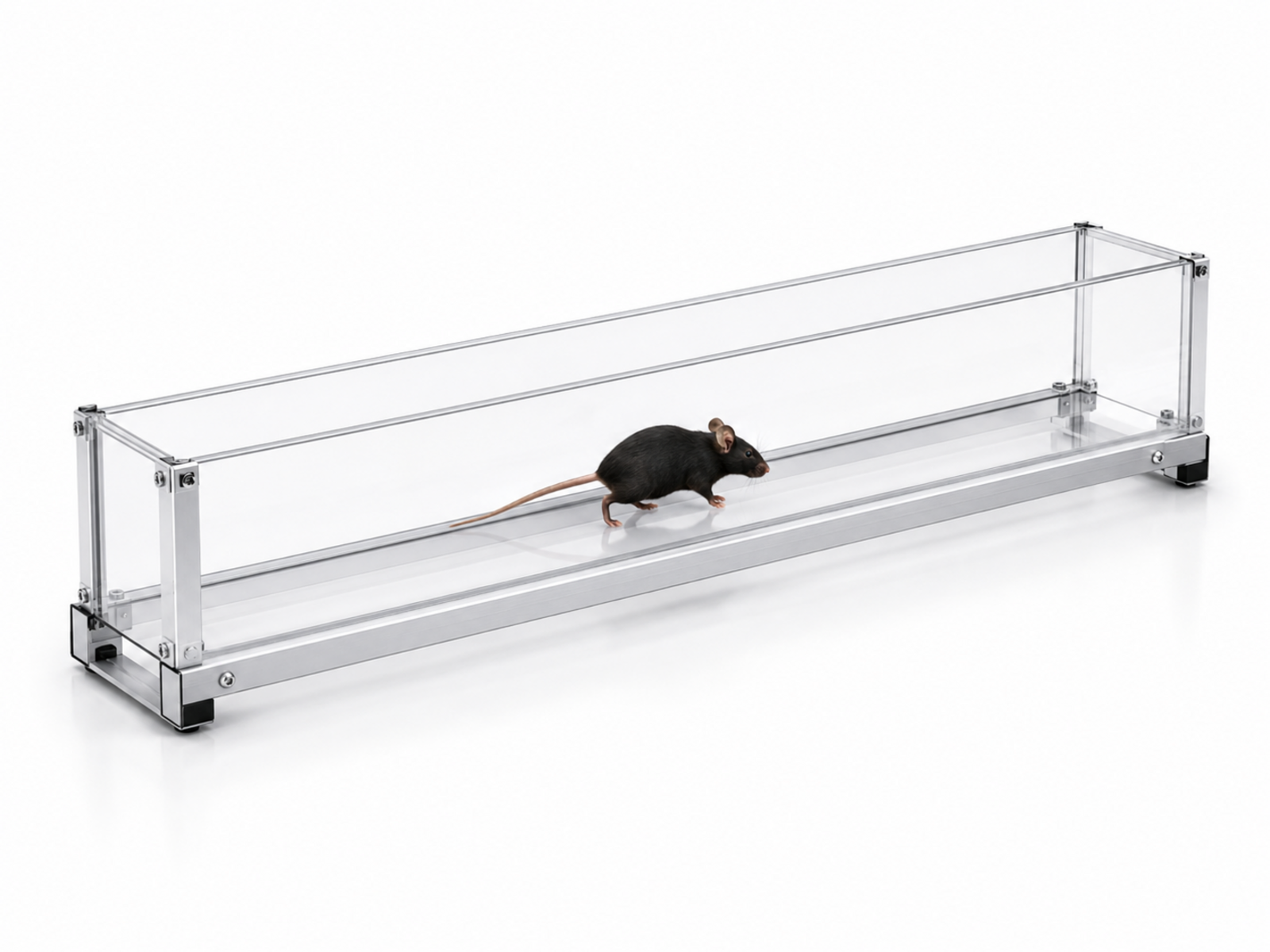
Symmetry, coordination & joint motion
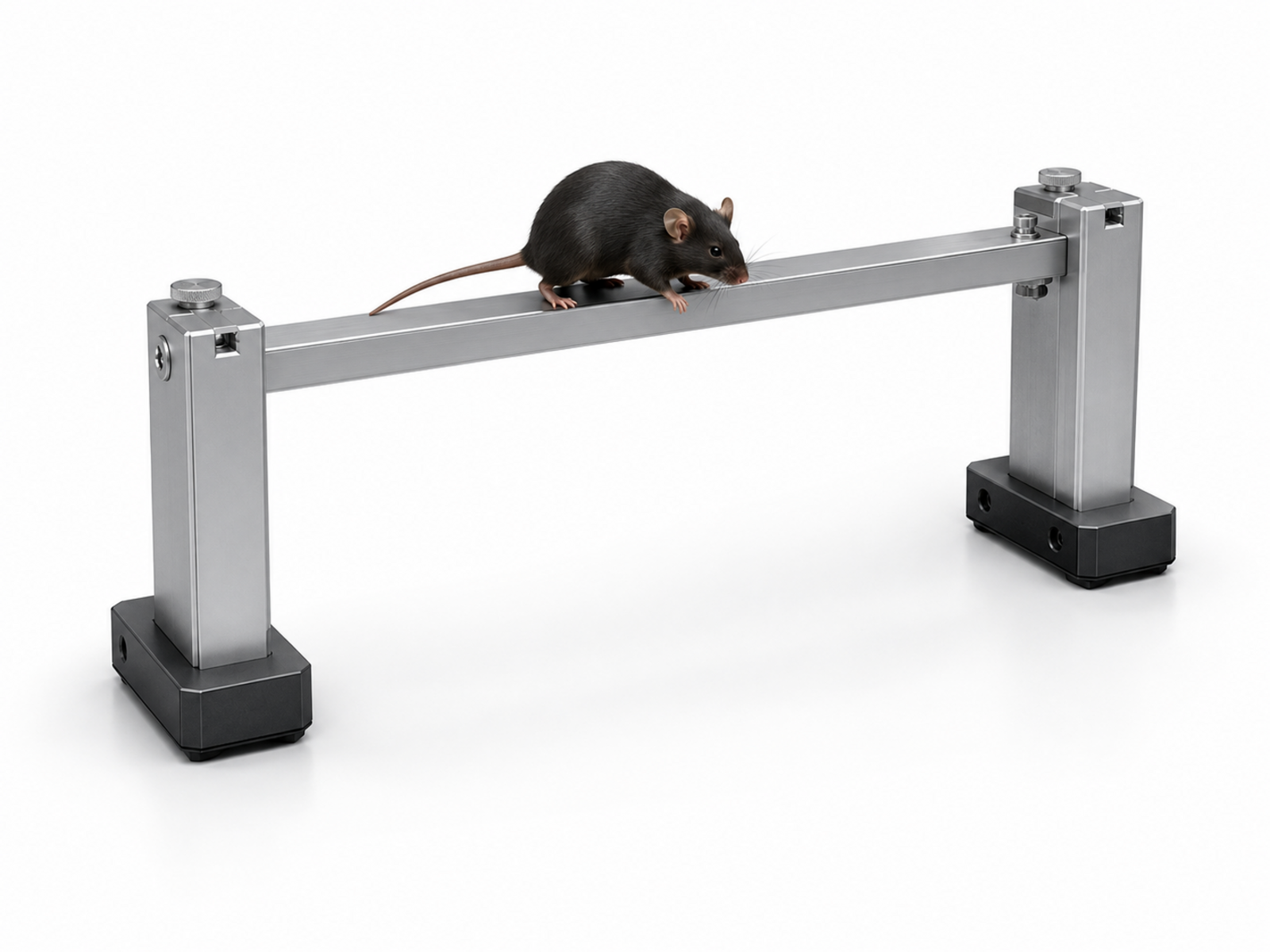
Falls, body tilt & transit time
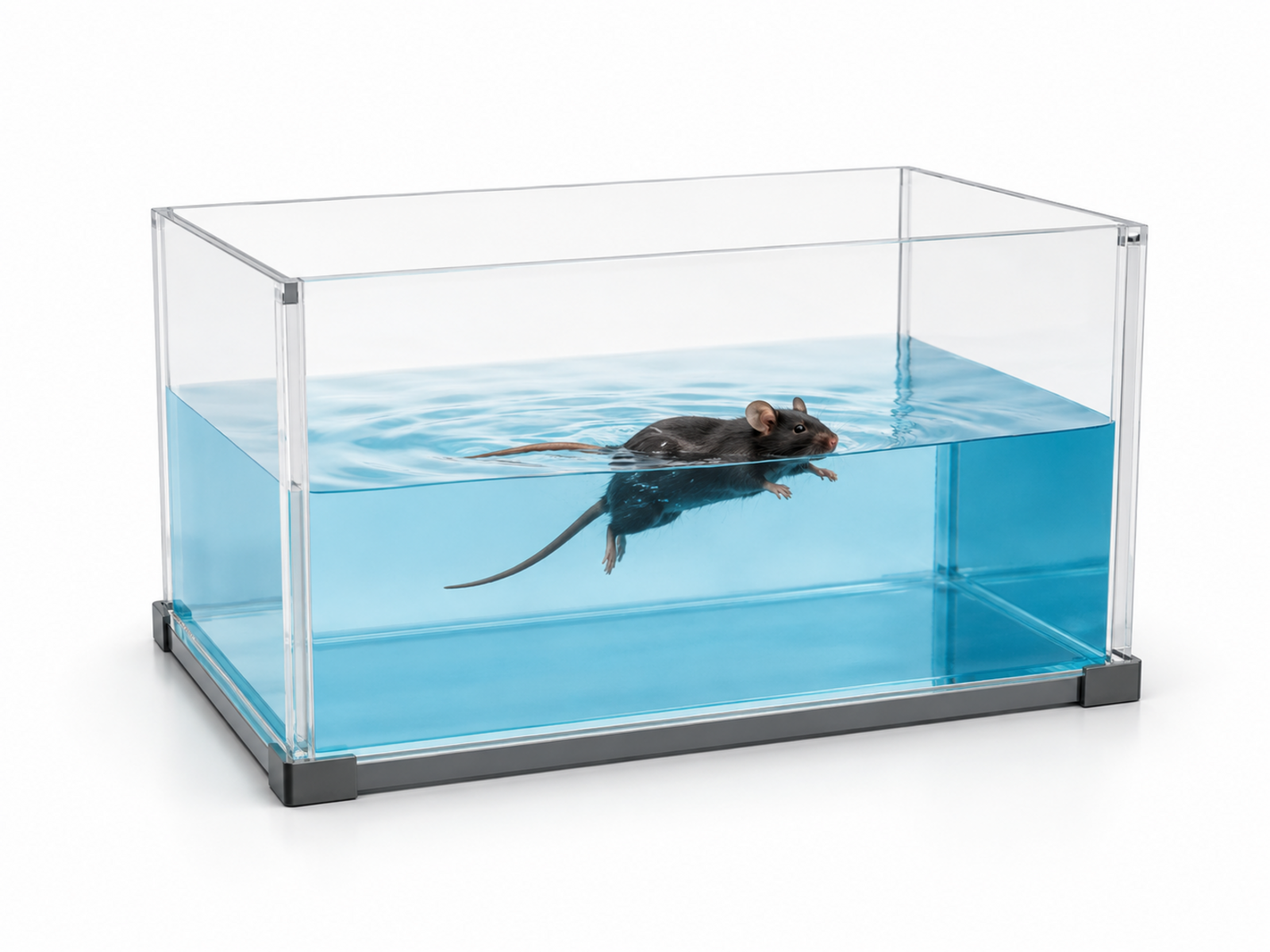
Stroke rate, float time & trajectory
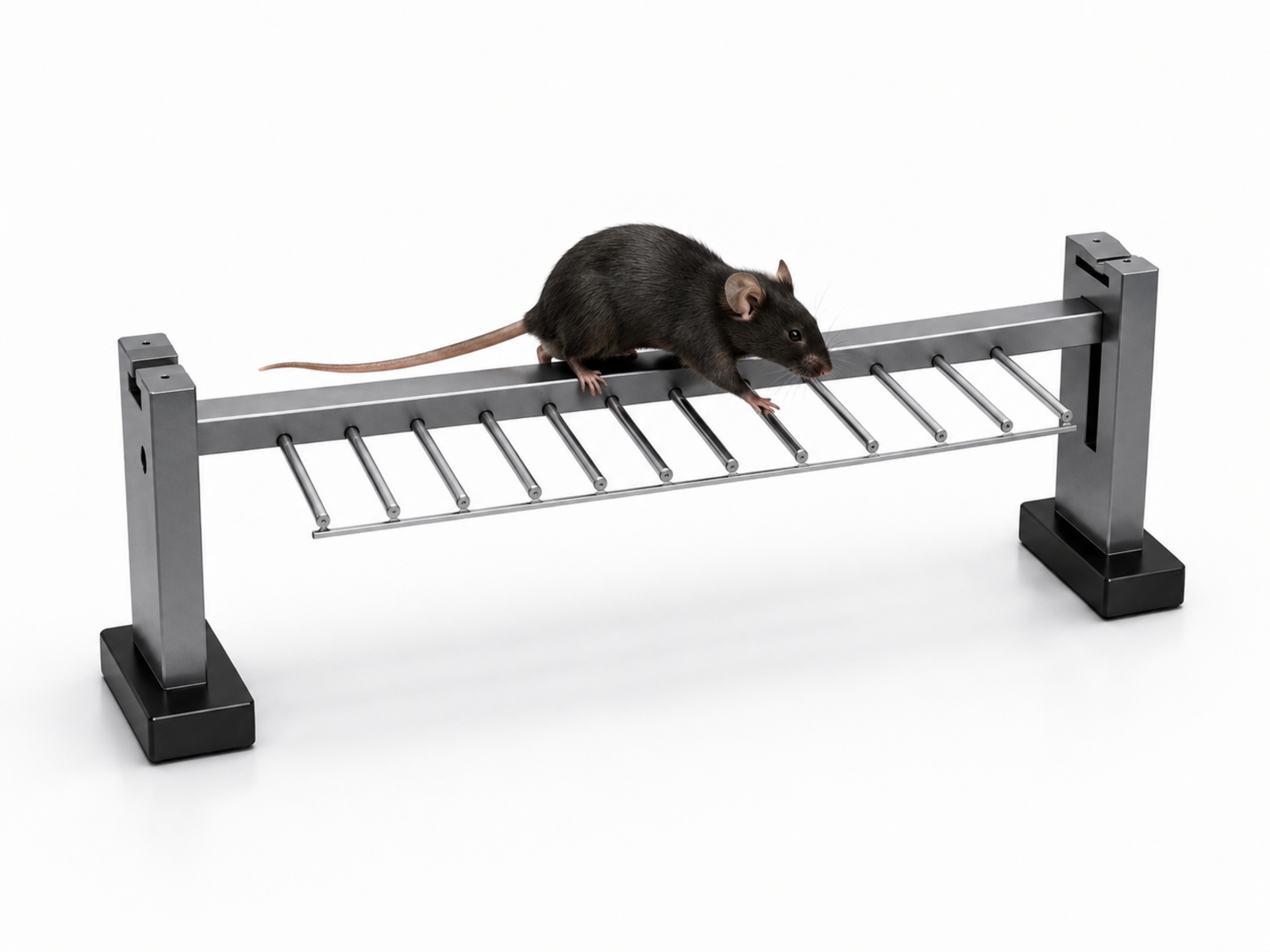
Limb coordination, footfalls & slips
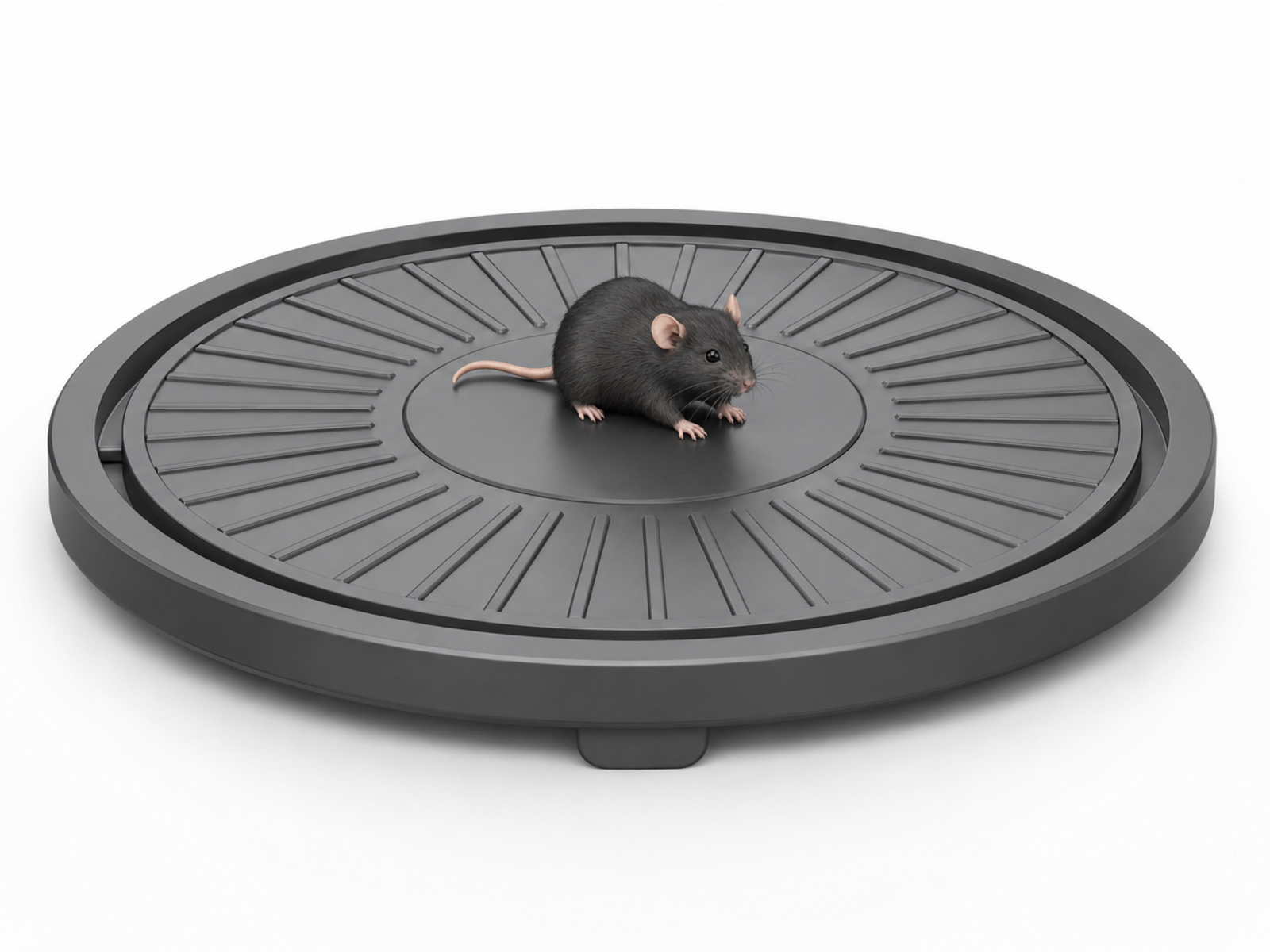
Endurance cycles & voluntary activity
Completeness, spatial precision, experiment efficiency, and cross-device sync — a repeatable standard workflow.
Capture cameras mount on 4-axis arms and move to each paradigm’s preset poses. Select a mode and reposition in one click — no remounting required.
≥6 cameras per scene; ≥4 sync to reduce occlusion and blind spots.
Track ≥16 keypoints with continuous xyz, velocity, and acceleration.
Call paradigm pose presets — on-arm capture cameras move into place, less manual tuning and remounting.
Robot auto-calibration or manual; reprojection error ≤1 px.
Adjustable resolution/FPS; single-cam up to 1080p / 120 fps.
2-in / 2-out TTL for ephys, optogenetics, and other devices.
Deploy, sync-capture, AI-process, and review for a fixed paradigm — ideal for controlled comparison and intervention studies.
Objective, fine, repeatable phenotypes for disease-mechanism research and drug evaluation.
Objective, fine, repeatable phenotypes for CNS disease models, intervention comparison, and translational research.
Bradykinesia, gait anomalies & fine behavior changes
↗Joint gait, balance & limb coordination recovery
↗Motor deficits, laterality & functional recovery
↗Activity, exploration, fine behavior & sequences
↗Multi-level phenotype comparison pre/post treatment
↗Behavior synced with ephys & optogenetics
↗Open design across hardware modules, paradigms, algorithms, and third-party sync for lasting research fit.
✓ Modular apparatus with quick swap
✓ Eight paradigms & dedicated metrics
✓ Markerless 3D tracking & fine behavior
✓ TTL third-party device linking
✓ Bilingual UI
→ More paradigms & module expansion
→ Online algorithm & plotting updates
→ Cross-lab data standard alignment
→ Batch throughput & automation
→ Broader third-party signal integration
Share your animal model, paradigms, and goals — get a tailored hardware, software, and analysis plan.
Paradigm setup · Analysis plan · Joint experiment design