MRI environment compatibility
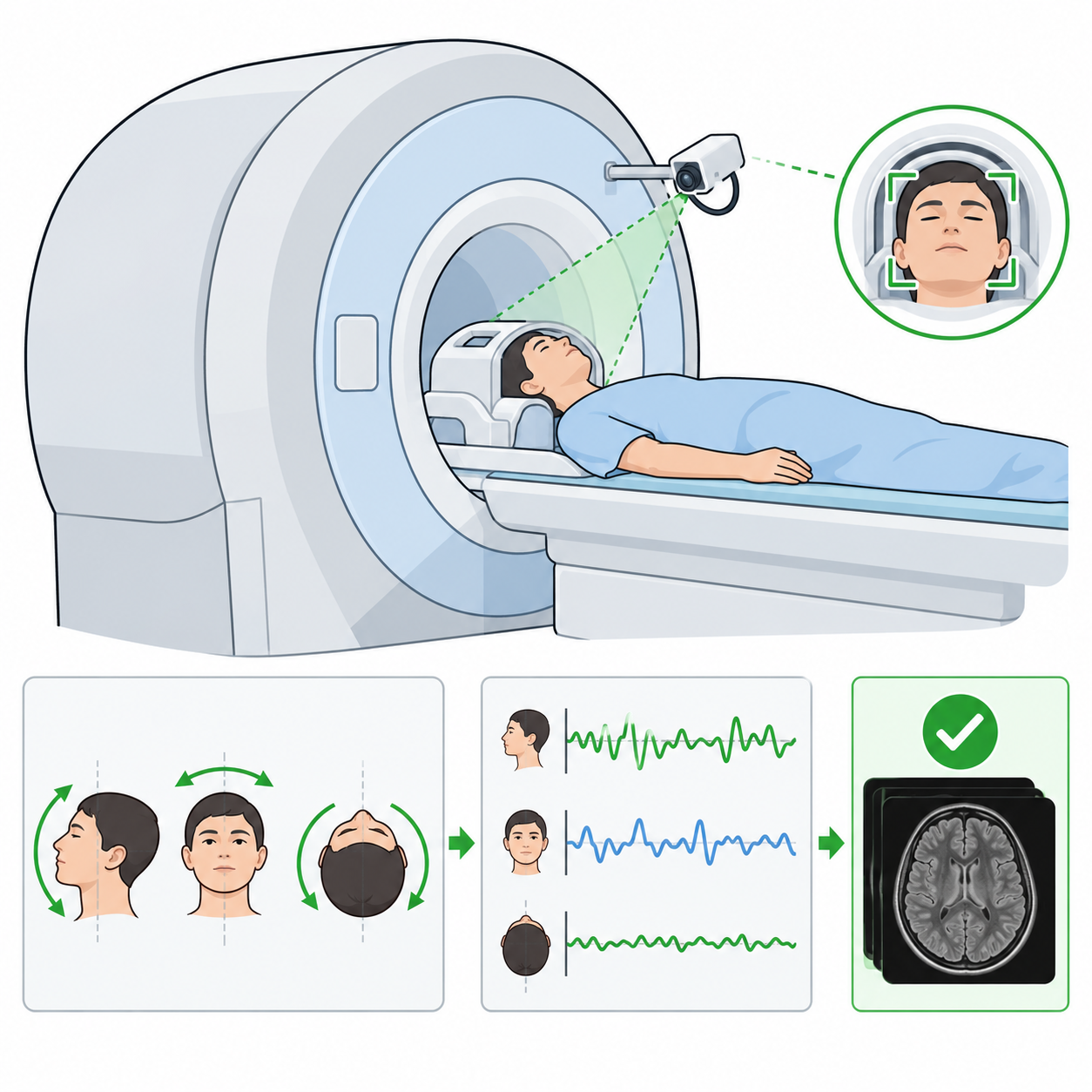
Hardware and algorithms optimized for bore lighting, occlusion, and subject positioning — stable capture throughout scans.
MRI Compatible
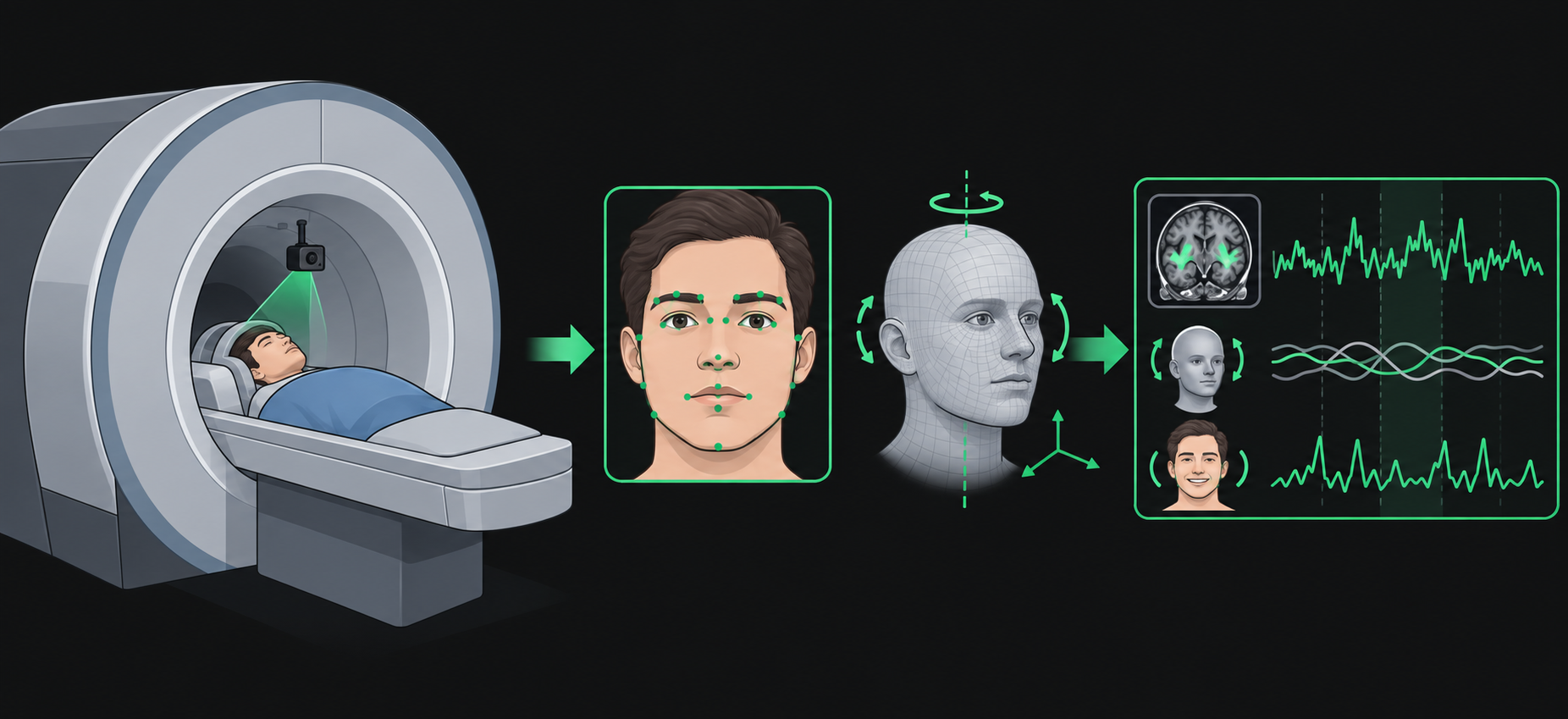
AI facial landmarks for head pose and expression — 3D digital-twin visualization for objective head-motion monitoring and emotion assessment during MRI scans.
CAPABILITIES
Designed for MRI scanning — markerless simultaneous quantification and visualization of head motion and facial expression.
Hardware and algorithms optimized for bore lighting, occlusion, and subject positioning — stable capture throughout scans.
Deep learning precisely locates facial keypoints — high-frame-rate, low-latency input for pose and expression analysis.
Maps head motion to a 3D digital model — intuitive angle and displacement trajectories for real-time QC decisions.
HEAD POSE
Facial-landmark-based head motion parameters — objective quantification of head movement during scans.
Head nod up/down rotation — anterior-posterior nodding motion.
Head tilt left/right — lateral roll motion capture.
Head turn left/right — lateral rotation during scanning.
3D translational displacement — macro head motion beyond angular thresholds.
Configurable angle and displacement thresholds with real-time alerts for scan QC.
Full-session head-motion time series — alignable with fMRI temporal data.
EXPRESSION RECOGNITION
Real-time facial expression recognition — behavioral readouts for emotion assessment and task-evoked response analysis.
Detects happiness, sadness, surprise, fear, anger, disgust, and intensity levels.
Captures expression onset, peak, and offset — parsing brief emotional fluctuations.
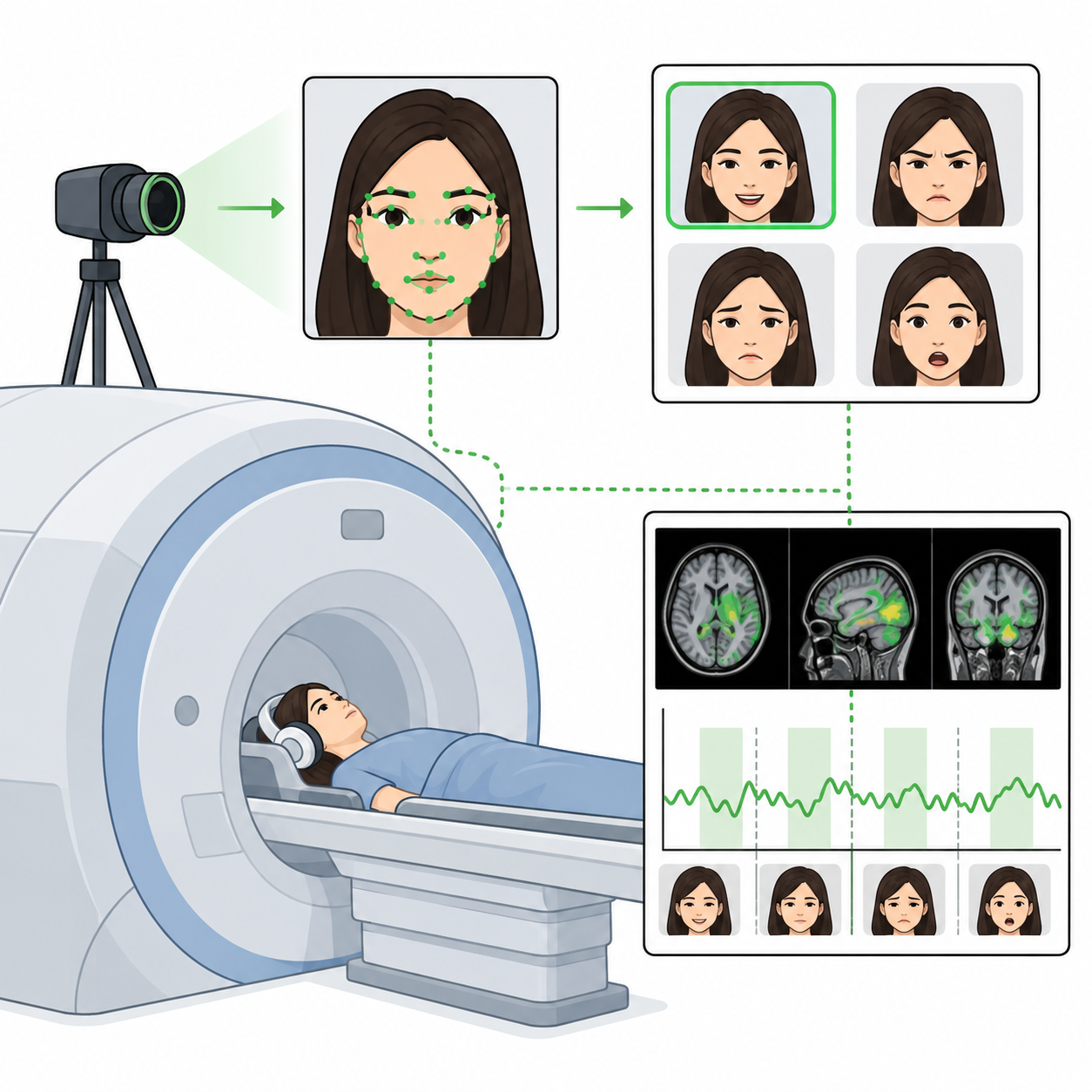
Links fMRI task blocks to expression changes — supporting emotion-processing mechanism research.
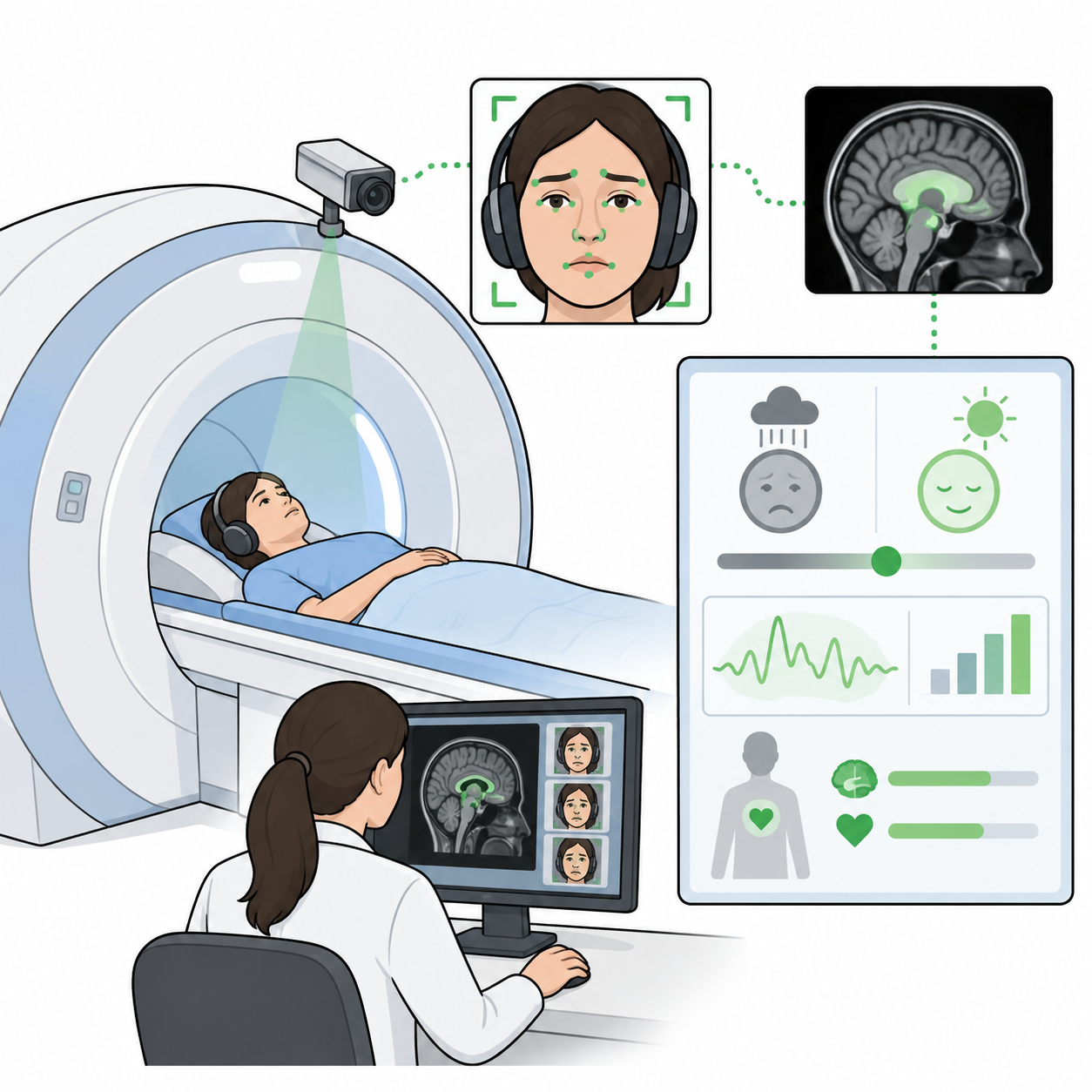
Subject expression baseline profiles improve cross-session emotion assessment comparability.
3D VISUALIZATION
3D digital twin transforms abstract motion parameters into intuitive 3D views — faster interpretation for researchers and operators.
Real-time sync of subject head pose to digital twin — multi-angle rotation views.
Post-scan replay of head motion and expression trajectories — QC and anomaly review.
Head motion/expression timeline aligned with scan sequences — joint analysis and reporting.
Unified dashboard for angles, displacement, expression, and alerts — instant operator decisions.
APPLICATIONS
Supporting neuroimaging experiment design, clinical psychology assessment, and MRI scan quality management.
Real-time head-motion monitoring reduces motion artifact risk and improves data usability.
Synchronized expression capture during fMRI tasks — emotion processing and regulation research.
Objective behavioral metrics for combined imaging-behavior assessment in anxiety, depression, and related disorders.
Reproducible behavioral measurement for motion regression and standardized QC workflows.
SPECIFICATIONS
Head pose and expression analysis solution for MRI scanning scenarios.
Contact us for bore deployment, QC threshold configuration, and fMRI joint analysis workflows.