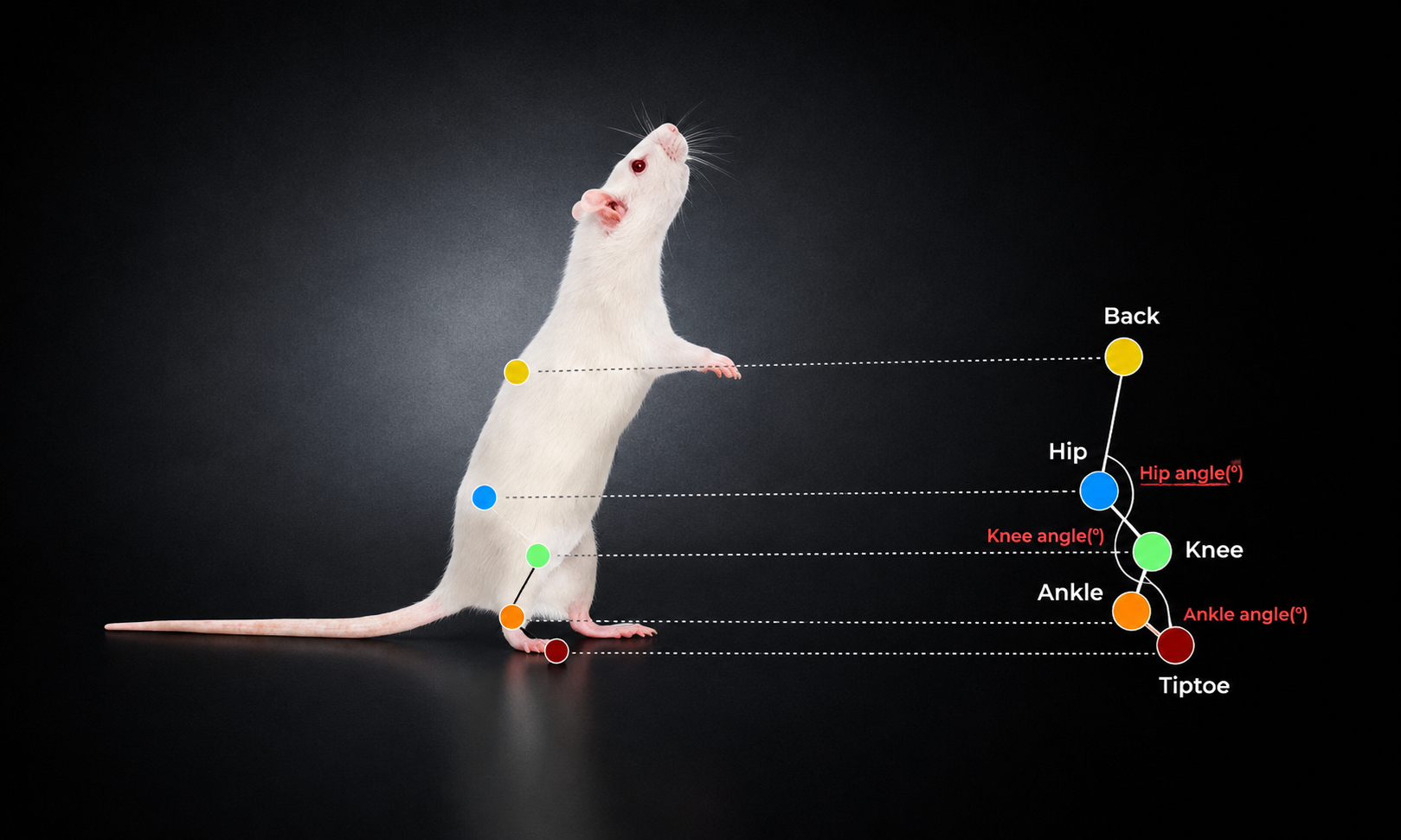
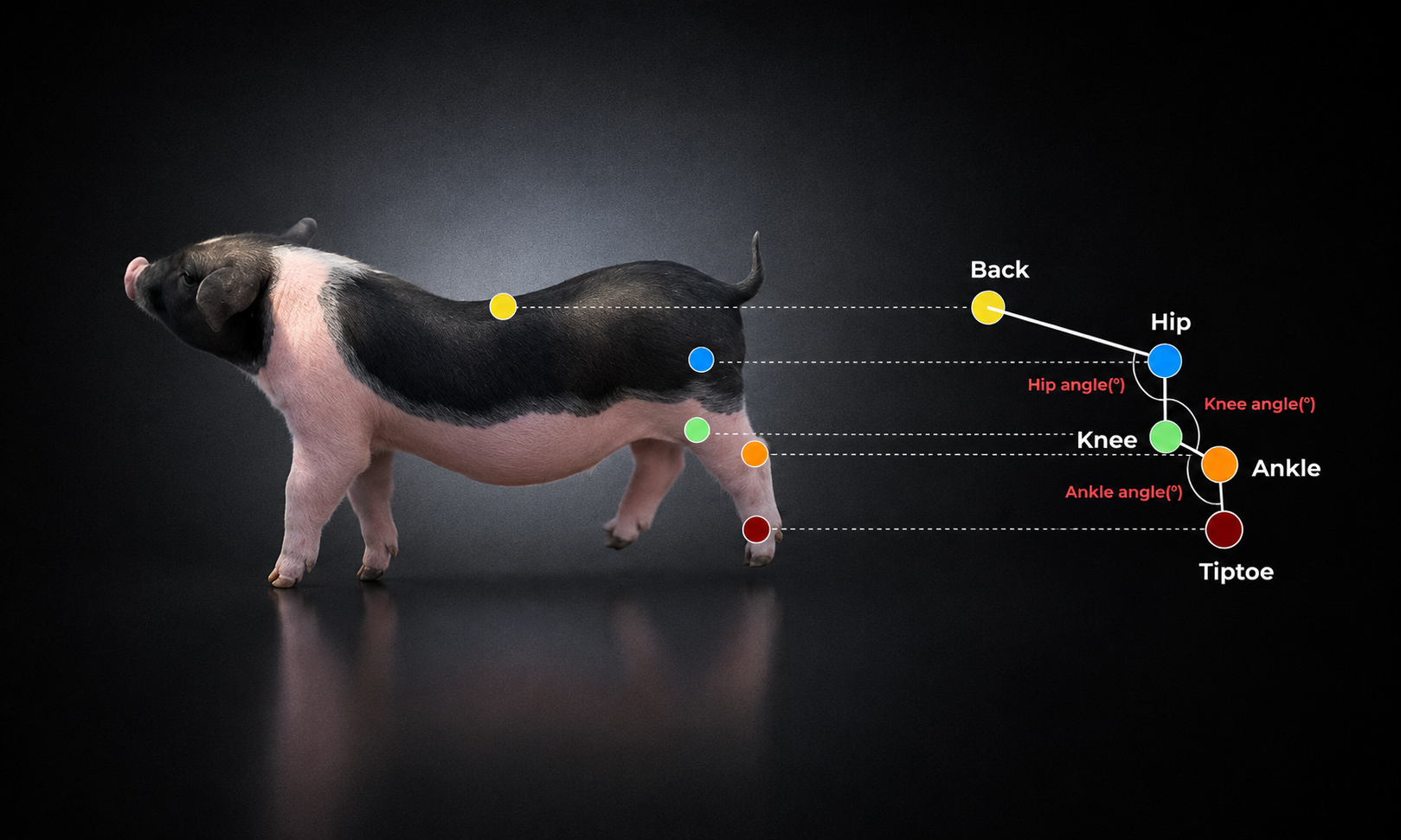
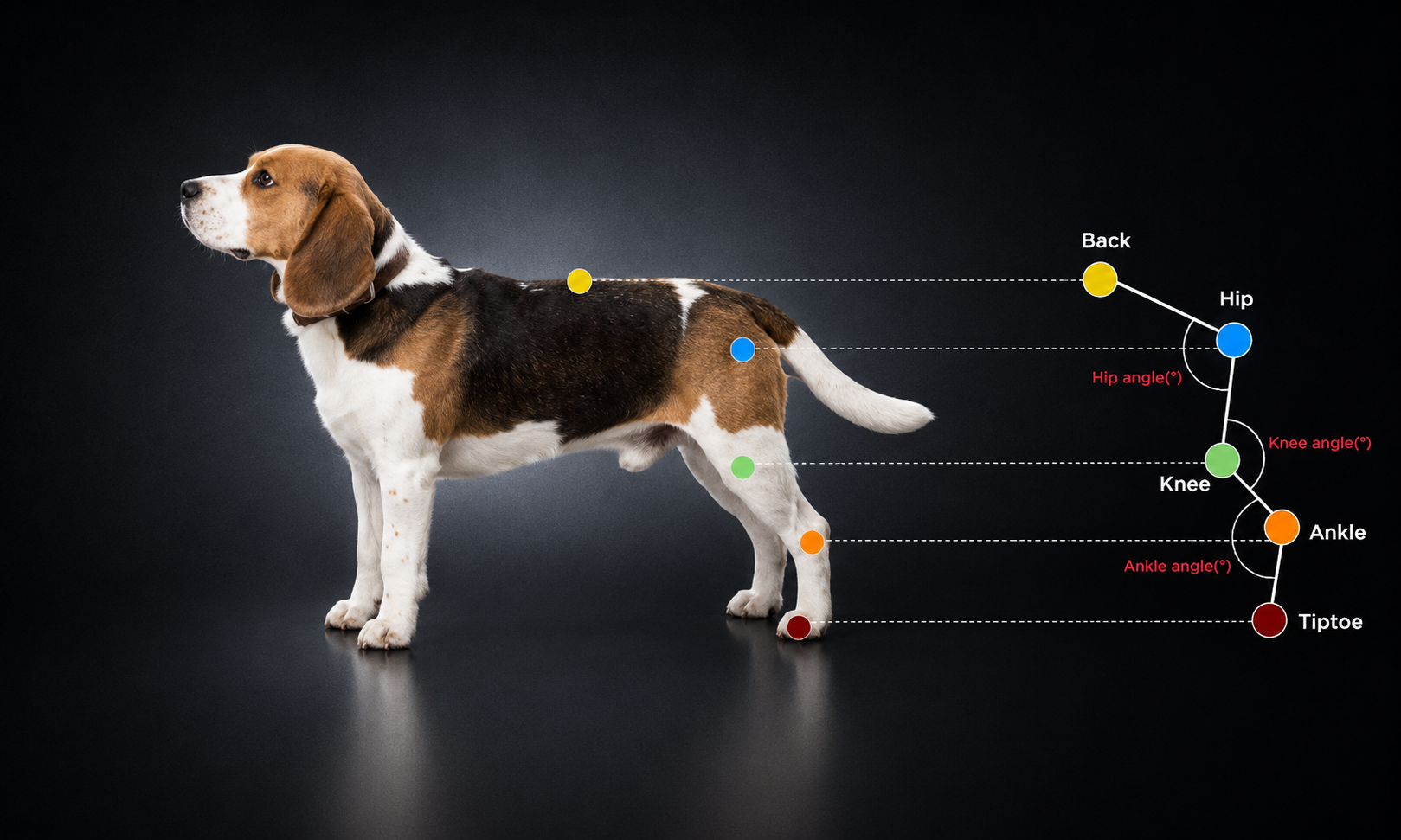
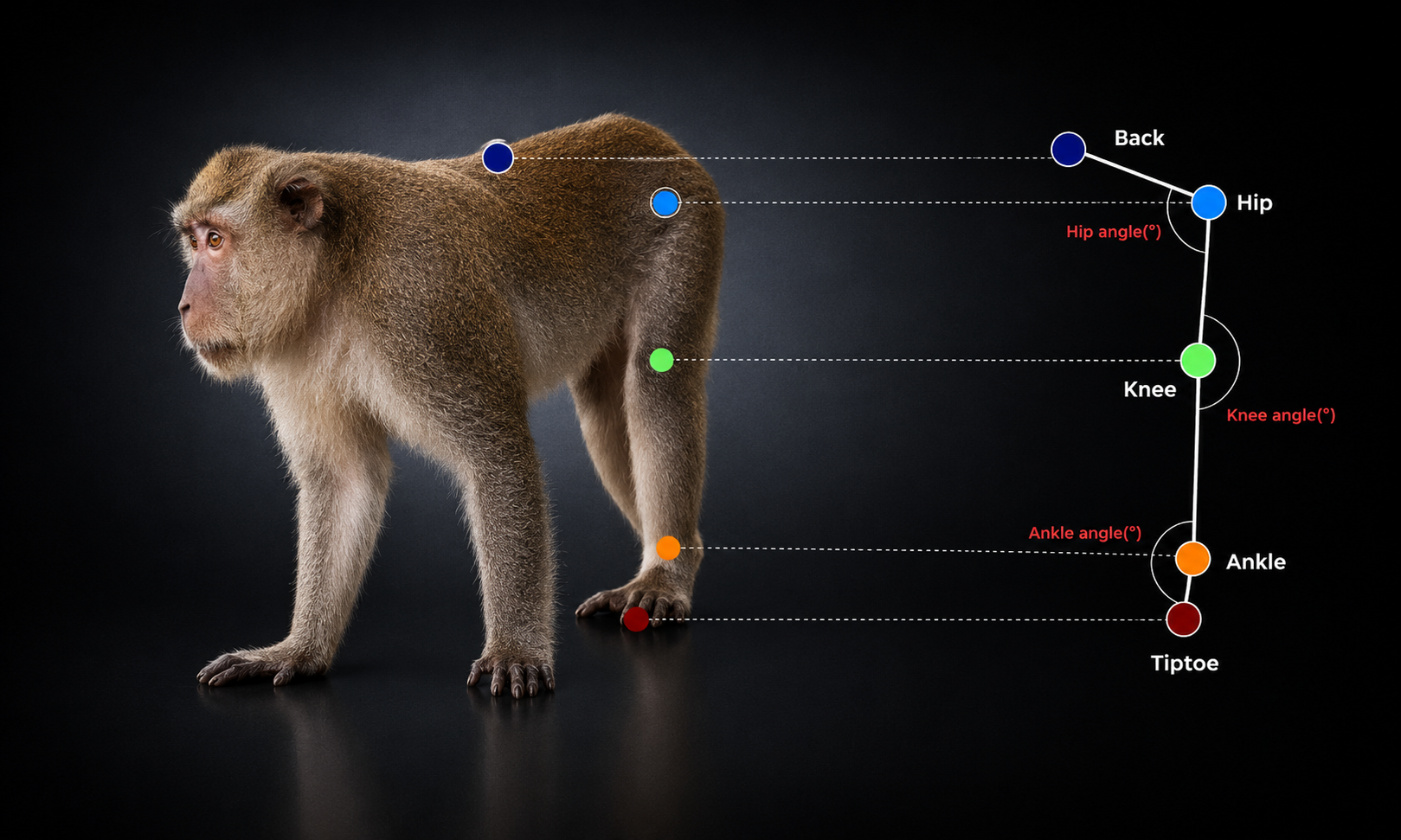
Precise, comprehensive motor data for orthopedic disease, sports injury, and neurological research (e.g. spinal cord injury).
Product Features
Designed for motor function research — multi-dimensional tracking and intelligent analysis.
Multi-View
Multi-View Video Capture
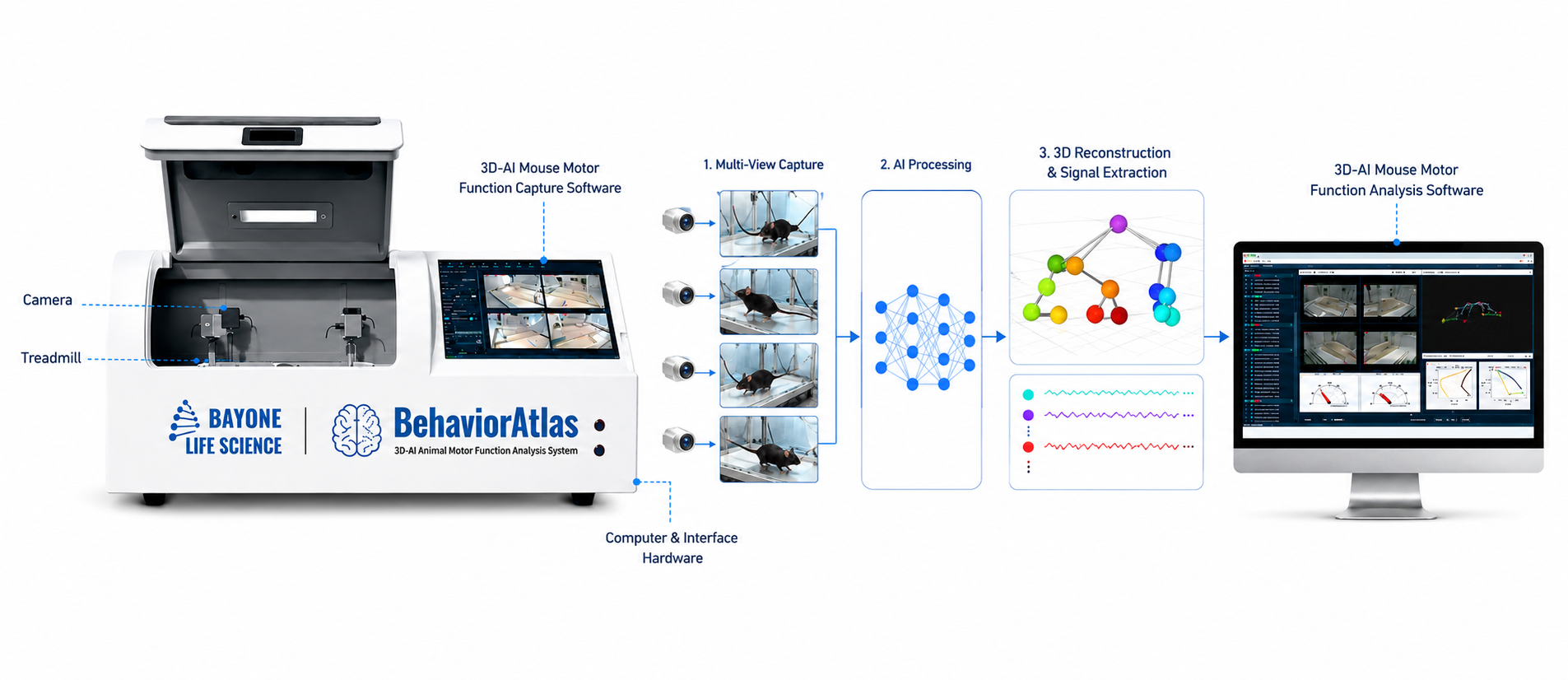
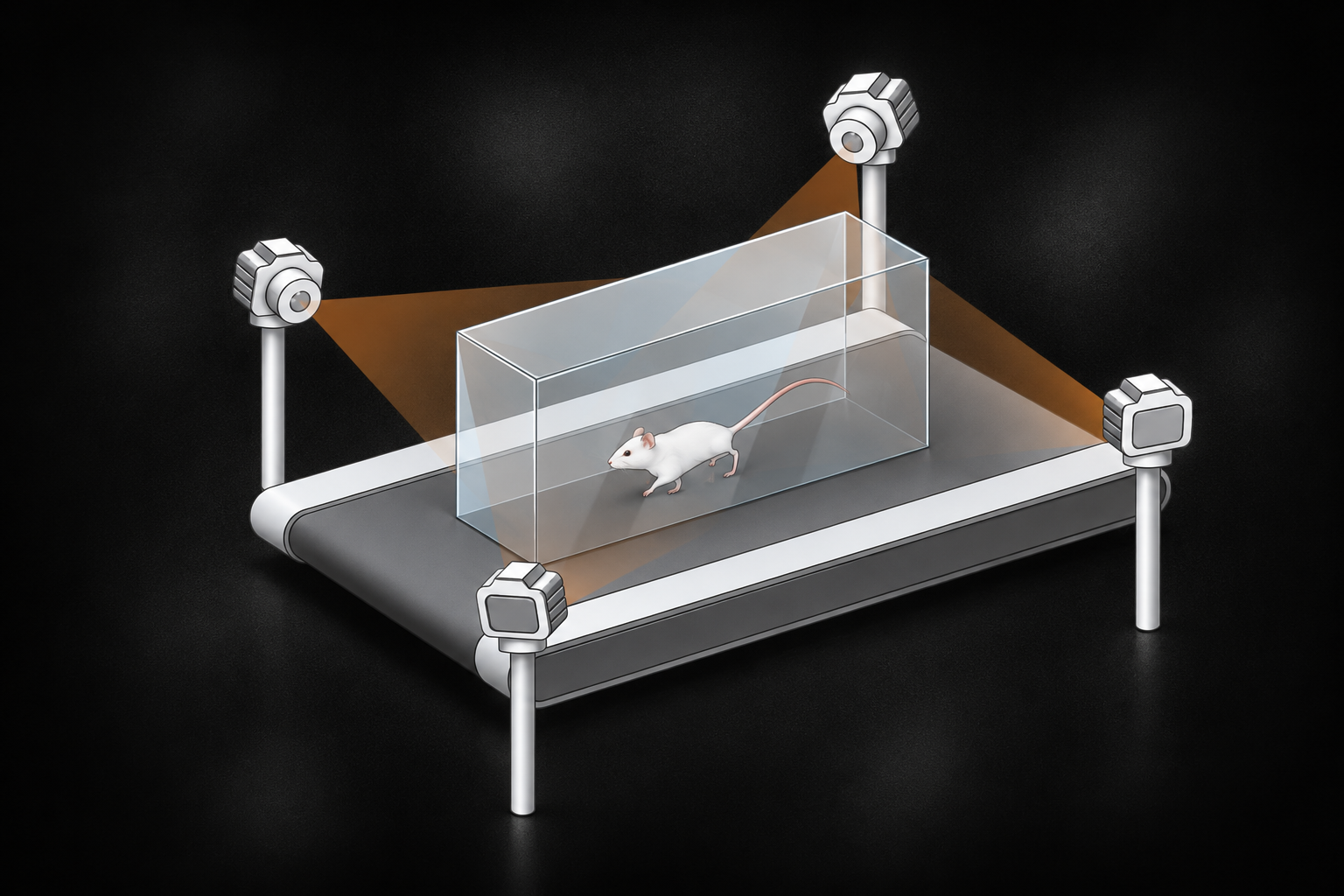
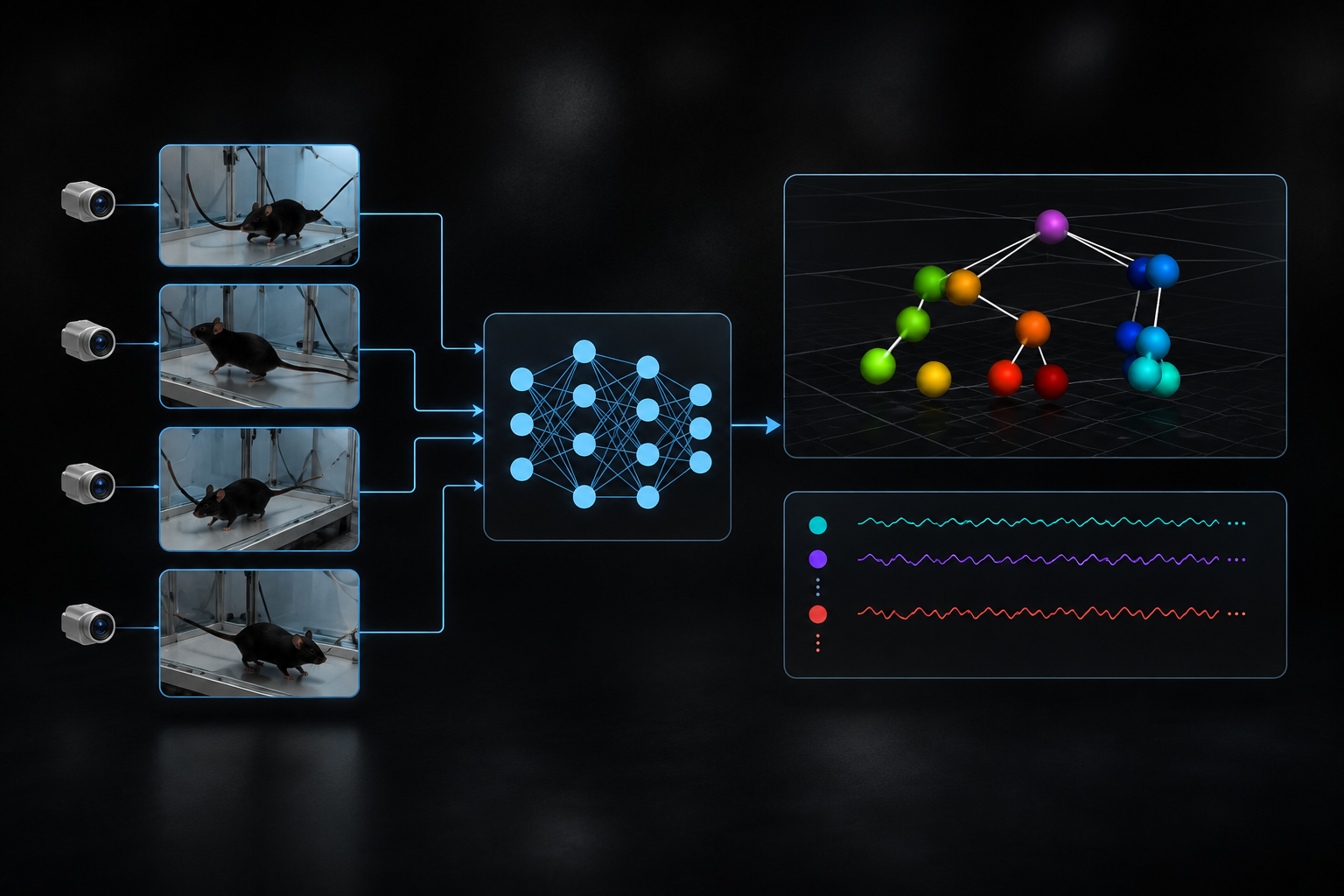
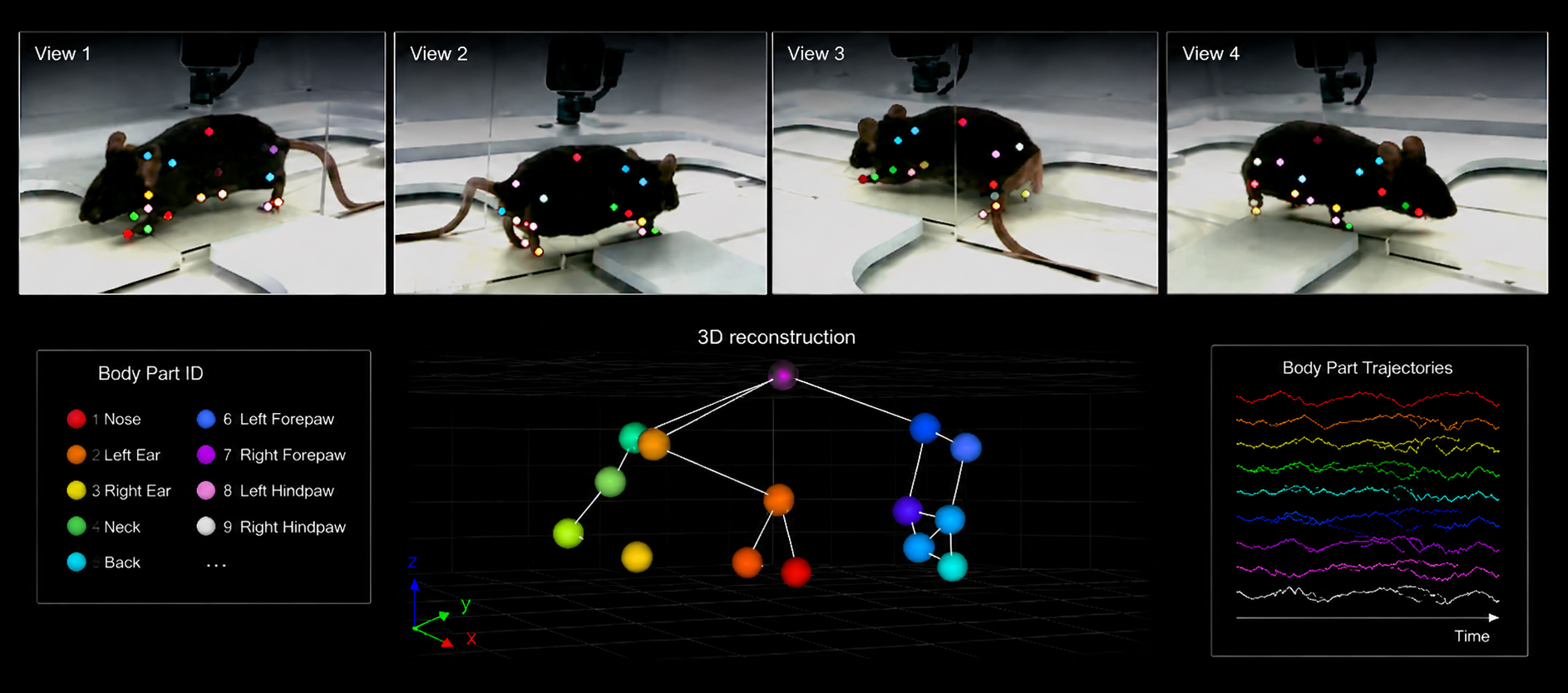
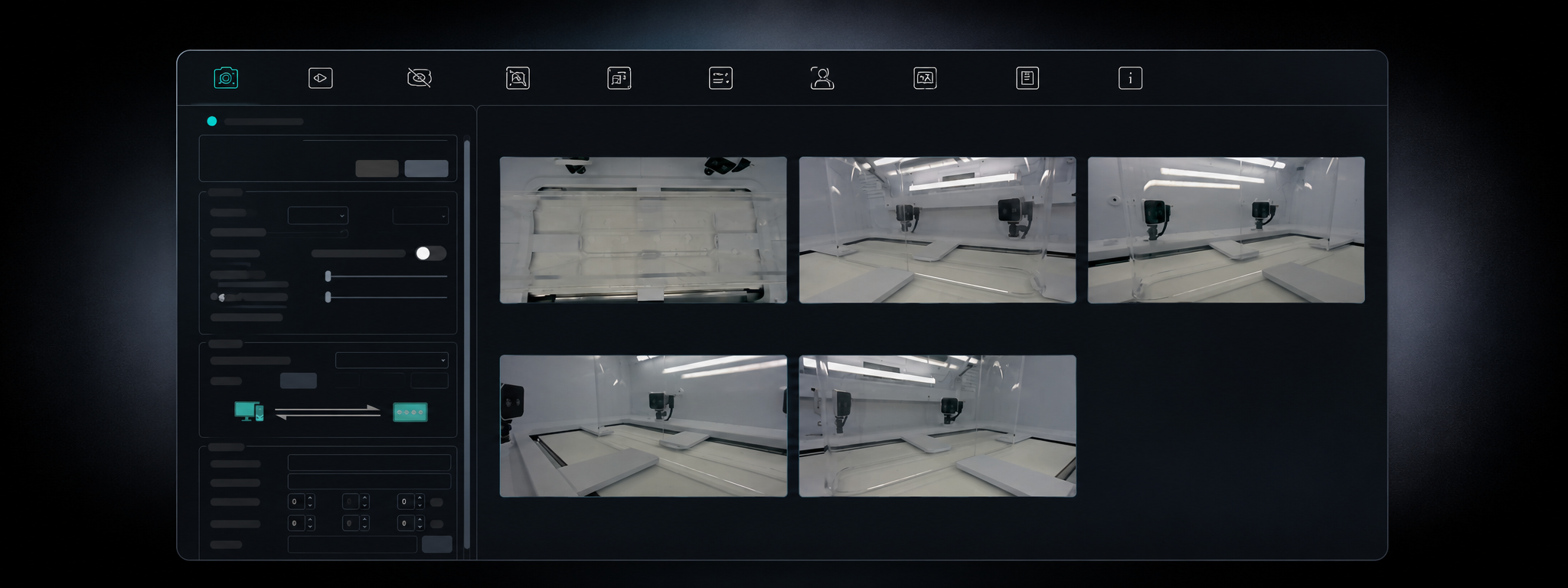
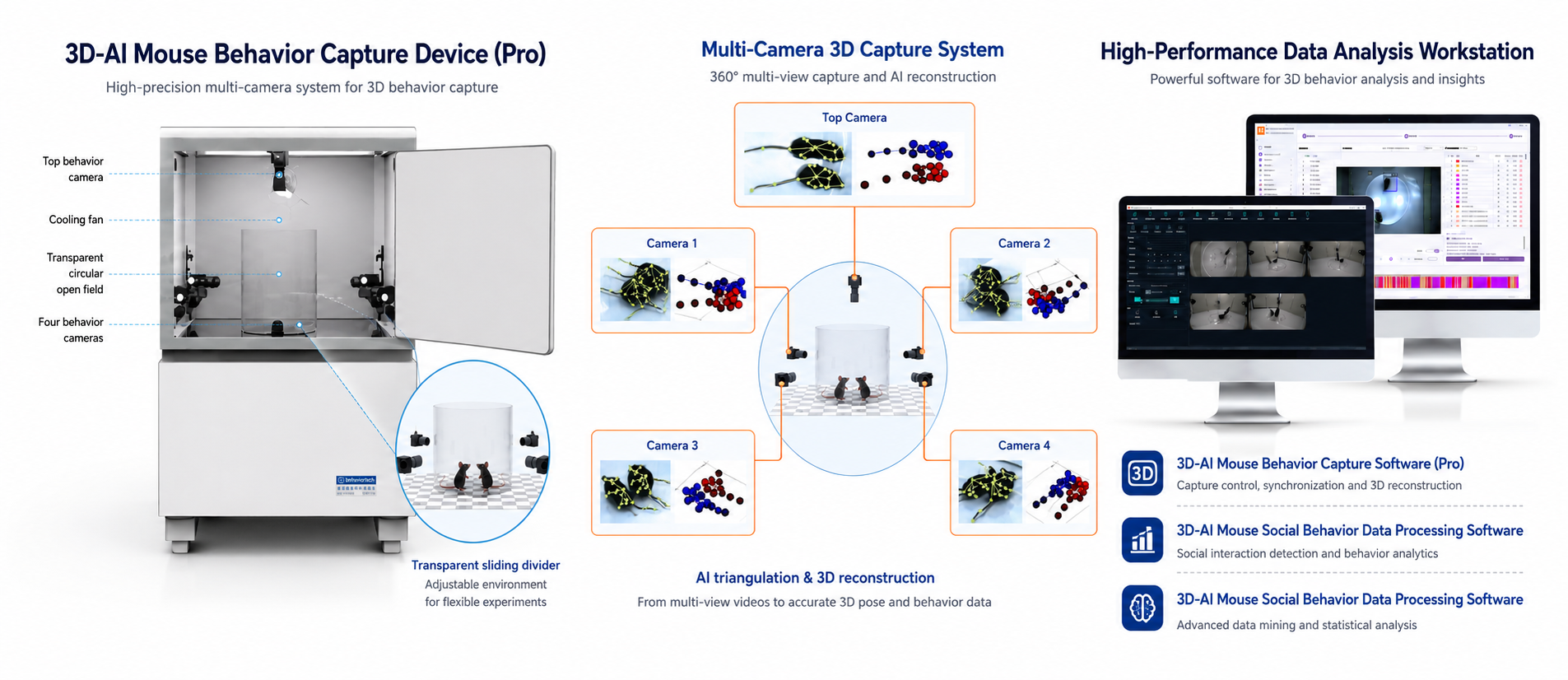
Full-view video capture using multi-view synchronized recording and stereo camera calibration, obtaining comprehensive locomotor parameters without blind spots.
Non-Invasive
Markerless
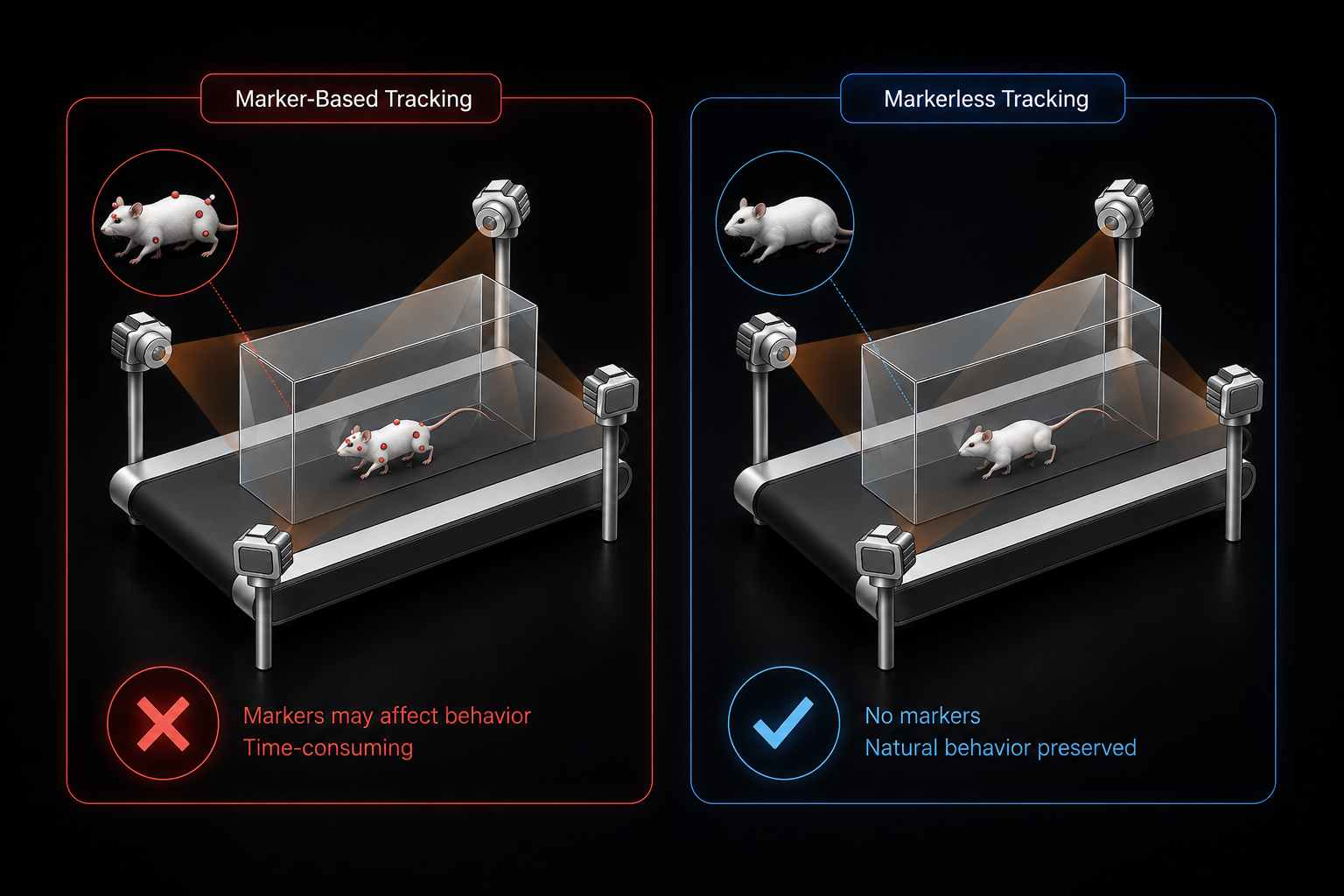
No physical markers or dye required; does not interfere with natural behavior, simplifying experiments.
Precision
Intelligent Precision 3D-AI Technology
Deep learning detects body keypoints, fuses multi-view 2D coordinates to reconstruct 3D joint positions, and precisely extracts 3D trajectories for 17+ bodypoints.
Easy to Use
Simple, Intuitive Operation
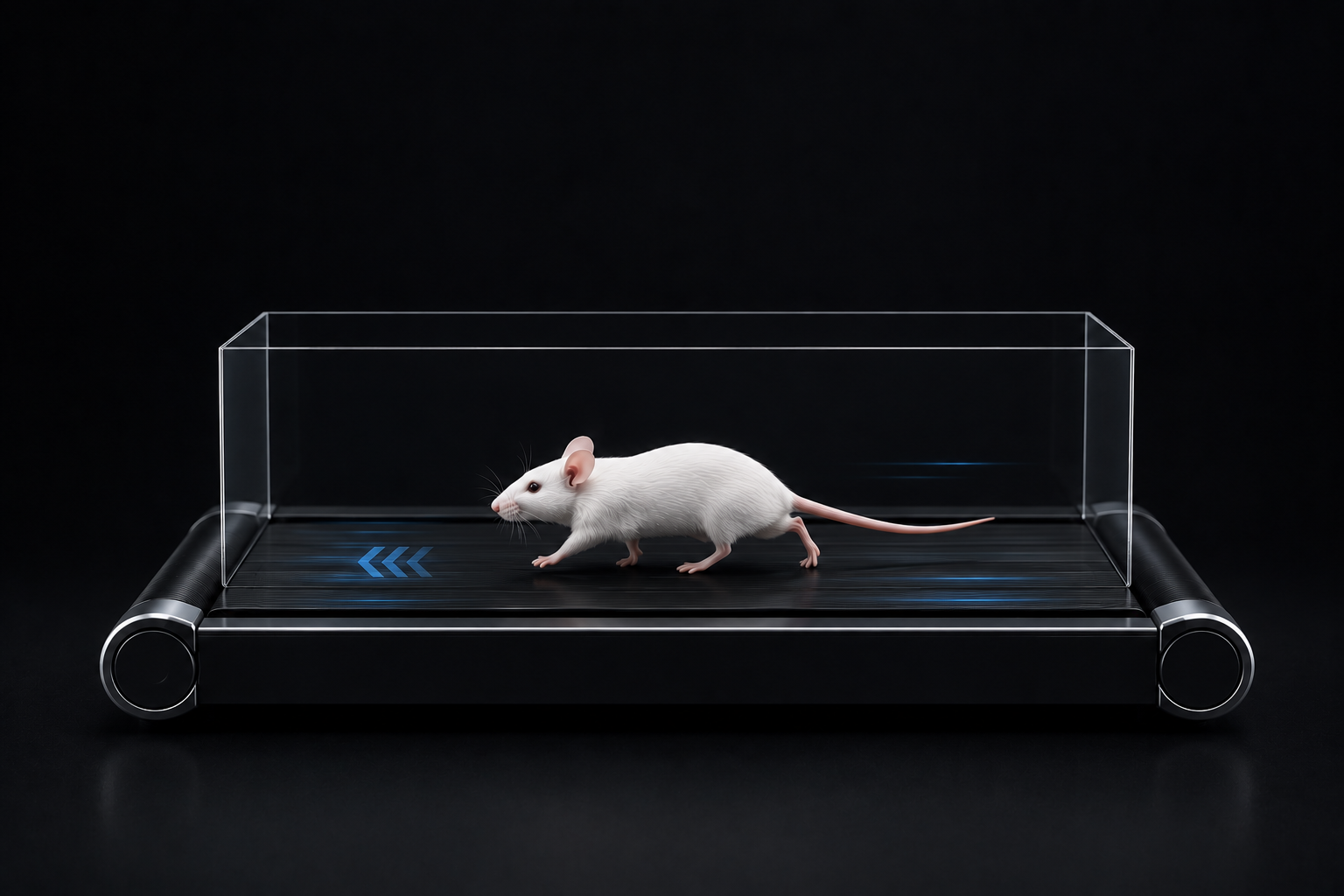
Passive treadmill walking platform requires minimal training; data collection can be completed in just a few attempts.
Visualization
50+ Visualization Charts
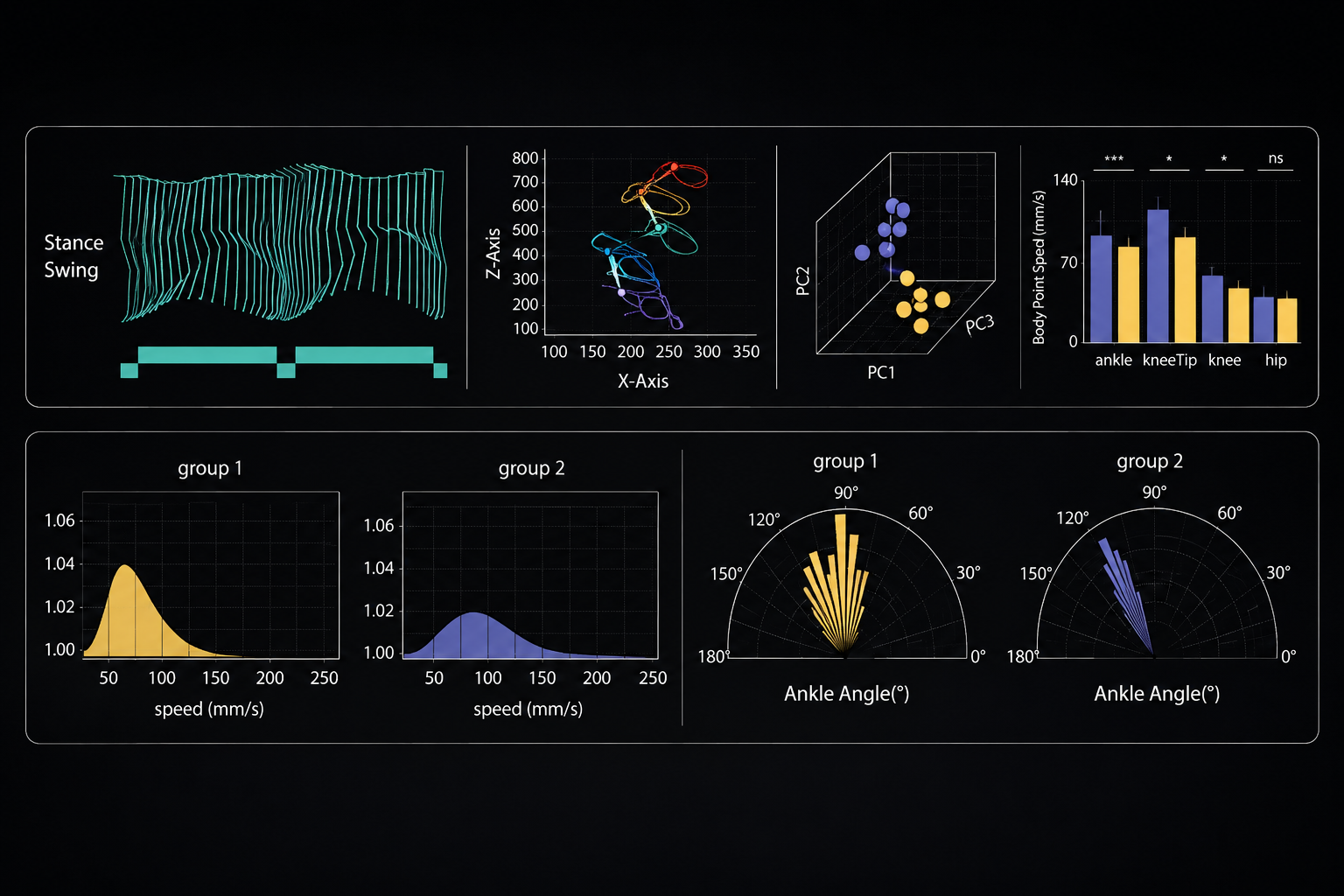
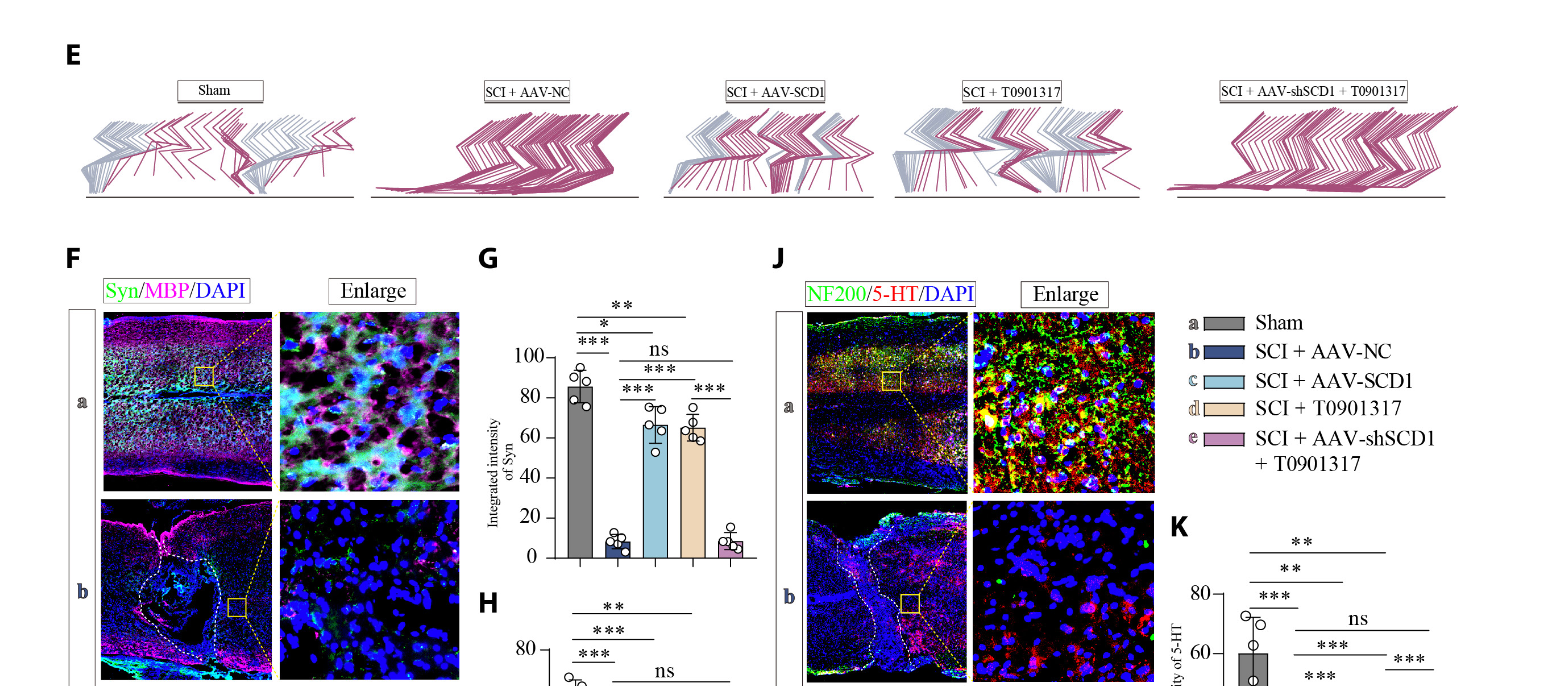
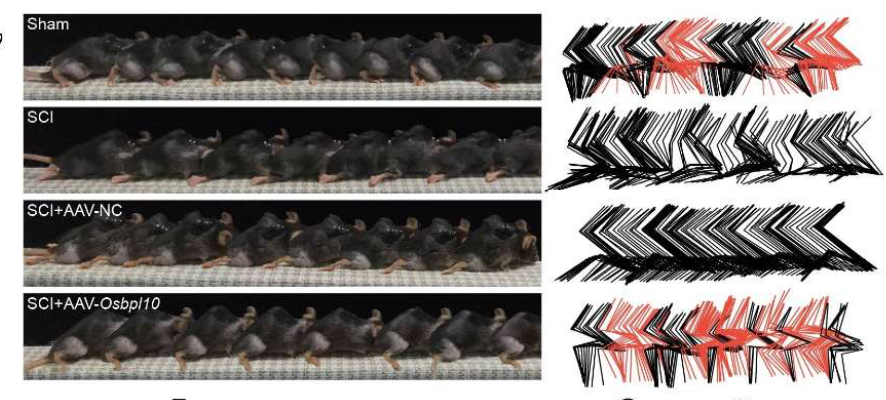
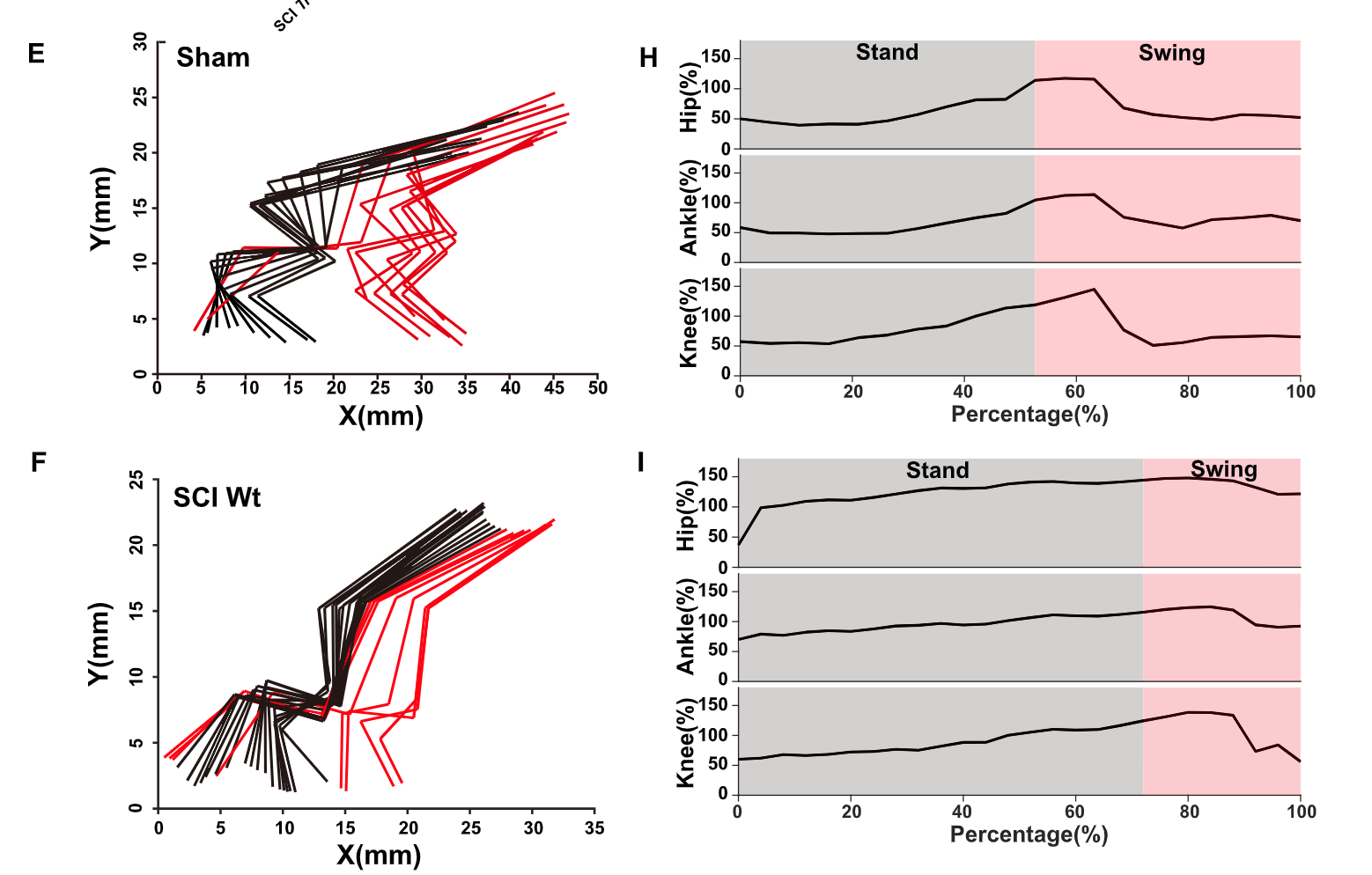
Provides kinematic distribution plots, motion trajectories, polar angle histograms, gait parameter charts, gait cycle phase plots, and more—publication-ready figures for SCI papers.
Chinese UI
Chinese Interface
Supports Chinese/English interface switching for convenient operation in every lab.
Product Comparison
Explore the full gap between legacy systems and next-generation 3D-AI technology.
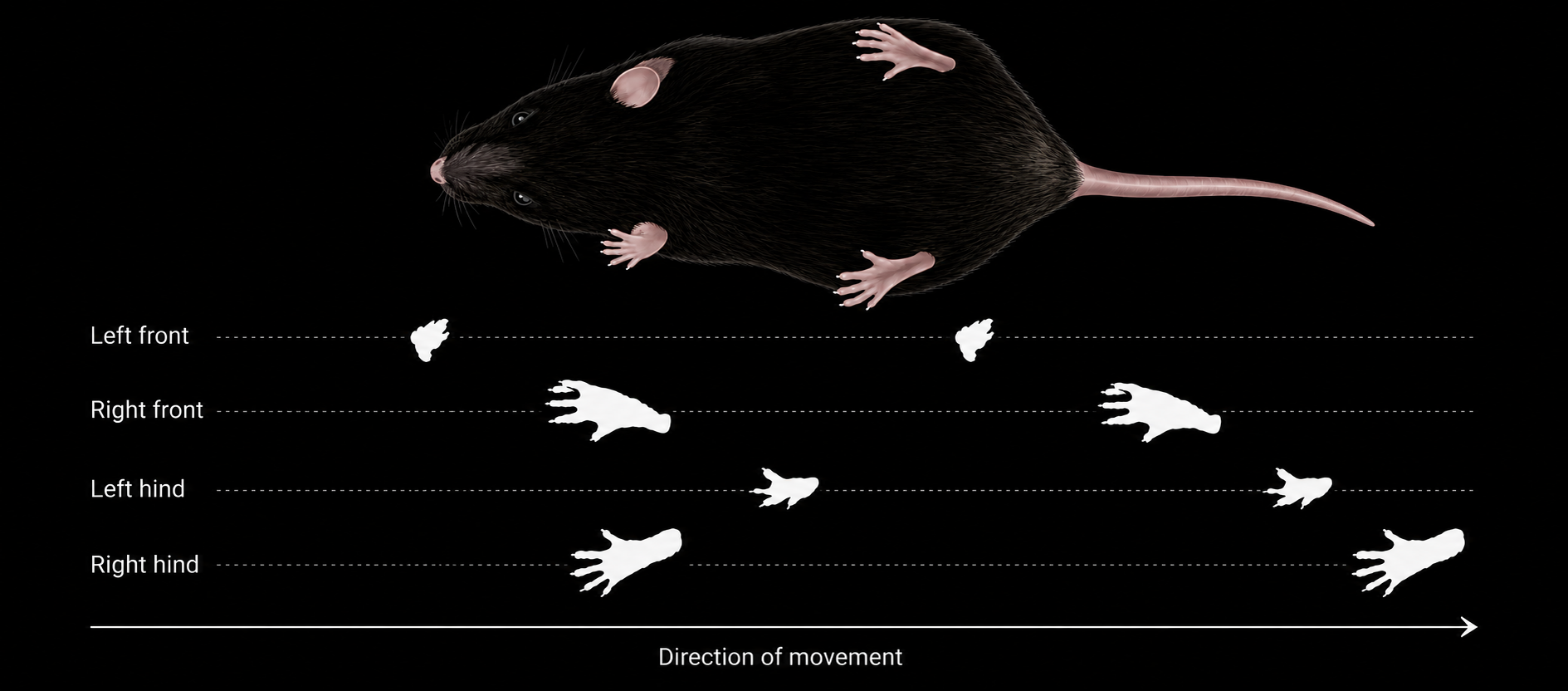
Footprint Gait Analysis
Gait Analysis
Measures gait via footprints on a specific surface
Limited parameters:Only stride length, frequency, and other surface spatiotemporal metrics
Missing depth:Cannot capture joint flexion/extension or trajectories
2D bottleneck:Loses 3D spatial state entirely — limited to 2D
Narrow use cases:Requires specific flooring; cannot assess free movement
3D Marker-based Motion Capture
Motion Capture
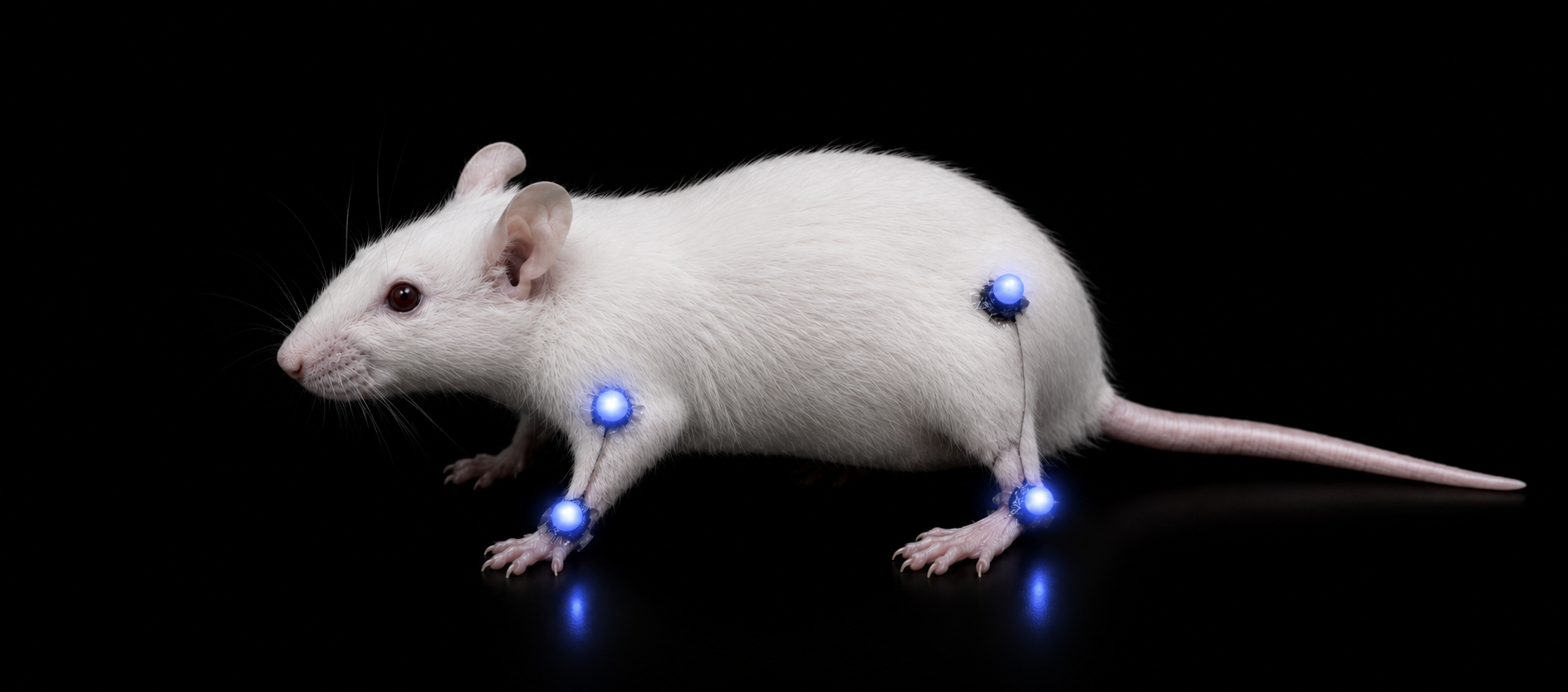
Optical capture with physical markers attached
Rich parameters:Joint angles, speed, and displacement analysis
Full-body modeling:Kinematic trajectories across full skeletal nodes
Invasive markers:Requires suturing or gluing markers to the animal
Behavior distortion:Foreign-body sensation and weight alter natural behavior
BehaviorAtlas
Mouse Motor Function Analysis System
Zero-interference 3D-AI technology
Zero interference:No markers — 100% natural behavior preserved
Panoramic capture:Four-camera sync — 360° 3D skeleton reconstruction
Multi-dimensional analysis:Unified gait cycles and full-body kinematics
Kinematic and gait parameters from body-point trajectories and joint motion to gait cycles — quantifiable metrics for disease models and drug evaluation.
Kinematics Parameters
52 items
Overview
Frame-by-frame velocity of each bodypoint in mm/s. Computed primarily from x and y coordinate data, indicating the speed of each bodypoint during horizontal locomotion.
Biological Significance
Reflects instantaneous velocity of body parts during horizontal locomotion; used to assess motor coordination and localized movement abnormalities.
Primary Disease Areas
Neurological and motor dysfunction disorders, including Parkinson's disease (bradykinesia), spinal cord injury, cerebellar ataxia, and osteoarthritis
Overview
Frame-by-frame motion intensity of each bodypoint, a dimensionless parameter computed as the square root of the sum of squared velocities along the x, y, and z axes, representing overall motion intensity at each bodypoint.
Biological Significance
Reflects three-dimensional motion intensity at each bodypoint, indicating overall activity level.
Primary Disease Areas
Neurological and motor dysfunction disorders, including amyotrophic lateral sclerosis (ALS), multiple sclerosis, metabolic myopathy, and chronic fatigue syndrome
Overview
Back height above ground in mm, calculated as the Z coordinate of the back bodypoint minus the mean Z coordinate of the four toe tips.
Biological Significance
Characterizes the height of the back bodypoint above the ground, reflecting vertical body position and postural stability; assesses vertical body control.
Primary Disease Areas
Neurological and motor dysfunction disorders, including spinal cord injury
Overview
Two angles per limb: spatial angle formed by three keypoints on each limb at each frame. For example, angle_lh_toe_ankle_knee is the spatial angle among the left hind toetip, ankle, and knee. Two angles per limb, eight total.
Left and right forelimb swing angles: each computed from the forelimb toetip, shoulder, and back bodypoints, one per forelimb.
Left and right hindlimb swing angles: each computed from the hindlimb toetip, hip, and back bodypoints, one per hindlimb.
Biological Significance
Assesses limb and joint range of motion and joint mobility.
Primary Disease Areas
Neurological and motor dysfunction disorders, including joint contracture, arthritis, muscular dystrophy, and post-stroke motor control deficits
Overview
Forelimb length: Euclidean distance from shoulder to toetip for each forelimb.
Hindlimb length: Euclidean distance from hip to toetip for each hindlimb.
Limb abbreviations: left forelimb (lf); right forelimb (rf); left hindlimb (lh); right hindlimb (rh).
Biological Significance
Measures limb structural length to detect atrophy or developmental abnormalities.
Primary Disease Areas
Neurological and motor dysfunction disorders, including muscular dystrophy (e.g., DMD) and chronic joint deformity
Overview
Frame-by-frame displacement of the animal's center point in mm. The body center is the mean of all bodypoint x and y coordinates; frame-by-frame displacement is computed from this centroid.
Biological Significance
Quantifies overall displacement distance to assess locomotor activity and endurance.
Primary Disease Areas
Neurological and motor dysfunction disorders, including Parkinson's disease and pain-related motor impairment
Gait Parameters
16 items
height_maximal_<bodypoint>mm
Maximum height of a specified bodypoint within one gait cycle (<bodypoint> denotes the bodypoint name, e.g. back, hip)
Biological Significance:Reflects maximum bodypoint elevation; assesses vertical body control
Related Diseases:Neurological and motor dysfunction disorders, including spinal cord injury
stride_lengthmm
Stride length: horizontal distance between two consecutive ground contacts of the same limb
Biological Significance:Stride length reflects limb propulsion, walking efficiency, and balance/coordination; a core spatial gait metric
Related Diseases:Neurological and motor dysfunction disorders, including cerebral palsy, stroke, Parkinson's disease, and spinal cord injury
cycle_durations
Duration of one gait cycle
Biological Significance:Reflects gait cadence; associated with walking efficiency and motor capacity
Related Diseases:Neurological and motor dysfunction disorders, including spinal cord injury, stroke, and cerebral palsy
stance_durations
Stance phase duration within one gait cycle
Biological Significance:Reflects limb load-bearing capacity and stability; a core metric of the weight-bearing phase directly related to limb loading
Related Diseases:Neurological and motor dysfunction disorders, including spinal cord injury, stroke, cerebral palsy, osteoporosis (with motor limitation), and bone tumors (with secondary motor impairment)
swing_durations
Swing phase duration within one gait cycle
Biological Significance:Reflects swing efficiency and limb elevation capacity
Related Diseases:Neurological and motor dysfunction disorders, including spinal cord injury and arthritis
Biological Significance:Represents the proportion of the gait cycle spent in swing; reflects efficiency of limb advancement
Related Diseases:Neurological and motor dysfunction disorders, including joint fibrosis (with motor limitation) and arthritis (with secondary motor impairment)
swing_stance_ratioRatio
Ratio of swing duration to stance duration within one gait cycle
Biological Significance:Reflects swing–stance coordination and gait symmetry
Related Diseases:Neurological and motor dysfunction disorders, including knee osteoarthritis (with motor abnormalities)
swing_speed_<bodypoint>mm/s
Mean velocity of a specified bodypoint during the swing phase within one gait cycle (<bodypoint> denotes the bodypoint name)
Biological Significance:Reflects limb velocity during swing; associated with motor capacity
Related Diseases:Neurological and motor dysfunction disorders, including ALS, cerebral palsy, stroke, and spinal cord injury
mean_angle_swing_hip°
Mean hip angle during the swing phase within one gait cycle
Biological Significance:Reflects hip joint angle during swing; associated with hip flexibility and control
Related Diseases:Neurological and motor dysfunction disorders, including hip contracture (with motor limitation) and congenital hip dysplasia (with secondary motor changes)
mean_angle_swing_knee°
Mean knee angle during the swing phase within one gait cycle
Biological Significance:Reflects knee joint angle during swing; associated with knee flexion–extension and gait coordination
Related Diseases:Neurological and motor dysfunction disorders, including knee injury (with motor dysfunction) and knee ankylosis (with secondary motor impairment)
mean_angle_swing_ankle°
Mean ankle angle during the swing phase within one gait cycle
Biological Significance:Reflects ankle joint angle during swing; directly related to foot clearance (toe clearance) ability
Related Diseases:Neurological and motor dysfunction disorders, including spinal cord injury and lumbar disc herniation (with motor dysfunction)
height_amplitude_<bodypoint>mm
Vertical amplitude of a specified bodypoint within one gait cycle (<bodypoint> denotes the bodypoint name)
Biological Significance:Reflects vertical excursion of key bodypoints; associated with gait vertical displacement
Related Diseases:Neurological and motor dysfunction disorders, including spinal cord injury and ankylosing spondylitis (with motor limitation)
range_angle_hip°
Hip angle range within one gait cycle
Biological Significance:Reflects hip range of motion; directly related to joint flexibility and motor capacity
Related Diseases:Neurological and motor dysfunction disorders, including hip osteoarthritis (with motor dysfunction) and post-hip replacement (with secondary motor changes)
range_angle_knee°
Knee angle range within one gait cycle
Biological Significance:Reflects knee range of motion; associated with lower-limb flexion–extension function
Related Diseases:Neurological and motor dysfunction disorders, including knee adhesion (with motor limitation) and knee osteoarthritis (with secondary motor impairment)
range_angle_ankle°
Ankle angle range within one gait cycle
Biological Significance:Reflects ankle range of motion; associated with ankle flexion–extension and walking stability
Related Diseases:Neurological and motor dysfunction disorders, including Achilles tendon shortening (with motor abnormalities) and ankle contracture (with secondary motor impairment)
Architecture
Capture System
3D-AI Mouse Motor Function Capture Device
Motor Function Capture Device
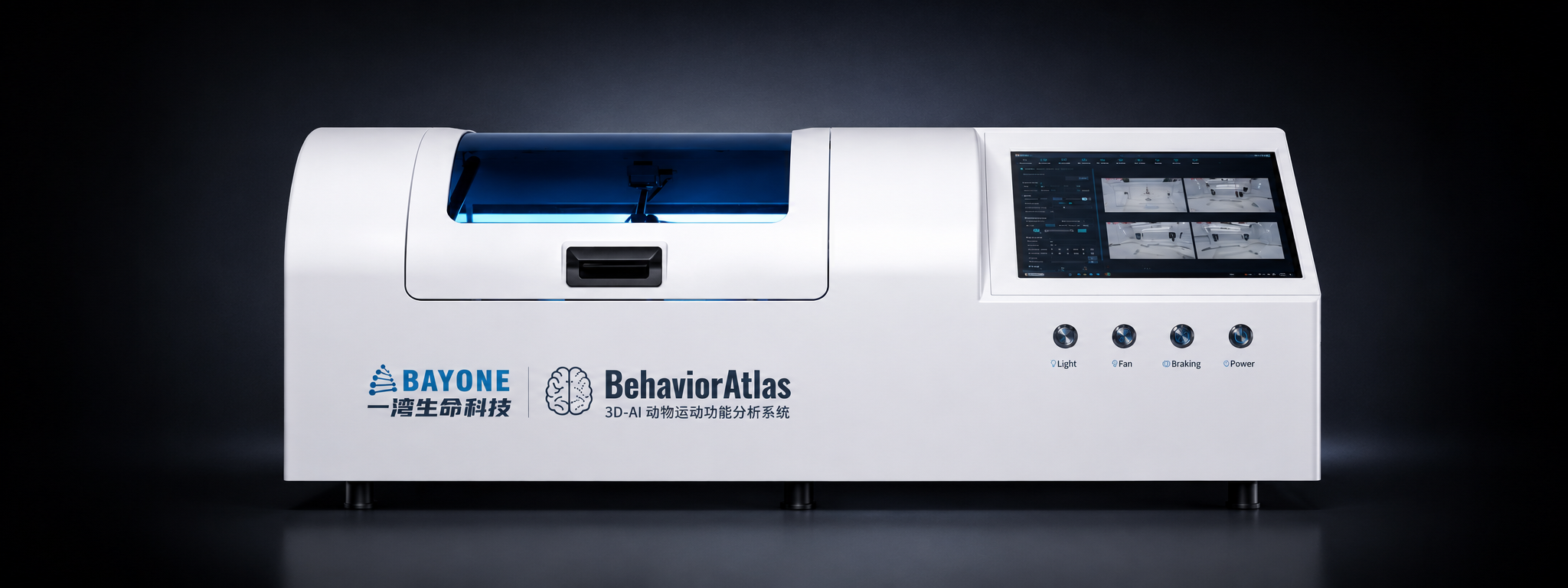
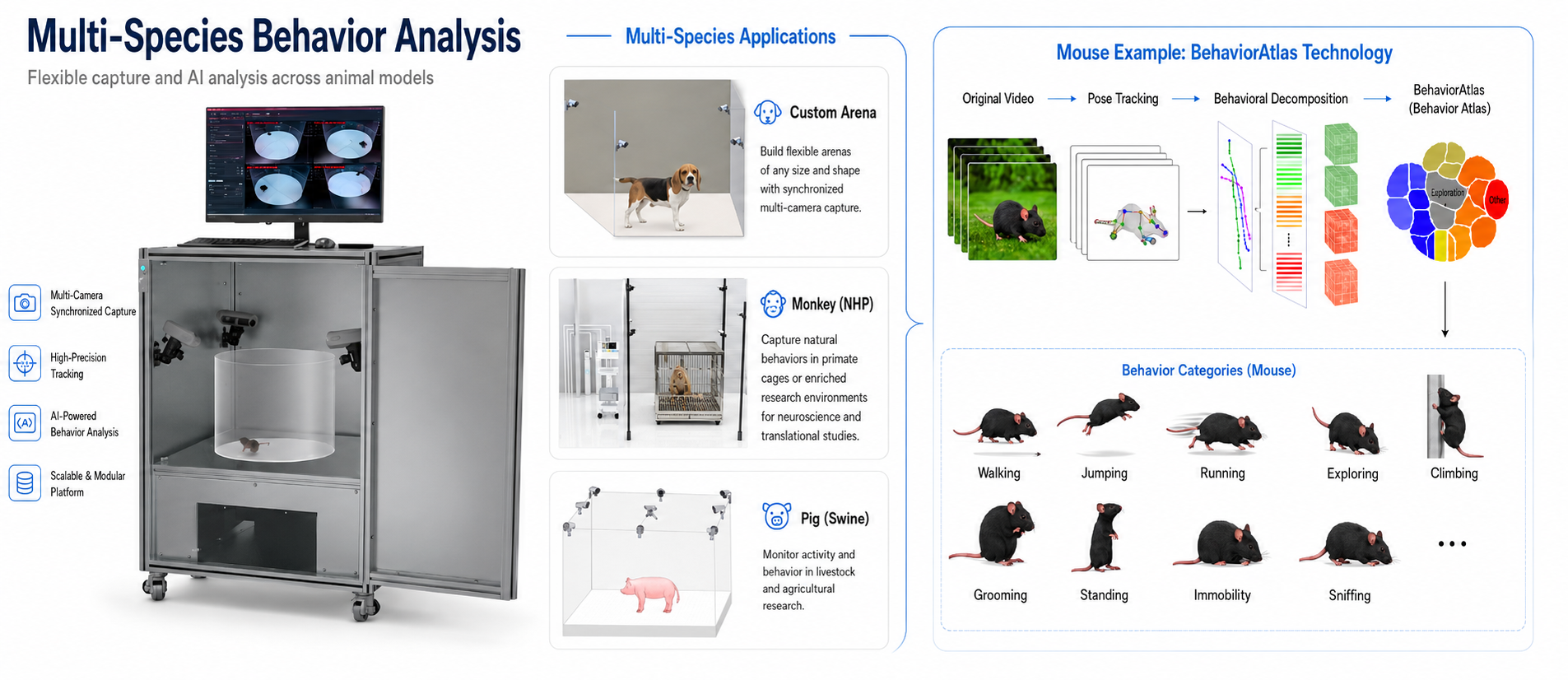
Integrates a four-camera array with a passive treadmill walking platform for multi-view synchronized capture, comprehensively recording animal locomotion while mitigating body occlusion and blind spots.
Supports translational motor function research in non-human primates, providing quantifiable cross-species motor metrics for neurological disease models and drug development.
Primate TranslationNeurological DiseaseDrug Development
Data Visualization
Multi-dimensional visualization uncovering breakthrough findings from real studies.
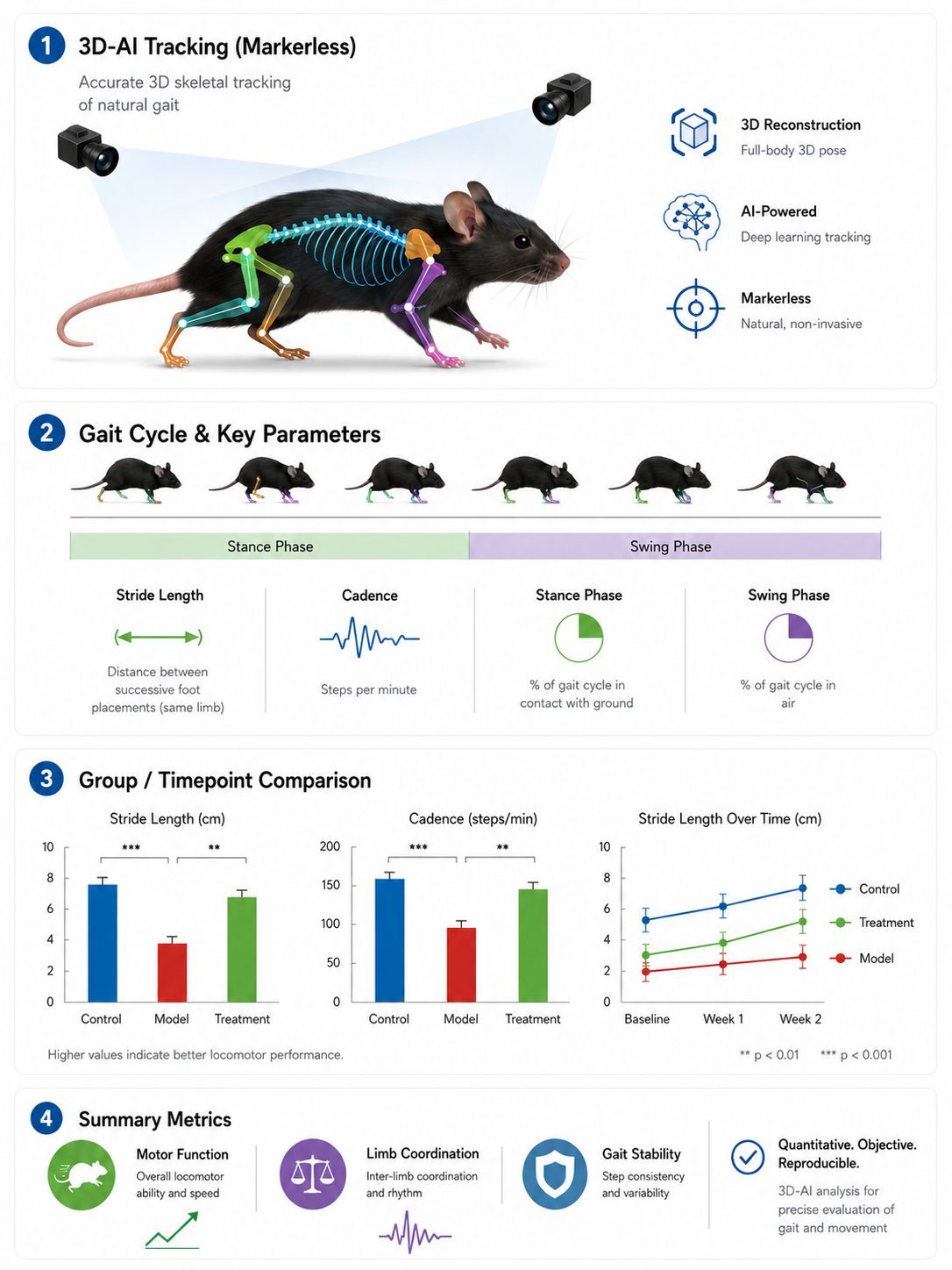
Quantifies changes in motor capacity and coordination using fine-grained 3D-AI gait parameters. Markerless 3D skeletal tracking automatically extracts kinematic parameters during gait to assess motor function, limb coordination, and gait stability, providing objective metrics for neural injury, motor disorders, and pharmacodynamic evaluation.
Automated analysis of core gait parameters including stride length, cadence, stance, and swing duration
Quantifies bilateral limb coordination and gait symmetry changes
Supports comparison of motor capacity across time points and dose groups
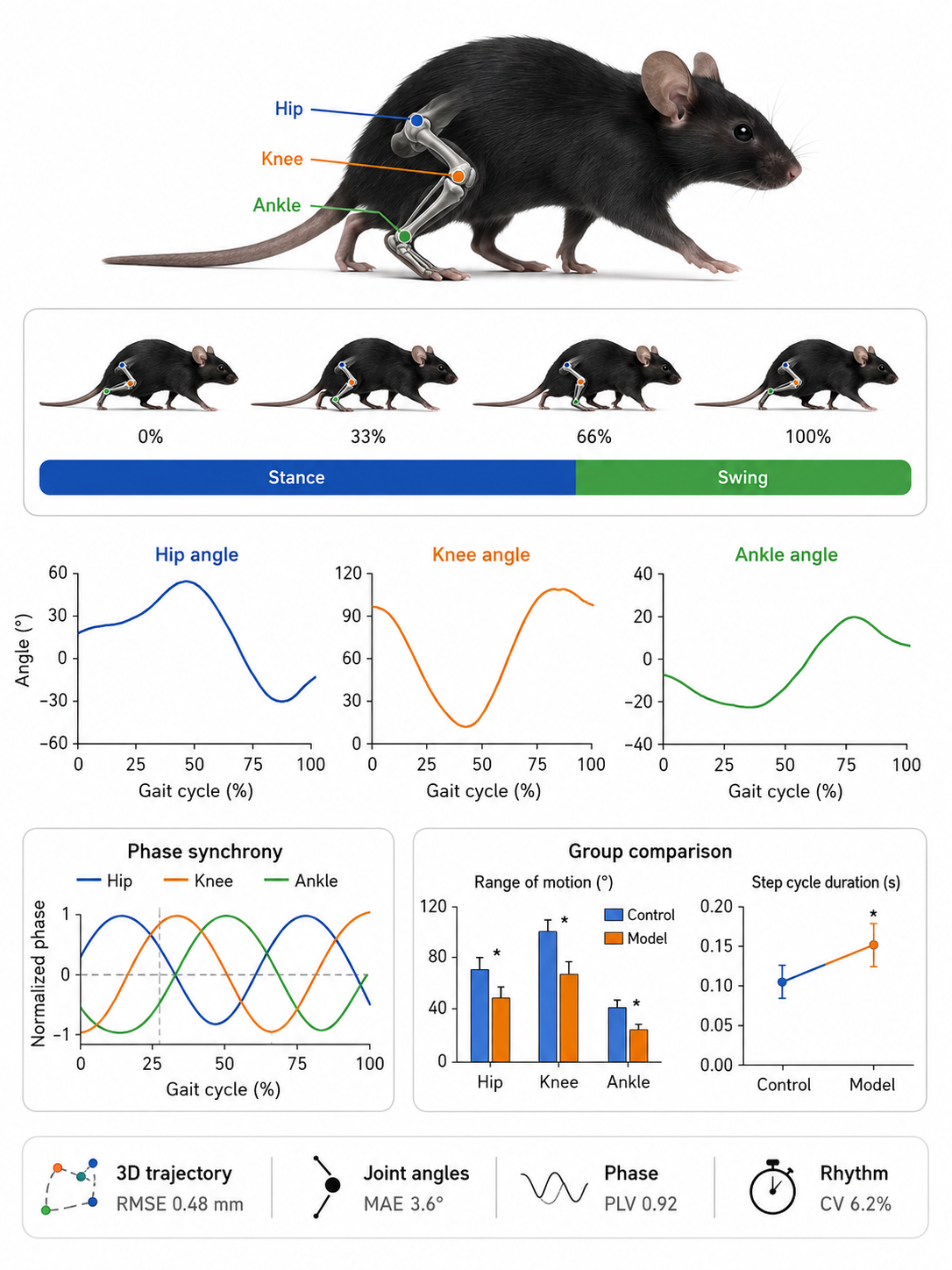
Parses fine-grained gait cycles and joint control from 3D joint trajectories. Integrating hip, knee, ankle, and other key joint trajectories, builds a complete gait cycle model to reveal subtle changes in neural control and motor dysfunction.
Automated computation of joint angle curves for hip, knee, ankle, and other joints
Extracts gait cycle phase and joint motion synchrony metrics
Analyzes joint range of motion and rhythmic abnormalities across disease models
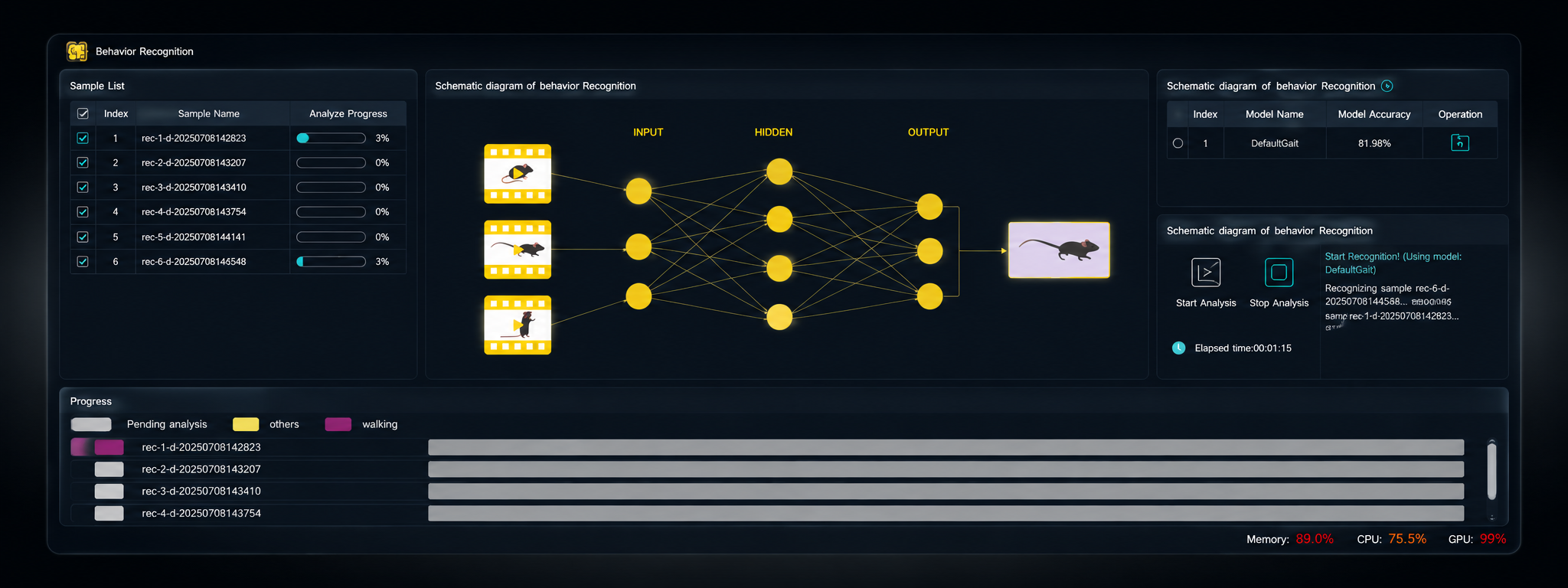
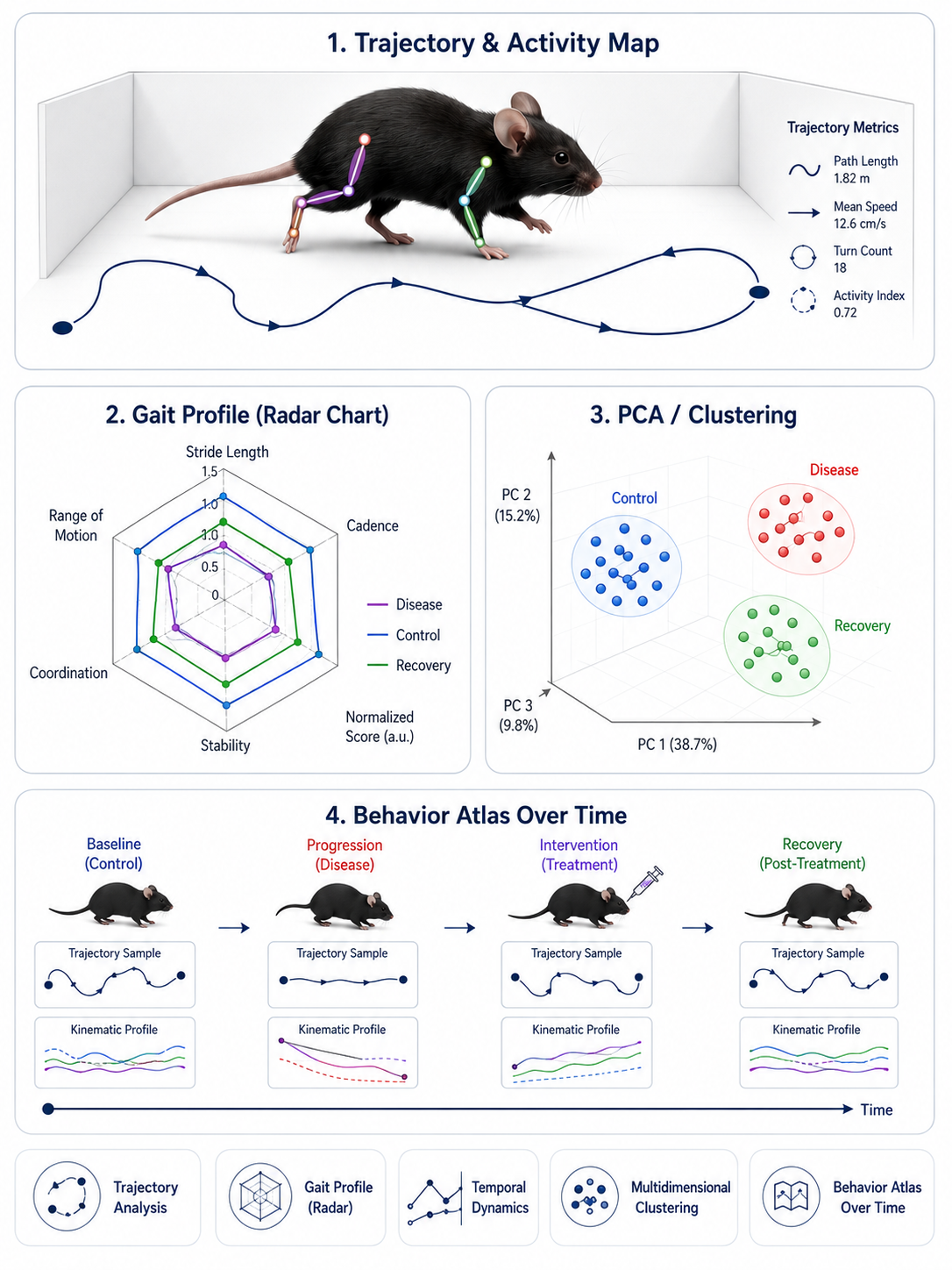
Integrates kinematic parameters and behavioral patterns into multidimensional gait behavioral maps. Multi-parameter joint analysis and visualization assess overall locomotor state, helping researchers identify abnormal motor phenotypes missed by conventional observation.
Generates motion trajectories, polar angle plots, heatmaps, and other visualizations
Supports PCA and clustering to identify distinct gait behavioral subtypes
Builds dynamic behavioral maps of disease progression, recovery, and drug intervention
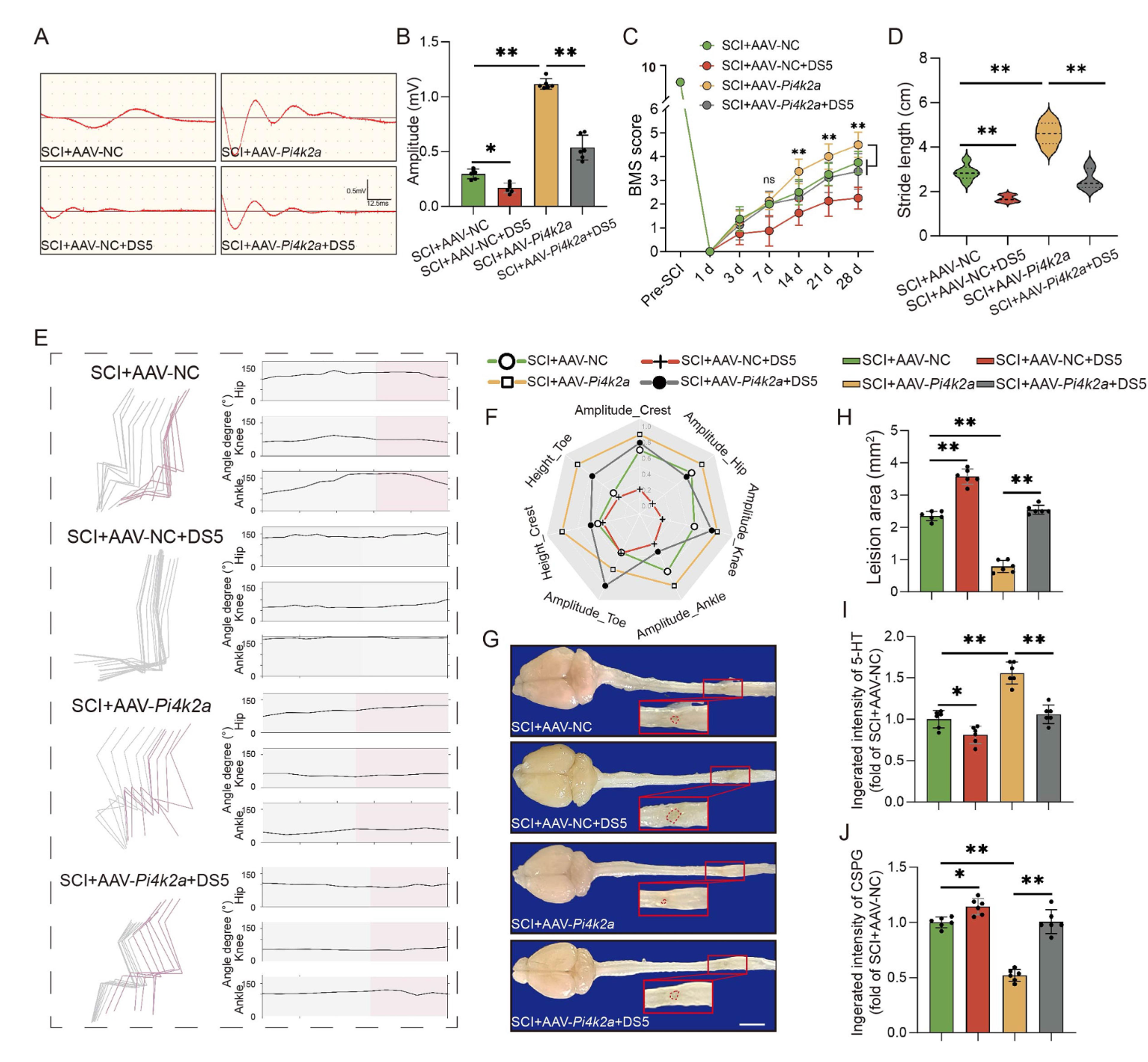
User Papers
Powered by 3D-AI motor analysis, supporting high-impact publications and objective quantification in gait and kinematics research.